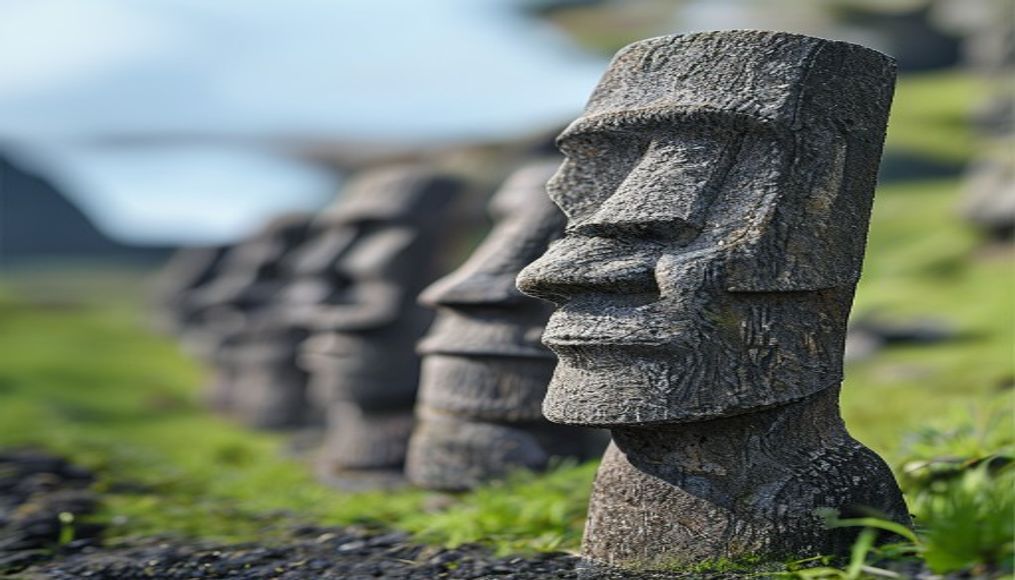
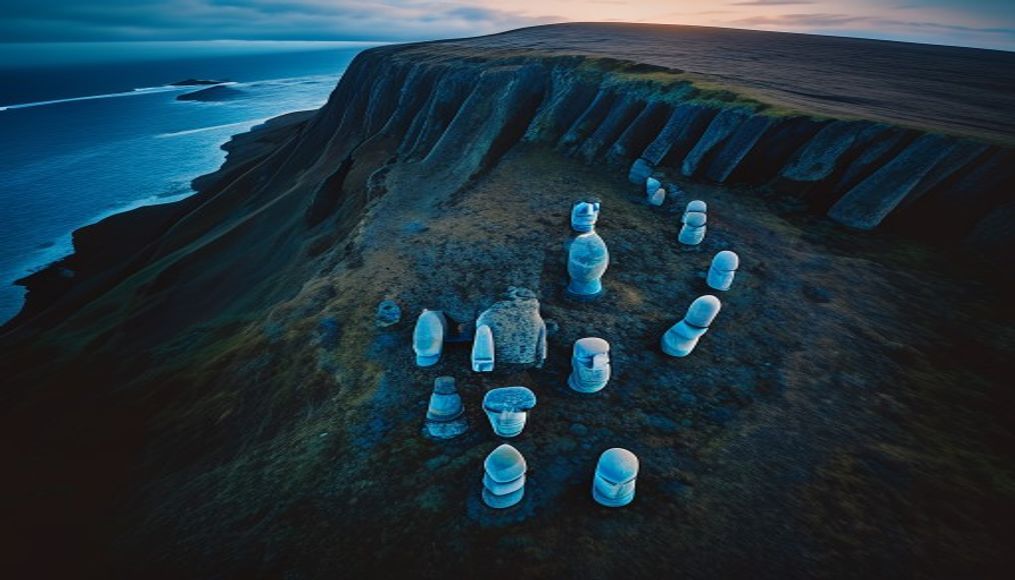
Easter island moai statues
1344×768 · AVIF · CC BY 4.0
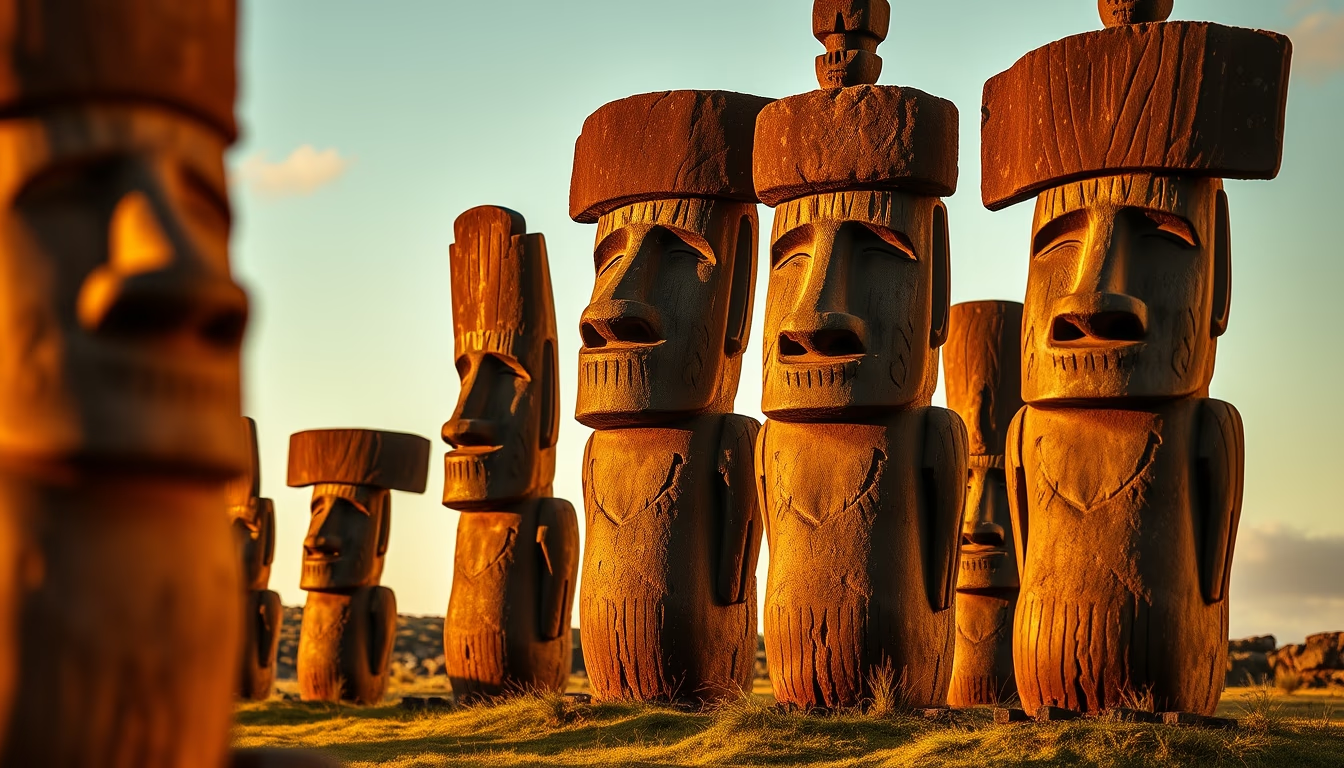
The Moai statues of Easter Island are stone monoliths carved by the Rapanui people between the 13th and 16th centuries, representing deified ancestors.
About this subject
The Moai are gigantic monolithic statues carved from volcanic tuff at the quarries of Rano Raraku volcano. Most of the approximately 900 known statues were carved between 1100 and 1680 AD. They feature disproportionately large heads and elongated bodies, with some reaching up to 10 meters in height and 80 tons. Each Moai was carved from a single piece of rock and then transported to ceremonial platforms called ahus along the coast.
The cultural significance of the Moai lies in the Rapanui belief that they encapsulated the mana, or spiritual power, of deceased leaders. They were placed facing inland, watching over the communities. The production and transport of these statues required enormous collective effort, reflecting the island's complex social organization. Interestingly, many Moai have bodies buried below ground, revealed by archaeological excavations, showing that the visible heads are only the upper part.
Easter Island, or Rapa Nui, is a special territory of Chile, located in the Pacific Ocean about 3,700 km off the Chilean coast. The decline of the Rapanui civilization, possibly due to resource depletion and internal conflicts, led to the cessation of Moai construction around 1600. Today, the statues are a UNESCO World Heritage site and one of the world's most iconic tourist destinations, attracting visitors interested in their history and mystery.
Frequently Asked Questions
How many Moai statues are on Easter Island?
There are about 900 known Moai, carved between 1100 and 1680 AD. Many remain unfinished in the quarries.
Why do Moai have large heads?
The large heads are a stylistic feature of the Rapanui, representing the importance of ancestors. The body is elongated and the ears are also prominent.
How were the Moai transported?
There are several theories, including the use of tree trunks as rollers, ropes, and human force. It is believed the Moai were "walked" upright, rocking side to side.
Direct URL
https://pub-c7d6a6ea828543ac903a74a341ccb2e1.r2.dev/imagens/easter-island-moai-statues-cinematic-wide-shot-p9.avifHow to credit
Include a visible link back to UtilizAí. Copy one of the snippets below:
<a href="https://xn--utiliza-eza.com/en/midia/imagens/easter-island-moai-statues-cinematic-wide-shot-p9">Easter island moai statues</a> by <a href="https://xn--utiliza-eza.com">UtilizAí</a>, licensed under <a href="https://creativecommons.org/licenses/by/4.0/">CC BY 4.0</a>.
[Easter island moai statues](https://xn--utiliza-eza.com/en/midia/imagens/easter-island-moai-statues-cinematic-wide-shot-p9) by [UtilizAí](https://xn--utiliza-eza.com), CC BY 4.0
License: CC-BY-4.0