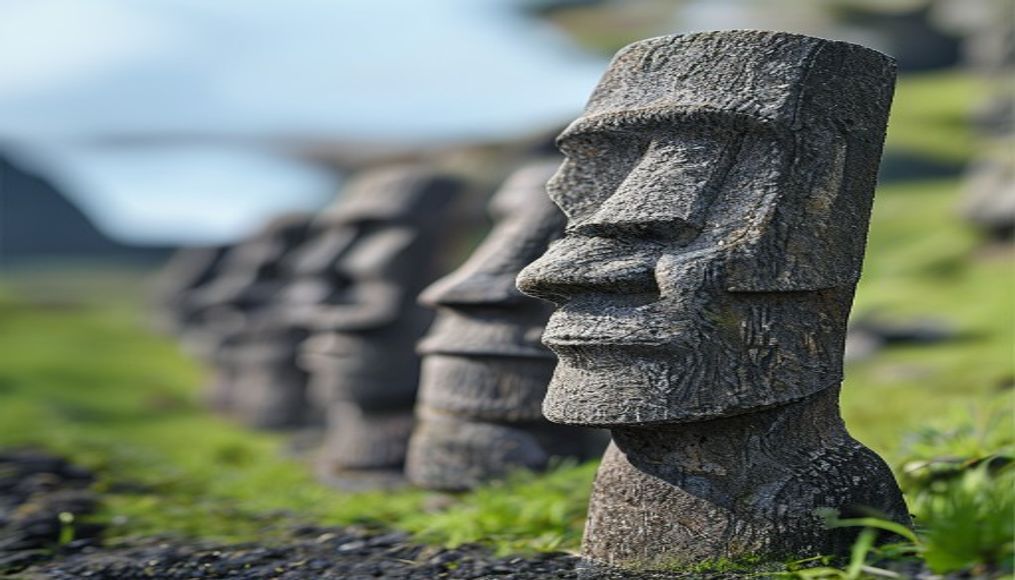
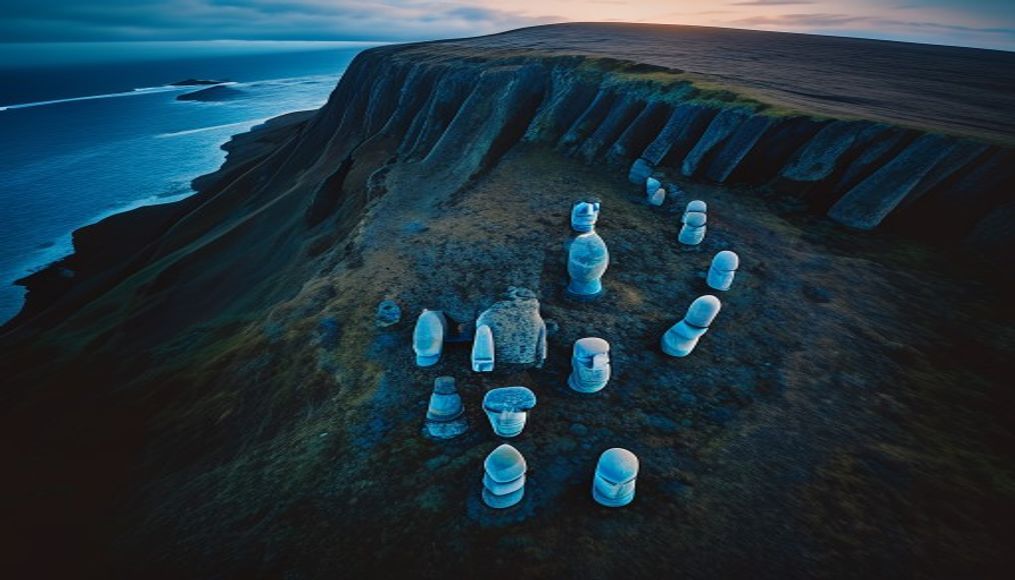
Easter island moai statues
1344×768 · AVIF · CC BY 4.0
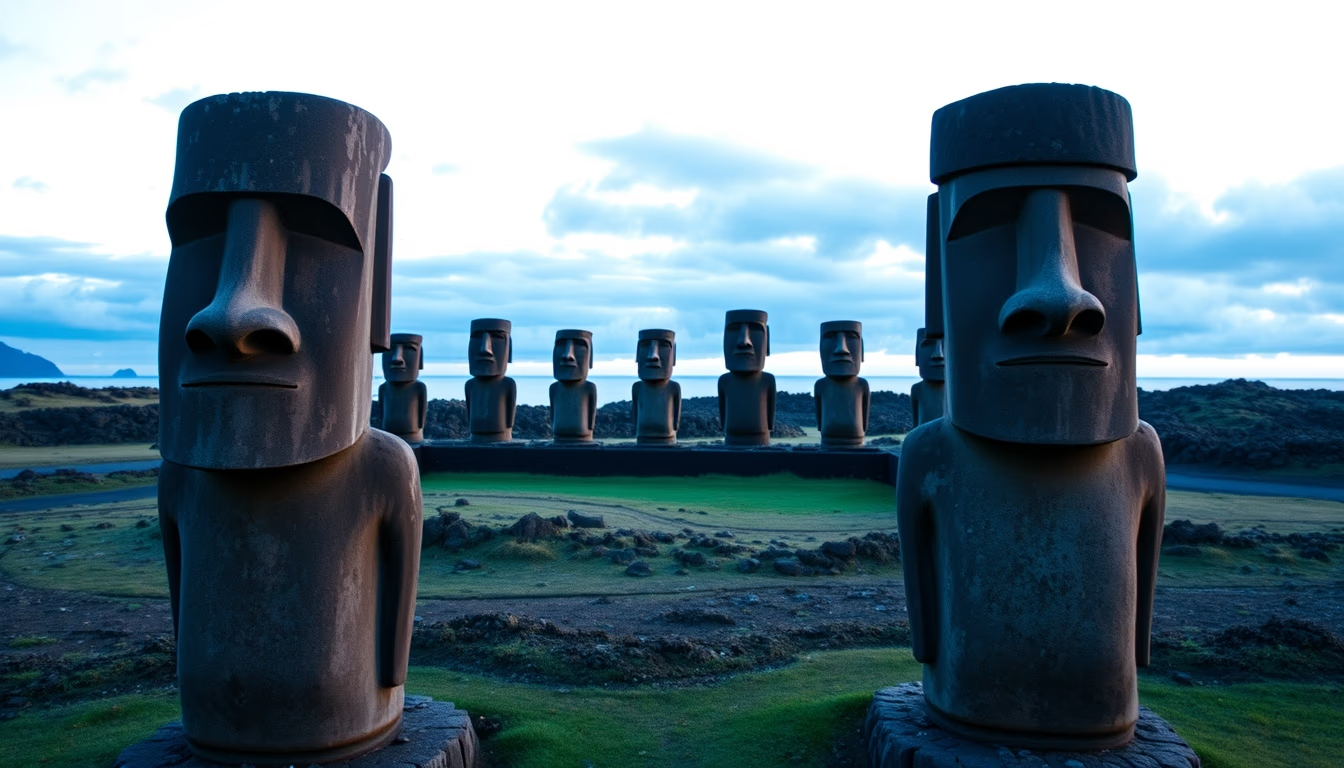
The moai are monolithic statues on Easter Island, carved by the Rapa Nui people between the 13th and 16th centuries, representing important ancestors.
About this subject
The moai are massive stone statues carved by the Rapa Nui people on Easter Island, a remote Chilean island in the Pacific. There are about 900 moai scattered across the island, most carved from volcanic tuff at the Rano Raraku quarry. The statues average 4 meters in height and weigh 14 tons, but some reach 10 meters and 82 tons. They were built between 1250 and 1500 AD to honor chiefs or important ancestors, serving as representations of their spiritual power.
The transportation of the moai is one of archaeology's greatest mysteries. Studies indicate they were moved horizontally using ropes and tree trunks, a process requiring great coordination and labor. Some theories suggest they were 'walked' using a rocking motion. The toppling of many moai during tribal wars or after European contact reveals the island's social complexity. Today, over 50 moai have been restored and re-erected, especially at the Ahu Tongariki site.
Easter Island, or Rapa Nui, has been a UNESCO World Heritage site since 1995. The moai are its most iconic symbol, attracting thousands of tourists yearly. Despite theories of ecological collapse due to deforestation, recent evidence suggests Rapa Nui society was more resilient than previously thought. Ongoing study of the moai helps understand the culture and engineering of this unique Polynesian civilization.
Interestingly, the moai had eyes made of white coral and obsidian, inserted after placement on the platforms (ahu). Only a few dozen have been found with intact eyes. Each moai is different, with distinct facial features, and many have a pukao on their head, a red stone hat from a different quarry. These details reinforce the individuality of each represented ancestor.
Frequently Asked Questions
Why were the moai built?
The moai were built to honor chiefs and important ancestors, serving as representations of their spiritual power and protection for the community. They were placed on ceremonial platforms called ahu.
How were the moai transported?
The exact method is debated, but the most accepted theory is that the moai were moved horizontally using ropes and logs, possibly by rocking them in a 'walking' motion. Experimental studies have shown that small groups could move statues this way.
Why were many moai toppled?
Many moai were toppled during intertribal wars among the Rapa Nui, especially after resource depletion. European contact also accelerated the process through invasions and diseases that destabilized society. Now, several have been restored and re-erected.
Direct URL
https://pub-c7d6a6ea828543ac903a74a341ccb2e1.r2.dev/imagens/easter-island-moai-statues-aerial-drone-shot-p11.avifHow to credit
Include a visible link back to UtilizAí. Copy one of the snippets below:
<a href="https://xn--utiliza-eza.com/en/midia/imagens/easter-island-moai-statues-aerial-drone-shot-p11">Easter island moai statues</a> by <a href="https://xn--utiliza-eza.com">UtilizAí</a>, licensed under <a href="https://creativecommons.org/licenses/by/4.0/">CC BY 4.0</a>.
[Easter island moai statues](https://xn--utiliza-eza.com/en/midia/imagens/easter-island-moai-statues-aerial-drone-shot-p11) by [UtilizAí](https://xn--utiliza-eza.com), CC BY 4.0
License: CC-BY-4.0