Easter island moai row
1344×768 · AVIF · CC BY 4.0
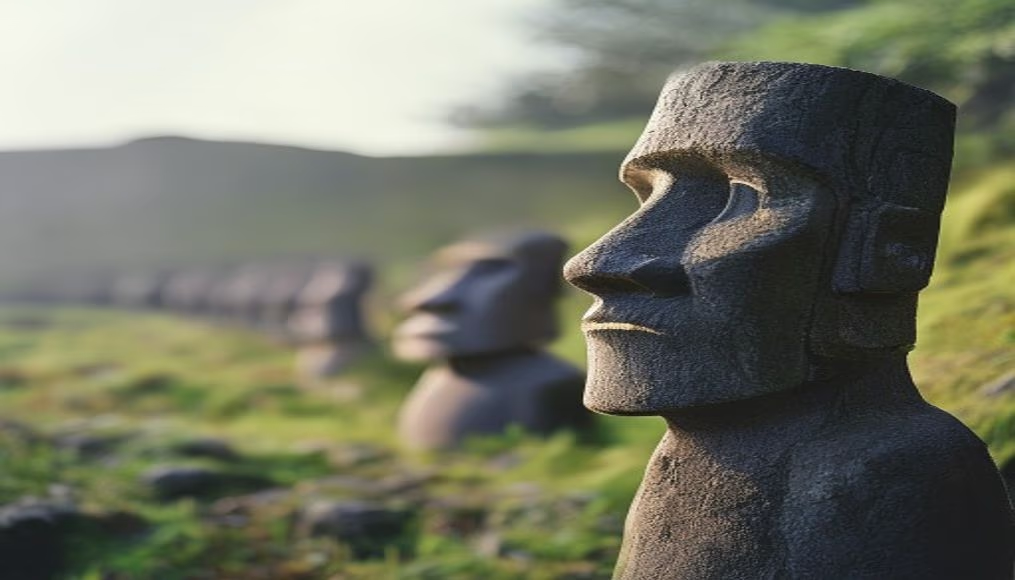
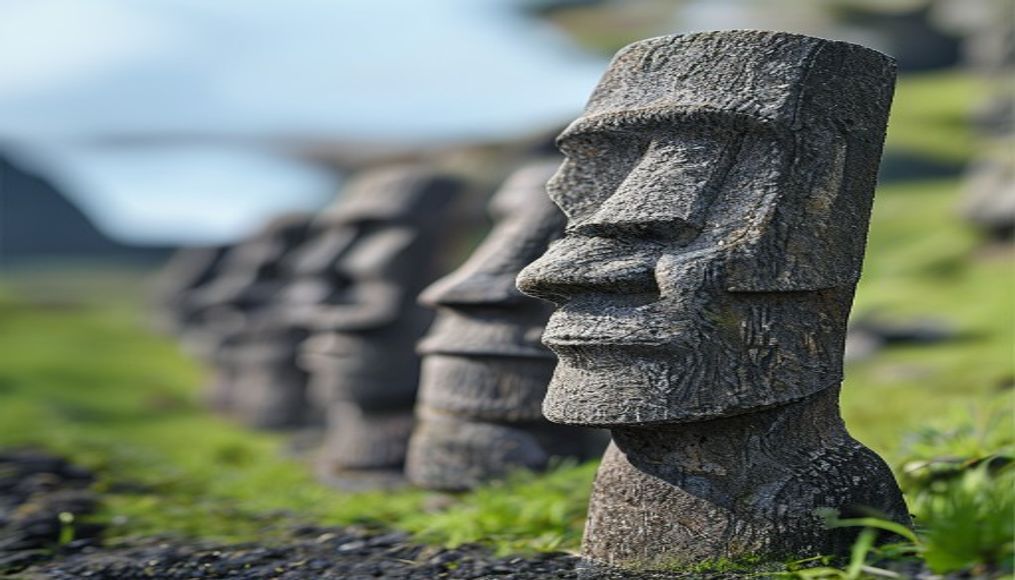
Rows of moai on Easter Island, monolithic statues carved by the Rapa Nui people between the 13th and 16th centuries, bear witness to an advanced civilization and its mysterious collapse.
About this subject
Moai are monumental stone sculptures carved from volcanic tuff by the ancient inhabitants of Easter Island (Rapa Nui), a remote Chilean territory in the South Pacific. Each moai represents an important ancestor, usually a chief or lineage leader, and was erected on an ahu, a ceremonial platform, facing inland to protect the community. The image shows a row of partially buried moai on the slopes of the Rano Raraku crater, the main quarry where most statues were carved, with 887 moai cataloged across the island. The largest moai ever carved, nicknamed "El Gigante," measures 21.6 meters tall and weighs about 270 tons, but it was never finished or erected. The construction and transport of moai, averaging 4 meters in height and weighing over 10 tons, required sophisticated engineering skills, including log rails and ropes, as well as organized labor. The peak of statue carving and movement occurred between the 13th and 16th centuries, coinciding with population growth and deforestation of the island. The collapse of the Rapa Nui civilization around 1600 is linked to overexploitation of natural resources, tribal warfare, and the arrival of Europeans in the 18th century, bringing diseases and slavery. The moai bear witness to the decline: many were toppled during internal conflicts. Today, the archaeological site is a UNESCO World Heritage Site and an enduring symbol of human ingenuity, with the row of buried moai being one of the most photographed scenes on the island.
Frequently Asked Questions
How many moai are there on Easter Island?
There are 887 moai cataloged across the island, most carved at the Rano Raraku quarry.
Why are some moai buried?
The moai on the slopes of Rano Raraku became covered by sediment over centuries due to erosion and soil movement, leaving only the heads visible.
What is the cultural significance of the moai?
Moai represent important ancestors, such as chiefs and lineage leaders, and were erected to protect and bless the community, central to Rapa Nui religious and political culture.
Direct URL
https://pub-c7d6a6ea828543ac903a74a341ccb2e1.r2.dev/imagens/easter-island-moai-row-documentary-photography-p0.avifHow to credit
Include a visible link back to UtilizAí. Copy one of the snippets below:
<a href="https://xn--utiliza-eza.com/en/midia/imagens/easter-island-moai-row-documentary-photography-p0">Easter island moai row</a> by <a href="https://xn--utiliza-eza.com">UtilizAí</a>, licensed under <a href="https://creativecommons.org/licenses/by/4.0/">CC BY 4.0</a>.
[Easter island moai row](https://xn--utiliza-eza.com/en/midia/imagens/easter-island-moai-row-documentary-photography-p0) by [UtilizAí](https://xn--utiliza-eza.com), CC BY 4.0
License: CC-BY-4.0