Drone delivery package
1344×768 · AVIF · CC BY 4.0
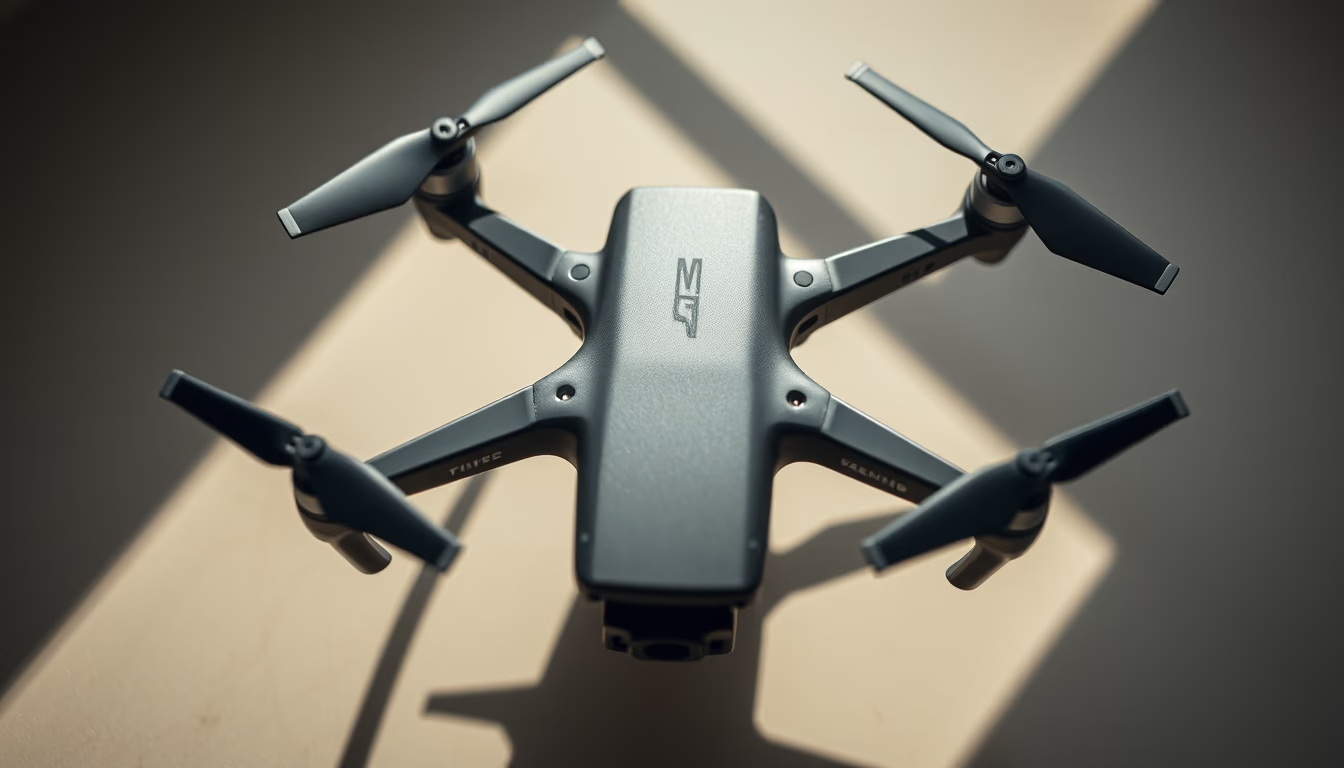
Drone deliveries are transforming urban logistics with speed and sustainability, integrating autonomous technology into daily life.
About this subject
Drone delivery is a logistics mode that uses unmanned aerial vehicles (UAVs) to transport packages directly from warehouse to consumer. Companies like Amazon, Walmart, and Alphabet have been running commercial trials in several countries, reaching distances of up to 20 km with payloads of up to 5 kg. In Brazil, the National Civil Aviation Agency (ANAC) has regulated drone flights for deliveries since 2020, allowing operations in rural and urban areas with restrictions. Cities such as São Paulo and Campinas have seen pilot projects for medication and food deliveries.
The technology relies on GPS navigation, obstacle avoidance sensors, and intelligent route planning. Modern drones can land precisely in small areas like patios or balconies and return automatically for recharging. One major challenge is the safe integration into already congested airspace, especially in metropolitan regions. To address this, companies develop drone traffic management systems (UTM) that coordinate flights and prevent collisions.
The trend for 2026 points to expanded beyond visual line of sight (BVLOS) operations, with broader regulatory approvals. Urgent deliveries, such as medications and spare parts, are expected to become common. Sustainability is also a differentiator: electric drones produce fewer emissions than ground vehicles in last-mile deliveries. However, issues like privacy, noise, and cybersecurity still need robust solutions.
In Brazil, the potential is enormous due to the continental dimensions and difficult access to remote areas. Logistics companies and local startups are testing drones to deliver vaccines and lab tests to riverside communities in the Amazon. Integration with e-commerce platforms should grow, but recharging infrastructure and professional training remain barriers. The future of deliveries depends on technological advances and a balanced regulatory framework.
Frequently Asked Questions
What is the typical range of a delivery drone?
Most commercial delivery drones have a flight time of 20 to 40 minutes, covering 15 to 30 km with a payload of up to 5 kg. Range varies based on weight, weather conditions, and battery efficiency.
Are drone deliveries safe in urban areas?
Yes, when operated under strict regulations. Drones are equipped with obstacle avoidance sensors, backup systems, and emergency parachutes. Authorities require insurance and pre-approved routes to minimize risks.
What are the main barriers to drone delivery adoption in Brazil?
The main barriers include restrictive regulations that still limit night flights and beyond visual line of sight operations, lack of charging infrastructure, and the need for specialized training. High equipment costs and public acceptance are also challenges.
Direct URL
https://pub-c7d6a6ea828543ac903a74a341ccb2e1.r2.dev/imagens/drone-delivery-package-magazine-editorial-p3.avifHow to credit
Include a visible link back to UtilizAí. Copy one of the snippets below:
<a href="https://xn--utiliza-eza.com/en/midia/imagens/drone-delivery-package-magazine-editorial-p3">Drone delivery package</a> by <a href="https://xn--utiliza-eza.com">UtilizAí</a>, licensed under <a href="https://creativecommons.org/licenses/by/4.0/">CC BY 4.0</a>.
[Drone delivery package](https://xn--utiliza-eza.com/en/midia/imagens/drone-delivery-package-magazine-editorial-p3) by [UtilizAí](https://xn--utiliza-eza.com), CC BY 4.0
License: CC-BY-4.0