Douro valley terraces
1344×768 · AVIF · CC BY 4.0
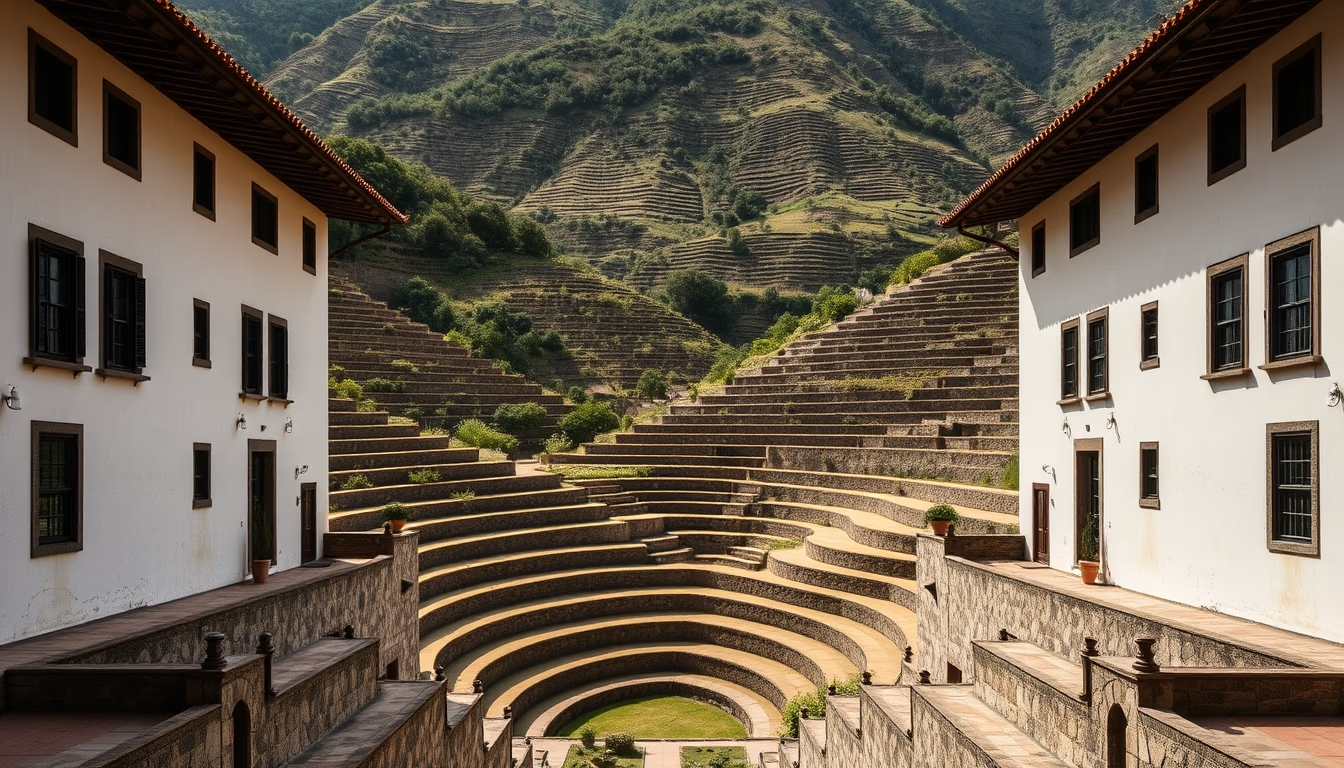
The terraces of the Douro Valley in Portugal are a remarkable example of agricultural engineering and a UNESCO World Heritage cultural landscape.
About this subject
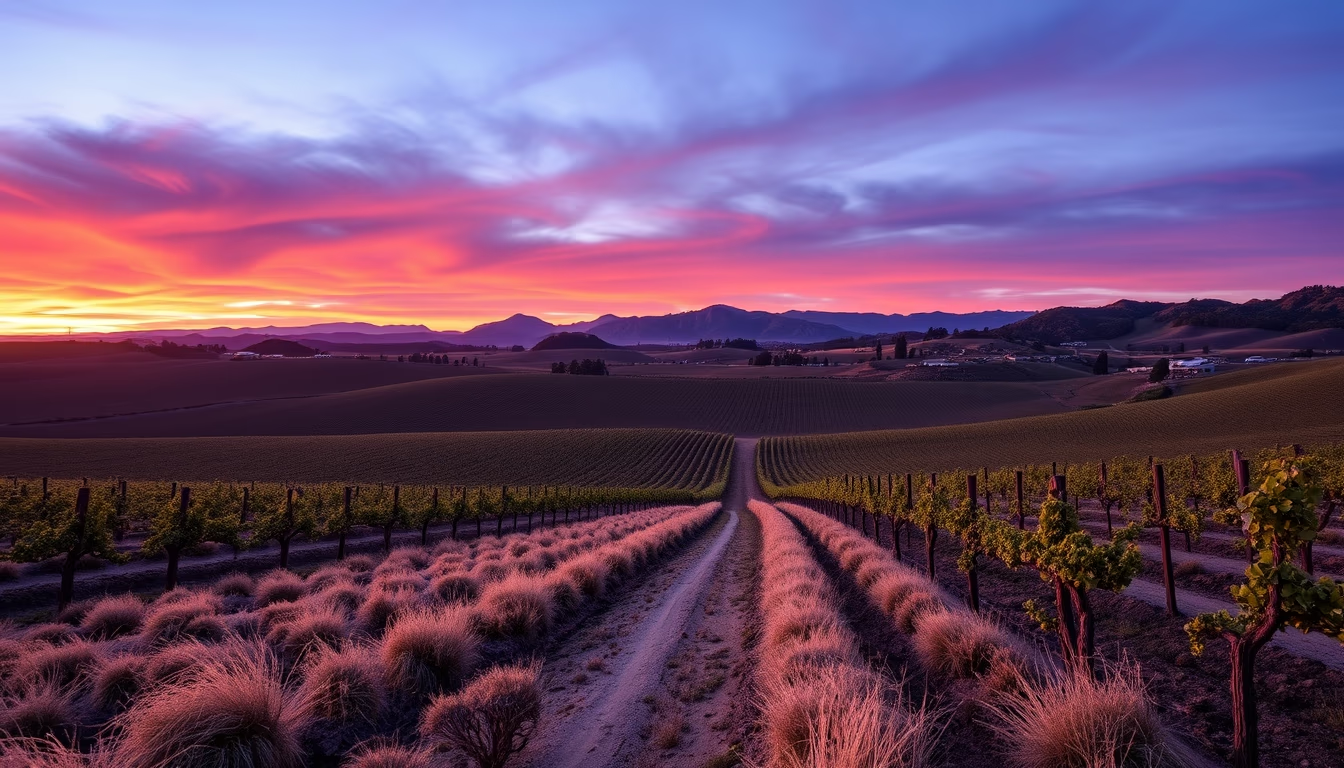
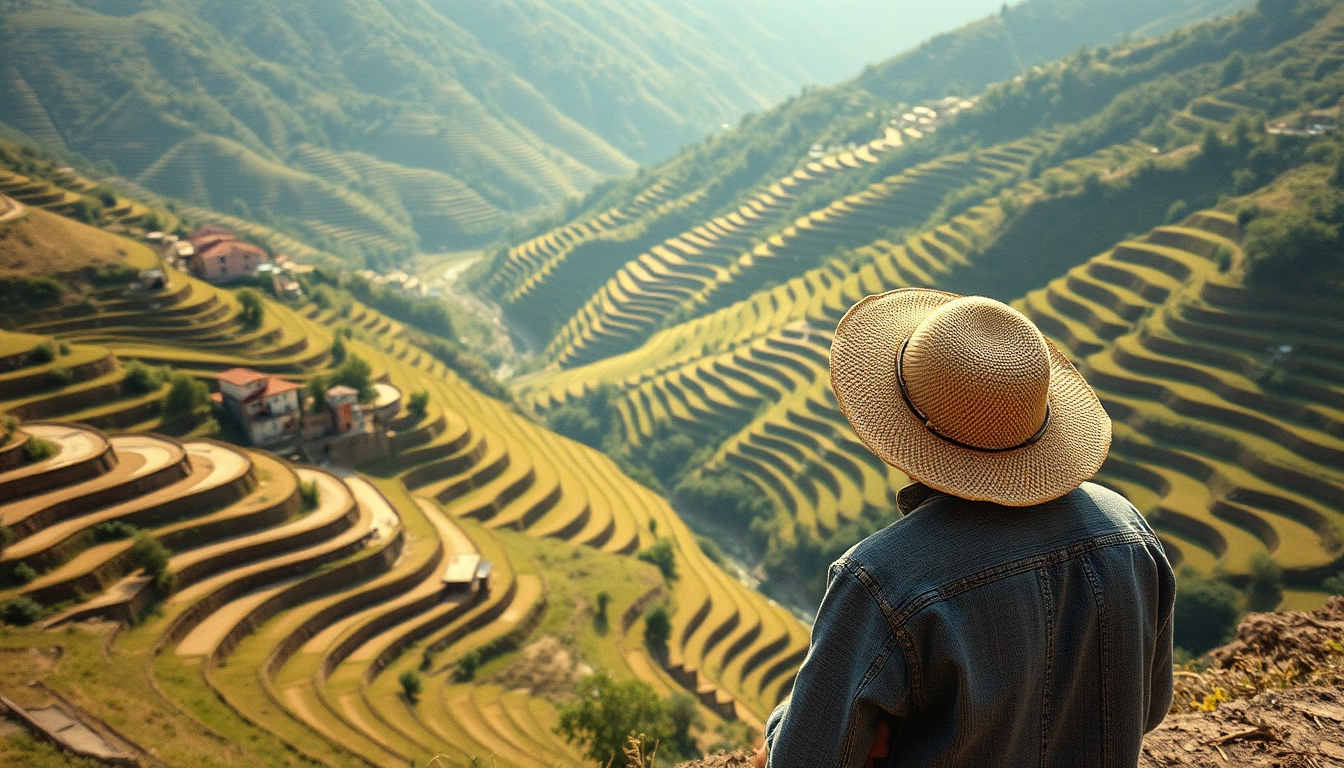
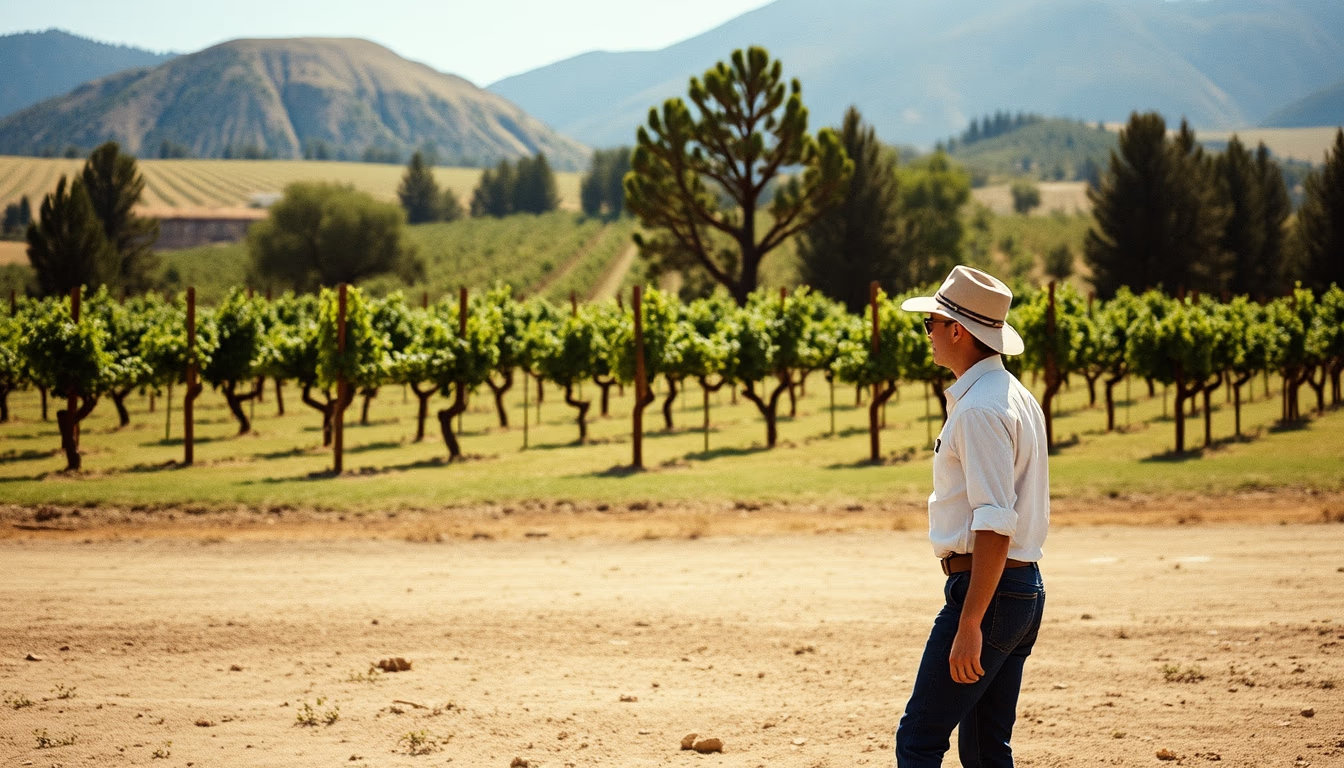
The Douro Valley in northern Portugal is one of the oldest wine regions in the world, designated a UNESCO World Heritage Site in 2001. The terraces that define its landscape were carved over centuries to allow vine cultivation on steep, schist-covered slopes. This terracing technique not only maximizes sun exposure for the vines but also controls soil erosion and makes the most of scarce water in a Mediterranean climate marked by hot, dry summers.
Construction of the terraces dates back to the 18th century, when the region gained international fame for producing Port wine. The schist walls, built by hand by generations of farmers, form a unique mosaic spanning over 40,000 hectares along the Douro River and its tributaries. Each plot is a testament to human labor adapted to rugged geography, creating one of the world's most impressive examples of terraced vineyard landscapes.
Today, the Douro terraces face challenges such as rural depopulation and limited mechanization due to steep slopes. Yet they continue to produce excellent wines, including both Port and still wines under the Douro DOC designation. The scenic beauty of the terraces, especially in the Upper Douro region, attracts visitors worldwide who travel the National Road 222 or cruise the river to appreciate this living heritage.
Interestingly, terrace maintenance requires orally transmitted knowledge, and many century-old vines are still tended by hand. The Douro is also one of the few places where schist, a metamorphic rock, is the dominant substrate, imparting minerality to the wines. This combination of tradition, geology, and human ingenuity makes the Douro terraces a global icon of wine culture.
Frequently Asked Questions
Why is the Douro Valley a UNESCO World Heritage site?
The Douro Valley was inscribed in 2001 as a World Heritage site for being an outstanding example of a cultural landscape shaped by winegrowing over two millennia, featuring terraces, estates, and villages that reflect a harmonious human-environment relationship.
How are the Douro terraces built?
The terraces are built with hand-stacked schist walls following the contour of the slopes. Vines are planted on narrow ledges that follow the gradient, enabling cultivation on steep terrain.
What wines are produced in the Douro Valley?
The region produces the famous fortified Port wine as well as still red and white wines under the Douro DOC. Common grape varieties include Touriga Nacional, Touriga Franca, and Tinta Roriz.
Direct URL
https://pub-c7d6a6ea828543ac903a74a341ccb2e1.r2.dev/imagens/douro-valley-terraces-architectural-photography-fresh15.avifHow to credit
Include a visible link back to UtilizAí. Copy one of the snippets below:
<a href="https://xn--utiliza-eza.com/en/midia/imagens/douro-valley-terraces-architectural-photography-fresh15">Douro valley terraces</a> by <a href="https://xn--utiliza-eza.com">UtilizAí</a>, licensed under <a href="https://creativecommons.org/licenses/by/4.0/">CC BY 4.0</a>.
[Douro valley terraces](https://xn--utiliza-eza.com/en/midia/imagens/douro-valley-terraces-architectural-photography-fresh15) by [UtilizAí](https://xn--utiliza-eza.com), CC BY 4.0
License: CC-BY-4.0