Dolphins jumping wave
1344×768 · AVIF · CC BY 4.0
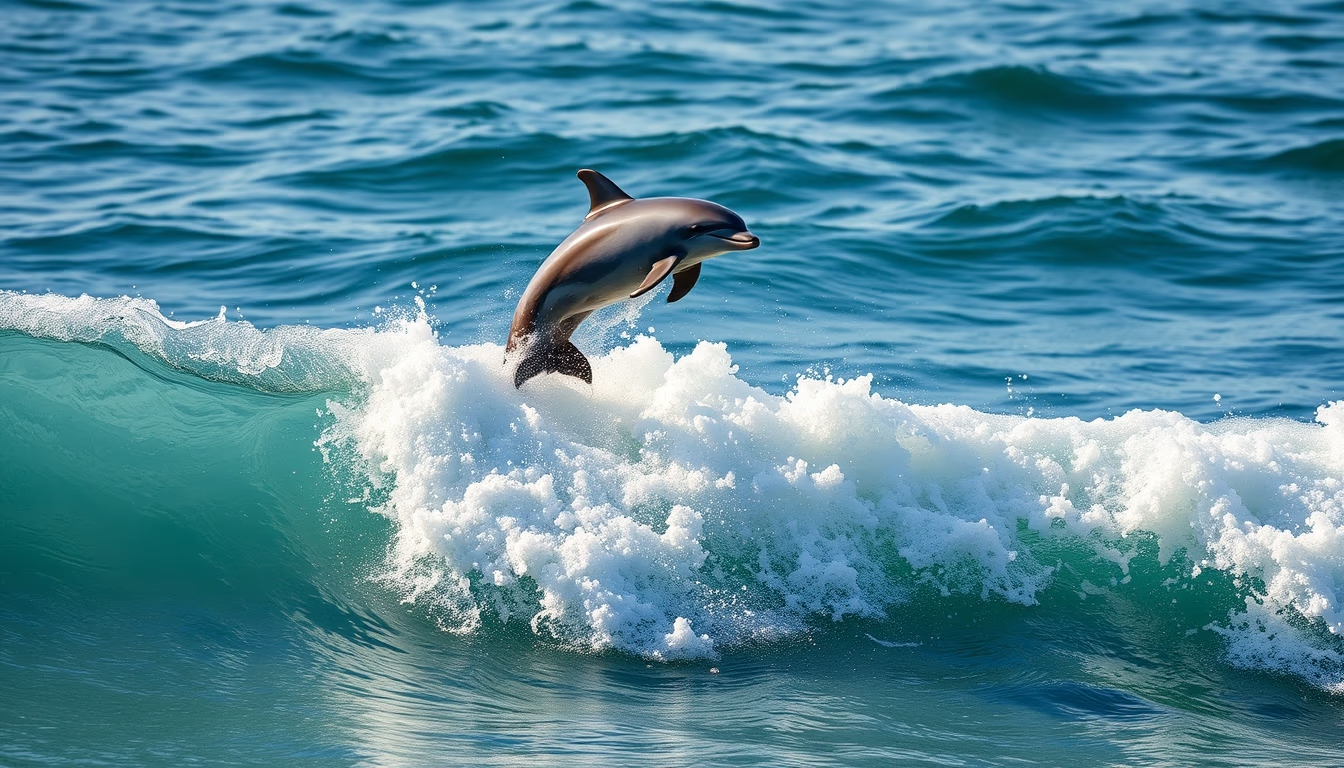
Dolphins jumping waves in the ocean: acrobatic and social behavior of these intelligent marine mammals.
About this subject
Dolphins are renowned for their agility and playful behavior, often seen leaping over waves. This behavior, known as wave riding or porpoising, is not just an efficient mode of travel but also a social and communication activity. Studies indicate that dolphins leap to conserve energy while swimming, reducing drag as they project through the air. Additionally, leaps can serve as visual signals among pod members, helping coordinate movements or express excitement.
Bottlenose dolphins (Tursiops truncatus) are one of the most common and studied species, found in tropical and temperate waters worldwide, including the Brazilian coast. In Brazil, they are spotted in regions like Fernando de Noronha, Abrolhos, and the coast of São Paulo. They live in complex social groups called pods, ranging from a few individuals to hundreds. The social structure is matriarchal, with lasting bonds between females and their calves.
Dolphins have a highly developed echolocation system, emitting clicks that reflect off objects, enabling them to navigate and hunt even in murky waters. Their diet mainly consists of fish and squid. The ability to leap is also linked to hunting: by jumping, they can locate fish schools or seabirds indicating food presence.
Interacting with waves is part of dolphins' playful repertoire, often surfing on boat wakes or natural waves. This behavior is observed in captivity and the wild, indicating that play is important for social and cognitive development. Unfortunately, human activities such as noise pollution, fishing nets, and vessel collisions threaten these populations. In Brazil, the Spinner Dolphin Project and other initiatives work on dolphin conservation.
Frequently Asked Questions
Why do dolphins jump over waves?
Dolphins jump to conserve energy, reduce drag while swimming, communicate visually with other dolphins, and locate food. It is also a playful and social behavior.
Where can I see dolphins jumping in Brazil?
Locations such as Fernando de Noronha, the Abrolhos Archipelago, and the coast of São Paulo are common spots for bottlenose dolphins. Responsible boat tours and observation are recommended.
Are dolphins threatened in Brazil?
Yes, they face threats like noise pollution, fishing nets, and vessel collisions. Conservation projects such as the Spinner Dolphin Project work to protect these animals.
Direct URL
https://pub-c7d6a6ea828543ac903a74a341ccb2e1.r2.dev/imagens/dolphins-jumping-wave-magazine-editorial.avifHow to credit
Include a visible link back to UtilizAí. Copy one of the snippets below:
<a href="https://xn--utiliza-eza.com/en/midia/imagens/dolphins-jumping-wave-magazine-editorial">Dolphins jumping wave</a> by <a href="https://xn--utiliza-eza.com">UtilizAí</a>, licensed under <a href="https://creativecommons.org/licenses/by/4.0/">CC BY 4.0</a>.
[Dolphins jumping wave](https://xn--utiliza-eza.com/en/midia/imagens/dolphins-jumping-wave-magazine-editorial) by [UtilizAí](https://xn--utiliza-eza.com), CC BY 4.0
License: CC-BY-4.0