Dna helix glowing blue
1344×768 · AVIF · CC BY 4.0
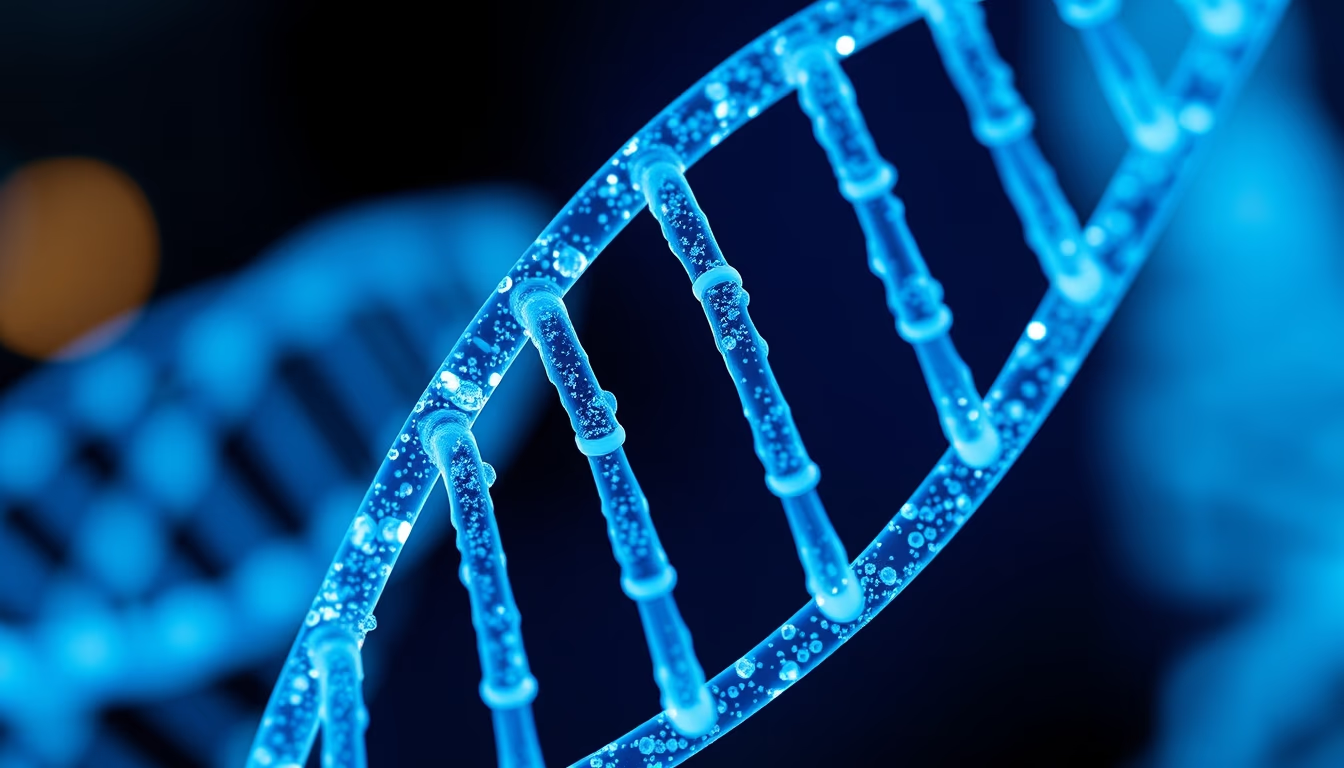
The DNA double helix is the fundamental structure storing the genetic code of all living beings, discovered in 1953 by Watson and Crick based on Rosalind Franklin's data.
About this subject
DNA (deoxyribonucleic acid) is a molecule shaped as a double helix that carries the genetic instructions for the development, functioning, and reproduction of all living organisms and many viruses. Its structure was elucidated in 1953 by James Watson and Francis Crick at the Cavendish Laboratory in England, using X‑ray diffraction data obtained by Rosalind Franklin and Maurice Wilkins. This discovery earned the 1962 Nobel Prize and revolutionized biology.
The double helix consists of two strands of nucleotides wound around each other. Each nucleotide contains a sugar (deoxyribose), a phosphate group, and a nitrogenous base (adenine, thymine, cytosine, or guanine). The bases pair specifically: adenine with thymine (two hydrogen bonds) and cytosine with guanine (three hydrogen bonds). This complementary pairing is the basis of replication and genetic information transmission.
DNA is organized into chromosomes within the nucleus of eukaryotic cells, but it is also present in mitochondria and chloroplasts. In prokaryotes, DNA is circular and resides in the cytoplasm. The sequence of bases along the molecule determines the sequence of amino acids in proteins, via the genetic code. Mutations in this sequence can cause diseases but also drive evolution.
Today, techniques such as PCR, sequencing, and gene editing (CRISPR) rely on knowledge of DNA structure. The Human Genome Project sequenced the entire human DNA, paving the way for personalized medicine. The image of the double helix has become an icon of modern science, representing life in its most fundamental form.
Frequently Asked Questions
What does the DNA double helix mean?
The double helix describes the three‑dimensional structure of DNA, formed by two nucleotide strands coiled around a common axis. This configuration allows compact packaging of genetic material and accurate replication during cell division.
Why is base pairing specific?
Base pairing is specific due to hydrogen bond formation: adenine pairs with thymine via two bonds, and cytosine pairs with guanine via three bonds. This complementarity ensures fidelity in DNA replication and transcription.
Who discovered the structure of DNA and how?
Watson and Crick proposed the double‑helix model in 1953, based on X‑ray diffraction data from Rosalind Franklin and Maurice Wilkins. They published the model in Nature, a landmark in molecular biology.
Direct URL
https://pub-c7d6a6ea828543ac903a74a341ccb2e1.r2.dev/imagens/dna-helix-glowing-blue-tilt-shift-miniature-p2.avifHow to credit
Include a visible link back to UtilizAí. Copy one of the snippets below:
<a href="https://xn--utiliza-eza.com/en/midia/imagens/dna-helix-glowing-blue-tilt-shift-miniature-p2">Dna helix glowing blue</a> by <a href="https://xn--utiliza-eza.com">UtilizAí</a>, licensed under <a href="https://creativecommons.org/licenses/by/4.0/">CC BY 4.0</a>.
[Dna helix glowing blue](https://xn--utiliza-eza.com/en/midia/imagens/dna-helix-glowing-blue-tilt-shift-miniature-p2) by [UtilizAí](https://xn--utiliza-eza.com), CC BY 4.0
License: CC-BY-4.0