Dna helix glowing blue
1344×768 · AVIF · CC BY 4.0
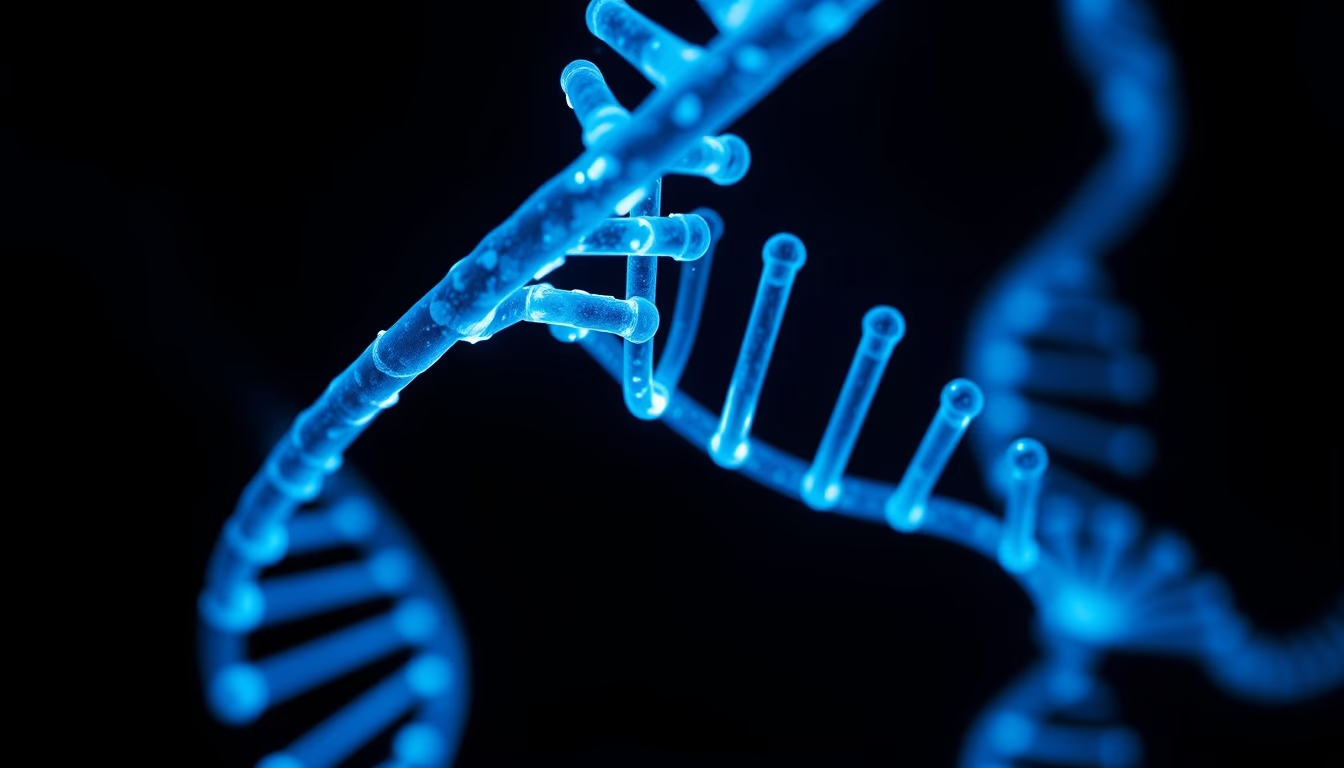
The DNA double helix is the molecule that stores genetic information in all living organisms, revealed by Watson and Crick in 1953.
About this subject
Deoxyribonucleic acid (DNA) is a molecule found in the nucleus of all living cells and in some viruses. Its double helix structure, discovered by James Watson and Francis Crick in 1953 based on Rosalind Franklin's data, consists of two nucleotide strands twisted around each other. Each nucleotide contains a phosphate group, a deoxyribose sugar, and a nitrogenous base: adenine (A), thymine (T), cytosine (C), or guanine (G). Bases pair specifically (A with T, C with G), forming rungs that hold the helices together.
DNA carries the genetic code that determines traits such as eye color, height, and predispositions to diseases. In the human genome, there are about 3 billion base pairs distributed across 23 pairs of chromosomes. Only about 2% of this DNA codes for proteins; the rest includes regulatory regions and non-coding sequences, once called 'junk DNA' but now known to be important in gene regulation.
DNA replication occurs during cell division, ensuring each daughter cell receives an identical copy. Mutations, which are changes in the base sequence, can arise from replication errors or external agents like radiation and chemicals. Some mutations are neutral or beneficial, but others can cause diseases such as cancer. Modern techniques like CRISPR allow precise editing of DNA, opening possibilities in medicine and agriculture.
Interestingly, the structure of DNA is highly conserved, but variations such as mitochondrial DNA (inherited only from the mother) and DNA from extremophiles reveal amazing adaptations. The DNA molecule is so thin that it can fit inside a cell nucleus, yet if stretched out, it reaches about 2 meters in length in each of our cells.
Frequently Asked Questions
What is the DNA double helix?
The double helix is the three-dimensional structure of DNA, formed by two intertwined strands of nucleotides. It was discovered by Watson and Crick in 1953 and is essential for storing and transmitting genetic information.
How do nucleotides pair in DNA?
Nitrogenous bases pair specifically: adenine (A) with thymine (T) and cytosine (C) with guanine (G). This pairing, held by hydrogen bonds, maintains the stability of the double helix.
How large is the human genome?
The human genome contains approximately 3 billion base pairs, distributed across 23 pairs of chromosomes. Only about 2% codes for proteins; the rest has regulatory functions.
Direct URL
https://pub-c7d6a6ea828543ac903a74a341ccb2e1.r2.dev/imagens/dna-helix-glowing-blue-studio-editorial-portrait-p5.avifHow to credit
Include a visible link back to UtilizAí. Copy one of the snippets below:
<a href="https://xn--utiliza-eza.com/en/midia/imagens/dna-helix-glowing-blue-studio-editorial-portrait-p5">Dna helix glowing blue</a> by <a href="https://xn--utiliza-eza.com">UtilizAí</a>, licensed under <a href="https://creativecommons.org/licenses/by/4.0/">CC BY 4.0</a>.
[Dna helix glowing blue](https://xn--utiliza-eza.com/en/midia/imagens/dna-helix-glowing-blue-studio-editorial-portrait-p5) by [UtilizAí](https://xn--utiliza-eza.com), CC BY 4.0
License: CC-BY-4.0