Dna helix glowing blue
1344×768 · AVIF · CC BY 4.0
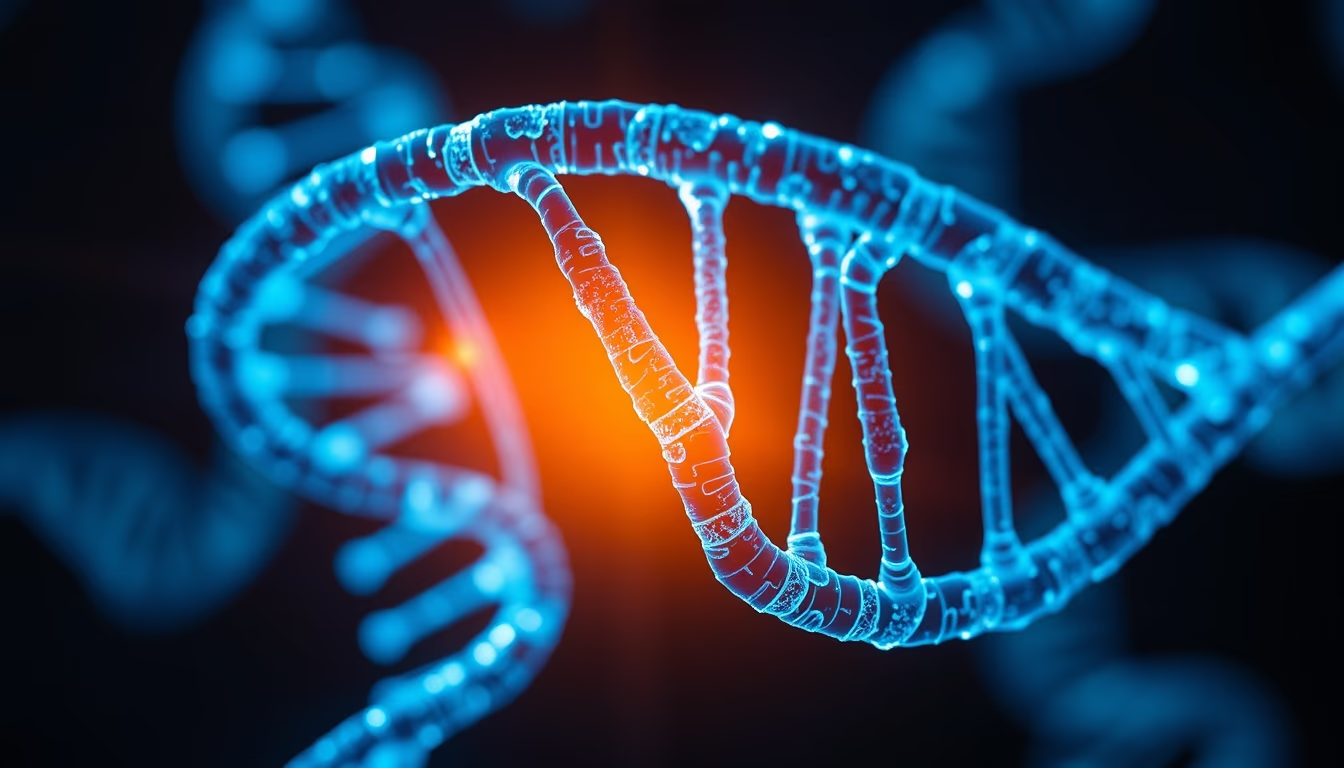
The DNA double helix is the fundamental structure that stores genetic information in all living organisms, discovered in 1953 by Watson and Crick.
About this subject
The DNA molecule (deoxyribonucleic acid) has a double helix structure, composed of two nucleotide strands that coil around each other. Each nucleotide contains a sugar (deoxyribose), a phosphate group, and a nitrogenous base (adenine, thymine, cytosine, or guanine). The bases pair specifically: adenine with thymine and cytosine with guanine, held together by hydrogen bonds. This pairing is key to DNA replication and transcription.
The discovery of the DNA structure by James Watson and Francis Crick in 1953, based on X-ray diffraction data from Rosalind Franklin and Maurice Wilkins, revolutionized biology. They published the model in the journal Nature in April of that year, describing a helix with two antiparallel strands, a diameter of 2 nanometers, and a distance of 0.34 nm between base pairs. A complete turn of the helix is about 3.4 nm, encompassing roughly 10 base pairs.
In the human body, DNA is organized into 23 pairs of chromosomes inside the cell nucleus. If stretched out, the DNA from a single cell would be about 2 meters long, totaling approximately 3 billion base pairs. The sequence of these bases encodes all the proteins necessary for life. The fidelity of DNA replication is maintained by enzymes such as DNA polymerase, which corrects errors during copying.
DNA goes beyond classical genetics. Modern techniques like CRISPR-Cas9 allow precise gene editing, while forensic DNA analysis helps solve crimes and identify individuals. The double helix structure has also inspired advances in nanotechnology, such as DNA origami for creating nanoscale structures. The iconic representation of a glowing blue helix has become a universal symbol of science and life.
Frequently Asked Questions
What does the double helix structure of DNA mean?
The double helix is the three-dimensional shape of DNA, where two nucleotide strands twist around each other. This structure allows compact storage of genetic information and facilitates replication and transcription.
Who discovered the structure of DNA?
James Watson and Francis Crick are credited with the discovery in 1953, but the X-ray crystallography work of Rosalind Franklin and Maurice Wilkins was essential for the model.
Why is the A-T and C-G base pairing important?
The specific pairing ensures accurate copying of DNA sequences during replication. Adenine always pairs with thymine, and cytosine with guanine, forming complementary base pairs.
Direct URL
https://pub-c7d6a6ea828543ac903a74a341ccb2e1.r2.dev/imagens/dna-helix-glowing-blue-documentary-photography-p3.avifHow to credit
Include a visible link back to UtilizAí. Copy one of the snippets below:
<a href="https://xn--utiliza-eza.com/en/midia/imagens/dna-helix-glowing-blue-documentary-photography-p3">Dna helix glowing blue</a> by <a href="https://xn--utiliza-eza.com">UtilizAí</a>, licensed under <a href="https://creativecommons.org/licenses/by/4.0/">CC BY 4.0</a>.
[Dna helix glowing blue](https://xn--utiliza-eza.com/en/midia/imagens/dna-helix-glowing-blue-documentary-photography-p3) by [UtilizAí](https://xn--utiliza-eza.com), CC BY 4.0
License: CC-BY-4.0