Dna helix glowing blue
1344×768 · AVIF · CC BY 4.0
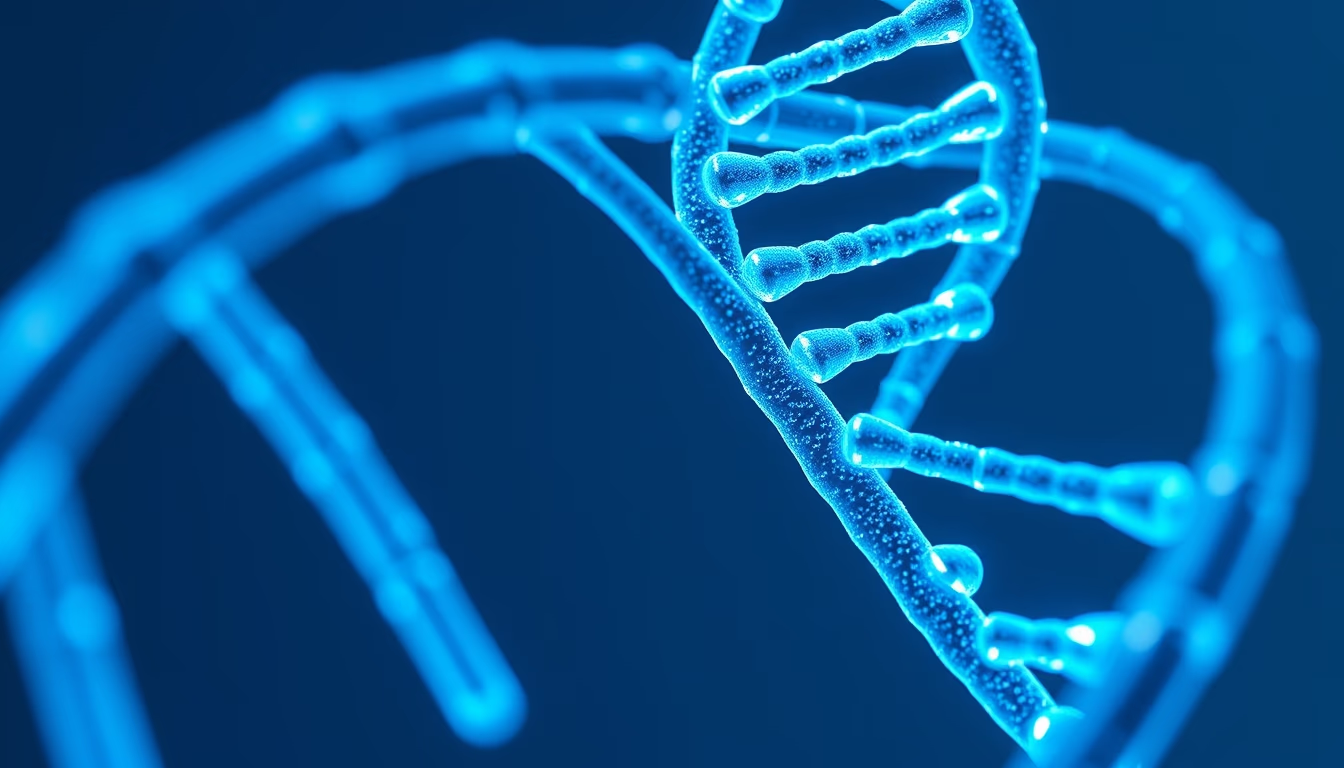
Double helix of DNA, the molecule that stores the genetic information of all living beings, depicted with a blue glow.
About this subject
The double helix structure of DNA was elucidated in 1953 by James Watson and Francis Crick, based on X-ray diffraction data from Rosalind Franklin. DNA is a polymer composed of nucleotides, each containing a phosphate group, a deoxyribose sugar, and a nitrogenous base. The four bases are adenine, thymine, cytosine, and guanine, which pair specifically (A-T and C-G) via hydrogen bonds. This double helix is about 2 nanometers in diameter and has a complete helical turn of 3.4 nanometers, containing approximately 10 base pairs per turn.
The human genome contains about 3 billion base pairs distributed across 23 pairs of chromosomes. The sequence of these bases provides instructions for protein synthesis and organism development. DNA replication is semiconservative: each original strand serves as a template for a new complementary strand, ensuring faithful transmission of genetic information during cell division.
Beyond its fundamental biological role, DNA is widely used in biotechnology and medicine. Techniques such as PCR (polymerase chain reaction) allow amplification of specific DNA segments for disease diagnosis, forensic studies, and paternity testing. The Human Genome Project, completed in 2003, paved the way for personalized medicine and understanding the genetic basis of complex diseases. In research, fluorescent markers like GFP (green fluorescent protein) are often used to visualize DNA and cellular processes in real time, giving rise to images like the blue glowing representation of the DNA helix.
Frequently Asked Questions
What is the double helix of DNA?
The double helix is the three-dimensional structure of DNA, consisting of two nucleotide strands wound around each other, held together by hydrogen bonds between complementary base pairs adenine-thymine and cytosine-guanine.
Who discovered the structure of DNA?
James Watson and Francis Crick proposed the double helix model in 1953, based on data from Rosalind Franklin and Maurice Wilkins. They won the Nobel Prize in Physiology or Medicine in 1962.
How is DNA used in medical diagnostics?
DNA is analyzed using techniques like PCR and sequencing to detect genetic mutations, identify pathogens, and determine disease predispositions. This enables accurate diagnoses and personalized treatments.
Direct URL
https://pub-c7d6a6ea828543ac903a74a341ccb2e1.r2.dev/imagens/dna-helix-glowing-blue-commercial-product-photography-p11.avifHow to credit
Include a visible link back to UtilizAí. Copy one of the snippets below:
<a href="https://xn--utiliza-eza.com/en/midia/imagens/dna-helix-glowing-blue-commercial-product-photography-p11">Dna helix glowing blue</a> by <a href="https://xn--utiliza-eza.com">UtilizAí</a>, licensed under <a href="https://creativecommons.org/licenses/by/4.0/">CC BY 4.0</a>.
[Dna helix glowing blue](https://xn--utiliza-eza.com/en/midia/imagens/dna-helix-glowing-blue-commercial-product-photography-p11) by [UtilizAí](https://xn--utiliza-eza.com), CC BY 4.0
License: CC-BY-4.0