Dna double helix 3D render
1344×768 · AVIF · CC BY 4.0
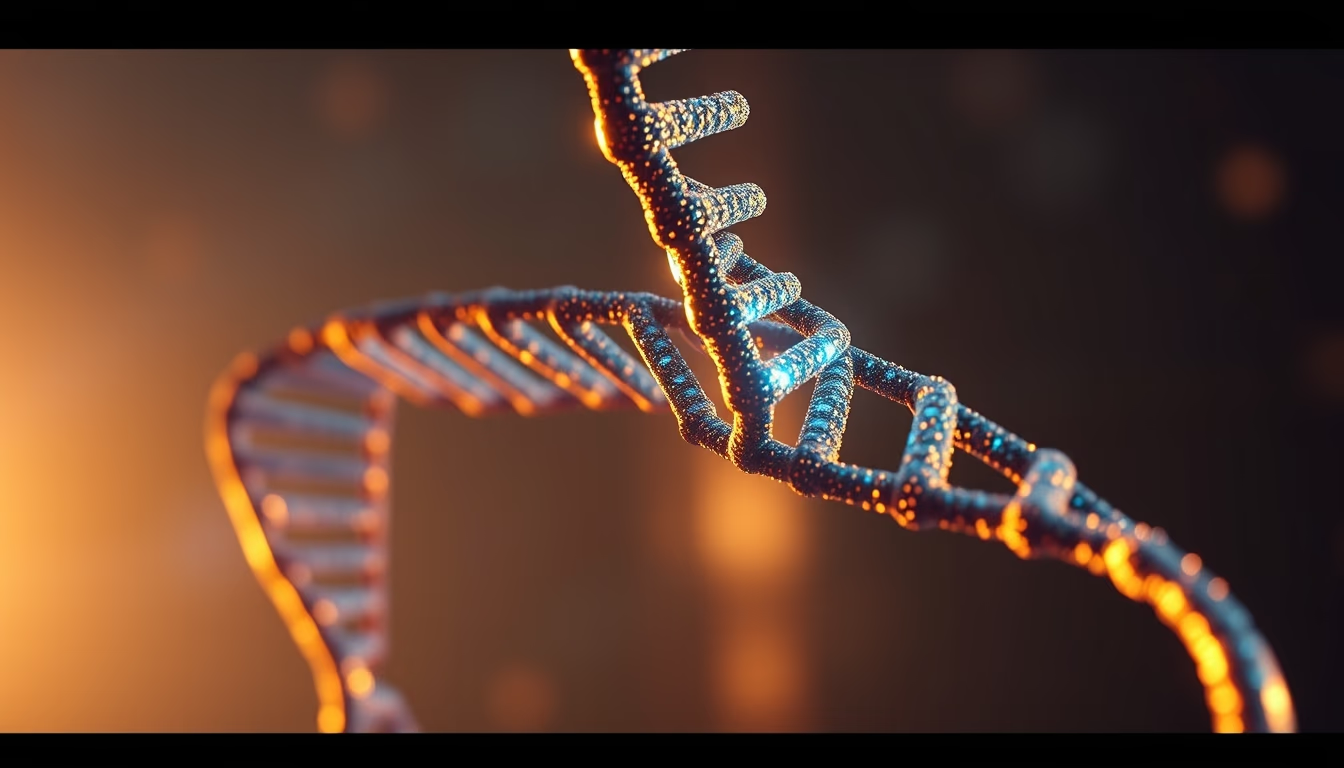
The DNA double helix is the molecular structure that stores and transmits genetic information in all living organisms.
About this subject
The structure of the DNA double helix was discovered by James Watson and Francis Crick in 1953, based on X-ray diffraction data obtained by Rosalind Franklin and Maurice Wilkins. This discovery revolutionized molecular biology and paved the way for understanding how genetic information is stored and replicated. DNA is composed of two nucleotide chains that coil around each other, forming a spiral staircase. Each rung of the ladder is formed by nitrogenous base pairs: adenine (A) pairs with thymine (T), and cytosine (C) pairs with guanine (G). This complementarity is essential for DNA replication and faithful transmission of genetic information during cell division.
The double helix is not a static structure; it can unwind and rewind during processes such as transcription and replication. Helix stability is maintained by hydrogen bonds between bases and hydrophobic interactions between stacked base pairs. Additionally, DNA structure can vary, such as A, B, and Z forms, which differ in parameters like diameter and helix pitch. The B form is most common under physiological conditions.
Human DNA contains about 3 billion base pairs, organized into 23 pairs of chromosomes. If stretched, the DNA from a single human cell would be about 2 meters long. To fit inside the cell nucleus, DNA is highly compacted with the help of histone proteins, forming chromatin. Mutations in DNA can lead to genetic diseases and cancer, but they are also the basis of evolution, generating genetic variation.
The three-dimensional representation of the double helix is often used in educational and scientific contexts to illustrate DNA structure. 3D models help visualize the helix twist and base pair positioning. Since its discovery, the double helix image has become an icon of modern science, symbolizing genetics and biotechnology.
Frequently Asked Questions
What is the DNA double helix?
The double helix is the three-dimensional structure of DNA, formed by two nucleotide strands coiled around each other, resembling a spiral staircase.
Who discovered the structure of DNA?
James Watson and Francis Crick are credited with the discovery, based on data from Rosalind Franklin and Maurice Wilkins.
Why are the A-T and C-G base pairs important?
The complementarity between adenine-thymine and cytosine-guanine allows accurate DNA replication and transmission of genetic information.
Direct URL
https://pub-c7d6a6ea828543ac903a74a341ccb2e1.r2.dev/imagens/dna-double-helix-3d-render-cinematic-wide-shot-v2.avifHow to credit
Include a visible link back to UtilizAí. Copy one of the snippets below:
<a href="https://xn--utiliza-eza.com/en/midia/imagens/dna-double-helix-3d-render-cinematic-wide-shot-v2">Dna double helix 3D render</a> by <a href="https://xn--utiliza-eza.com">UtilizAí</a>, licensed under <a href="https://creativecommons.org/licenses/by/4.0/">CC BY 4.0</a>.
[Dna double helix 3D render](https://xn--utiliza-eza.com/en/midia/imagens/dna-double-helix-3d-render-cinematic-wide-shot-v2) by [UtilizAí](https://xn--utiliza-eza.com), CC BY 4.0
License: CC-BY-4.0