Didgeridoo aboriginal
1344×768 · AVIF · CC BY 4.0
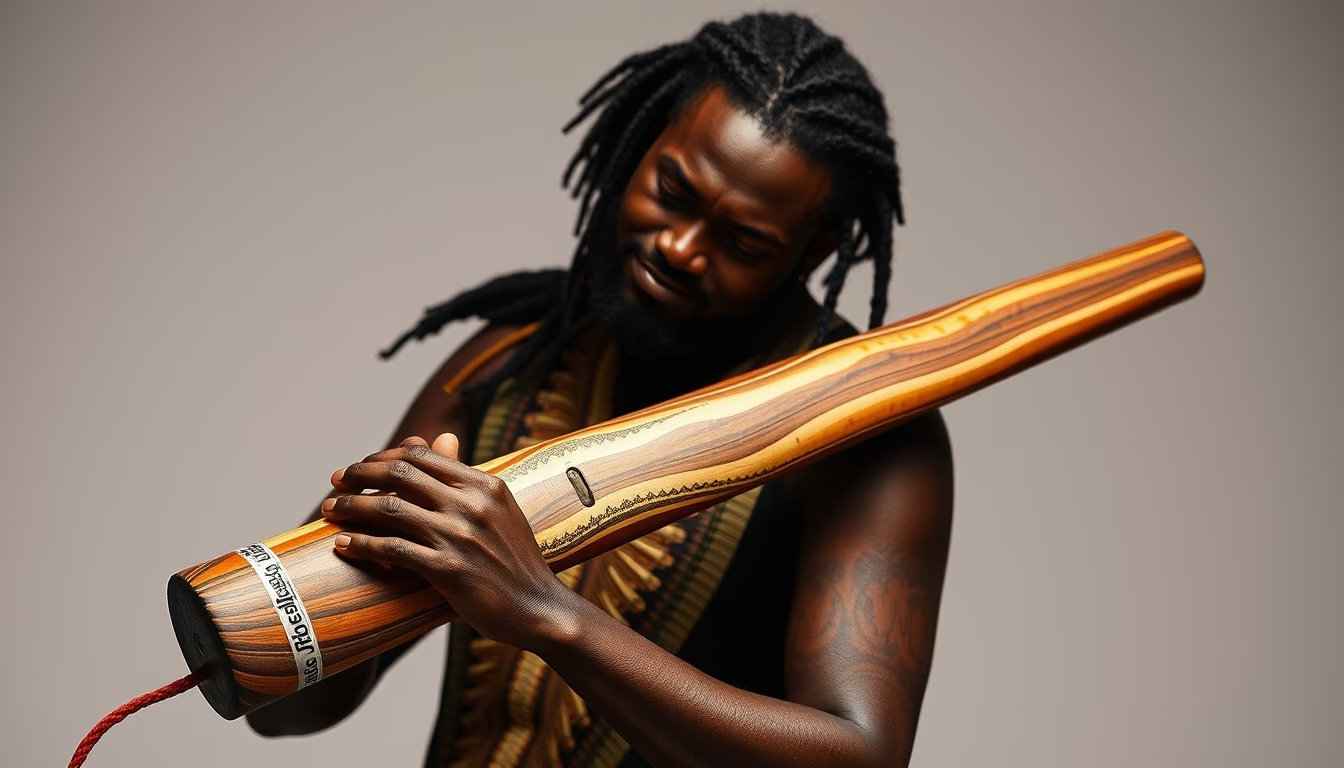
The didgeridoo is an ancient wind instrument of the Australian Aborigines, made from hollowed eucalyptus trunks and used in rituals for thousands of years.
About this subject
The didgeridoo, also known as yidaki or didjeridu, is a wind instrument originating from the Aboriginal peoples of northern Australia, especially Arnhem Land. Traditionally, it is crafted from eucalyptus branches hollowed out by termites, a natural process that can take years. The artisan selects the appropriate branch, removes the bark, and shapes the end to form a mouthpiece, often sealed with beeswax. Lengths range from 1 to 3 meters, directly affecting the pitch. The most distinctive playing technique is circular breathing, allowing the musician to produce a continuous drone by inhaling through the nose while exhaling stored air from the cheeks. This method is technically challenging and requires years of practice. Culturally, the didgeridoo is deeply connected to the Dreamtime, the Aboriginal cosmology explaining the world's creation. In ceremonies, it accompanies songs and dances, mimicking natural sounds like animals and wind, with each performance recounting an ancestral story. In recent centuries, the instrument gained global popularity, being incorporated into world music, jazz, and even rock. However, its cultural appropriation is debated, as many Aboriginal groups consider the didgeridoo sacred and traditionally restricted to initiated men, raising controversies about its use by women and non-indigenous people. Contemporary production also includes fiberglass or PVC versions, but traditional authentic eucalyptus instruments are highly prized by collectors and serious musicians.
Frequently Asked Questions
How is the didgeridoo traditionally made?
The traditional didgeridoo is made from eucalyptus trunks naturally hollowed by termites. The artisan selects the branch, removes the bark, and shapes the mouthpiece with beeswax. Length ranges from 1 to 3 meters.
What is the cultural significance of the didgeridoo to Aboriginal people?
The didgeridoo is sacred in the Aboriginal Dreamtime. It is used in ceremonies to tell ancestral stories, mimic natural sounds, and accompany songs and dances. Traditionally, it is only played by initiated men.
Is circular breathing the only way to play the didgeridoo?
Circular breathing is the main technique to produce a continuous drone, but beginners can play with pauses. Masters also use rhythmic variations and vocal overlays.
Direct URL
https://pub-c7d6a6ea828543ac903a74a341ccb2e1.r2.dev/imagens/didgeridoo-aboriginal-studio-still-life-p10.avifHow to credit
Include a visible link back to UtilizAí. Copy one of the snippets below:
<a href="https://xn--utiliza-eza.com/en/midia/imagens/didgeridoo-aboriginal-studio-still-life-p10">Didgeridoo aboriginal</a> by <a href="https://xn--utiliza-eza.com">UtilizAí</a>, licensed under <a href="https://creativecommons.org/licenses/by/4.0/">CC BY 4.0</a>.
[Didgeridoo aboriginal](https://xn--utiliza-eza.com/en/midia/imagens/didgeridoo-aboriginal-studio-still-life-p10) by [UtilizAí](https://xn--utiliza-eza.com), CC BY 4.0
License: CC-BY-4.0