Didgeridoo aboriginal
1344×768 · AVIF · CC BY 4.0
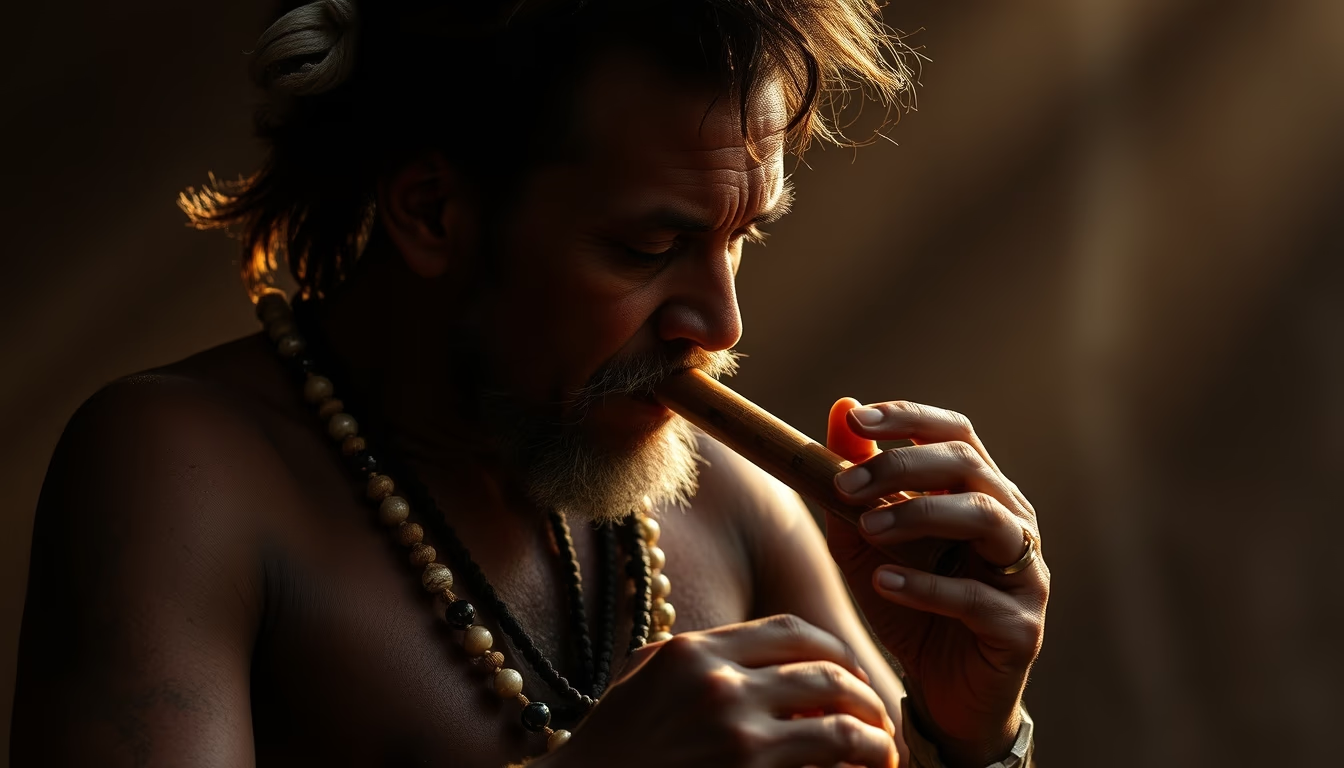
The didgeridoo is an ancient wind instrument of Australian Aboriginal people, made from hollowed eucalyptus trunks, producing a deep, resonant drone.
About this subject
The didgeridoo, also known as yidaki in northeastern Australia, is an ancient wind instrument used by Australian Aboriginal peoples for over 1,500 years, based on archaeological evidence and rock art. Traditionally made from hollowed eucalyptus trunks or branches excavated by termites, its length varies from 1 to 3 meters, directly influencing the characteristic deep drone. The player employs circular breathing to sustain the sound while inhaling through the nose, a technique requiring years of practice and central to ceremonial performances.
Beyond its musical role, the didgeridoo holds profound cultural and spiritual significance for Aboriginal people, used in initiation rites, funerals, and Dreamtime celebrations, the cosmology explaining land and being origins. Each clan has distinct playing styles and rhythmic patterns mimicking natural sounds like bird wings or flowing water. The instrument's painting with totemic symbols and earthy colors also carries ancestral meanings, narrating community stories.
Since the 20th century, the didgeridoo gained global popularity, incorporated into world music, jazz, and even rock by artists like Aboriginal musician William Barton and non-Indigenous bands. However, its use outside cultural context sparks debates on appropriation, leading many communities to restrict manufacture and performance to people of Aboriginal lineage. Conservation of traditional techniques and natural materials faces challenges from deforestation and commercial exploitation. UNESCO recognizes didgeridoo art as intangible cultural heritage, encouraging oral transmission across generations.
Frequently Asked Questions
What is the origin of the didgeridoo?
The didgeridoo is a wind instrument originating from the Aboriginal peoples of northern Australia, with evidence of use dating back over 1,500 years. Rock art and archaeological deposits indicate its presence in traditional ceremonies and rituals.
How is a traditional didgeridoo made?
Traditionally, a didgeridoo is made from hollow eucalyptus trunks excavated by termites, which are cleaned, shaped, and decorated with ritual paintings. The length and diameter of the trunk determine the instrument's pitch.
Can non-Aboriginal people play the didgeridoo?
This is controversial. Many Aboriginal groups consider the didgeridoo sacred and restrict its use to people of their culture. However, outside Australia, it is often played by non-Indigenous people, sparking debates about cultural appropriation.
Direct URL
https://pub-c7d6a6ea828543ac903a74a341ccb2e1.r2.dev/imagens/didgeridoo-aboriginal-magazine-editorial-p2.avifHow to credit
Include a visible link back to UtilizAí. Copy one of the snippets below:
<a href="https://xn--utiliza-eza.com/en/midia/imagens/didgeridoo-aboriginal-magazine-editorial-p2">Didgeridoo aboriginal</a> by <a href="https://xn--utiliza-eza.com">UtilizAí</a>, licensed under <a href="https://creativecommons.org/licenses/by/4.0/">CC BY 4.0</a>.
[Didgeridoo aboriginal](https://xn--utiliza-eza.com/en/midia/imagens/didgeridoo-aboriginal-magazine-editorial-p2) by [UtilizAí](https://xn--utiliza-eza.com), CC BY 4.0
License: CC-BY-4.0