Didgeridoo aboriginal
1344×768 · AVIF · CC BY 4.0
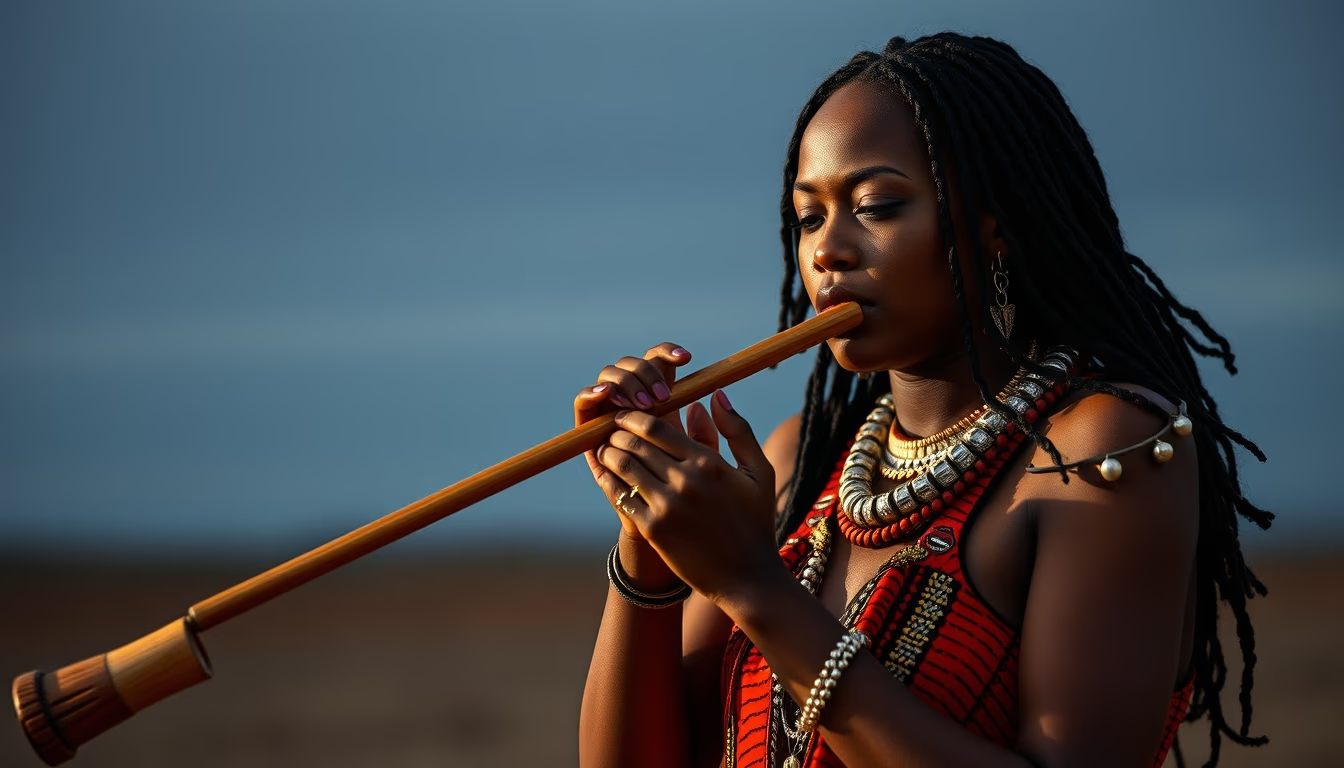
The didgeridoo is an ancient wind instrument of the Aboriginal Australians, made from hollow eucalyptus trunks naturally excavated by termites.
About this subject
The didgeridoo, also known as yidaki in Yolngu languages, is a wind instrument typical of Aboriginal peoples in northern Australia, especially Arnhem Land. Its origins date back thousands of years, making it one of the oldest wind instruments still in use. Traditionally, it is made from eucalyptus branches or trunks that have been naturally hollowed out by termites. After selecting the wood, the craftsman cleans the interior, shapes the mouthpiece, and often decorates the exterior with paintings representing Dreamtime symbols, the Aboriginal mythological creation period. The instrument produces a deep, continuous drone sound achieved by vibrating the lips while using circular breathing, a technique that allows the player to inhale through the nose while exhaling through the mouth, maintaining an uninterrupted tone. Mastering circular breathing requires years of practice and is essential for playing complex rhythms. In Aboriginal culture, the didgeridoo is more than a musical instrument: it accompanies ceremonies, rituals, and songs, serving as a connection to ancestors and the land. Although historically played predominantly by men, women now also practice it. The didgeridoo gained worldwide popularity in the 1980s, being incorporated by jazz, world music, and even rock musicians, such as in bands like Midnight Oil and Jamiroquai. Its adoption by non-Indigenous players has sparked debates about cultural appropriation and the importance of respecting original traditions.
Frequently Asked Questions
What is the origin of the name 'didgeridoo'?
The name 'didgeridoo' is a Western onomatopoeia mimicking the instrument's deep, repetitive drone. Aboriginal peoples have specific names depending on the region, such as yidaki, yiraki, and malujang.
Is circular breathing mandatory to play the didgeridoo?
Yes, circular breathing is essential to produce a continuous sound without pauses for inhalation. This technique allows the player to breathe in through the nose while exhaling through the mouth.
Can the didgeridoo only be played by Aboriginal men?
Traditionally, the didgeridoo was restricted to men in many communities, but today women also play it, both in Australia and internationally.
Direct URL
https://pub-c7d6a6ea828543ac903a74a341ccb2e1.r2.dev/imagens/didgeridoo-aboriginal-high-fashion-editorial-p6.avifHow to credit
Include a visible link back to UtilizAí. Copy one of the snippets below:
<a href="https://xn--utiliza-eza.com/en/midia/imagens/didgeridoo-aboriginal-high-fashion-editorial-p6">Didgeridoo aboriginal</a> by <a href="https://xn--utiliza-eza.com">UtilizAí</a>, licensed under <a href="https://creativecommons.org/licenses/by/4.0/">CC BY 4.0</a>.
[Didgeridoo aboriginal](https://xn--utiliza-eza.com/en/midia/imagens/didgeridoo-aboriginal-high-fashion-editorial-p6) by [UtilizAí](https://xn--utiliza-eza.com), CC BY 4.0
License: CC-BY-4.0