Didgeridoo aboriginal
1344×768 · AVIF · CC BY 4.0
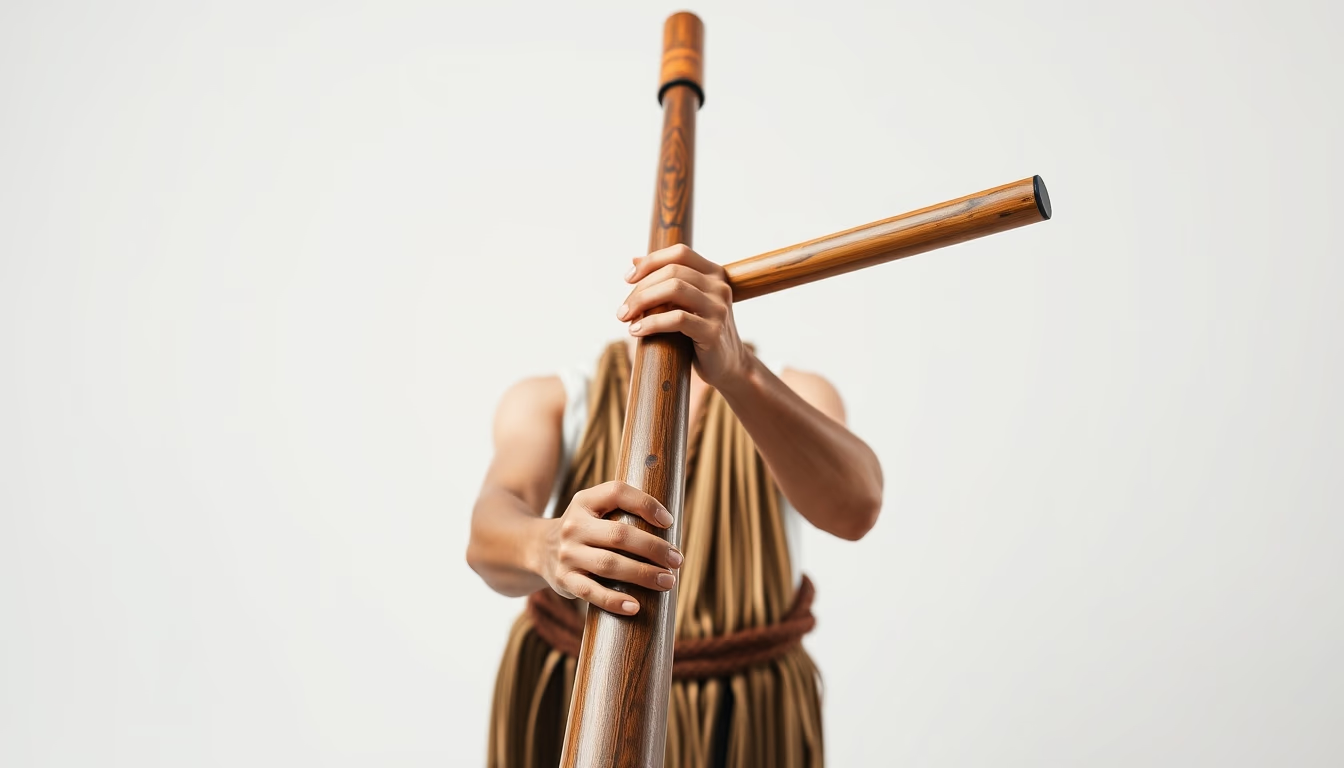
The didgeridoo is an ancient wind instrument of the Australian Aboriginal people, known for its deep, resonant sound.
About this subject
The didgeridoo, also known as yidaki or didjeridu, is a tubular wind instrument originating from northern Australia, used for thousands of years by Indigenous Australians. Traditionally, it is made from eucalyptus trunks naturally hollowed out by termites. After selecting the tree, the bark is removed, ends are cut, and the mouthpiece opening is coated with beeswax for better sealing. Lengths vary from 1 to 1.5 meters, but can reach up to 3 meters in some regions.
The characteristic sound of the didgeridoo is produced by the vibration of the player's lips, combined with the circular breathing technique, which allows continuous sound while inhaling through the nose. This technique is essential for creating complex rhythms and wave-like patterns. Besides the deep fundamental note, the instrument emits harmonics and vocal percussive effects such as clicks and grunts, imitating natural sounds like animals and wind.
Culturally, the didgeridoo holds deep spiritual and ceremonial significance for various Aboriginal nations, especially in Arnhem Land. It is not universal among all Indigenous groups; traditional use is tied to rituals, songs, and Dreamtime narratives. Over time, the didgeridoo gained global popularity, being incorporated into contemporary music genres such as world music, jazz, and even rock.
Construction and playing of the didgeridoo are transmitted orally, and each instrument has unique acoustic characteristics due to natural wood irregularities. Today, modern replicas are made from materials like PVC or fiberglass, but traditional eucalyptus versions remain most valued for their authenticity and timbre.
Frequently Asked Questions
How is a traditional didgeridoo made?
It is traditionally made from eucalyptus trunks hollowed by termites, with the bark removed and the mouthpiece coated with beeswax.
What breathing technique is needed to play the didgeridoo?
The main technique is circular breathing, which allows the player to inhale through the nose while exhaling through the mouth, sustaining a continuous sound. Lip vibration produces the drone note.
Does the didgeridoo have spiritual significance for Aboriginal people?
Yes, in many northern Australian communities, the didgeridoo is used in ceremonies and rituals linked to the Dreamtime, representing ancestral stories and connection to the land.
Direct URL
https://pub-c7d6a6ea828543ac903a74a341ccb2e1.r2.dev/imagens/didgeridoo-aboriginal-commercial-product-photography-p3.avifHow to credit
Include a visible link back to UtilizAí. Copy one of the snippets below:
<a href="https://xn--utiliza-eza.com/en/midia/imagens/didgeridoo-aboriginal-commercial-product-photography-p3">Didgeridoo aboriginal</a> by <a href="https://xn--utiliza-eza.com">UtilizAí</a>, licensed under <a href="https://creativecommons.org/licenses/by/4.0/">CC BY 4.0</a>.
[Didgeridoo aboriginal](https://xn--utiliza-eza.com/en/midia/imagens/didgeridoo-aboriginal-commercial-product-photography-p3) by [UtilizAí](https://xn--utiliza-eza.com), CC BY 4.0
License: CC-BY-4.0