Diaper changing station
1344×768 · AVIF · CC BY 4.0
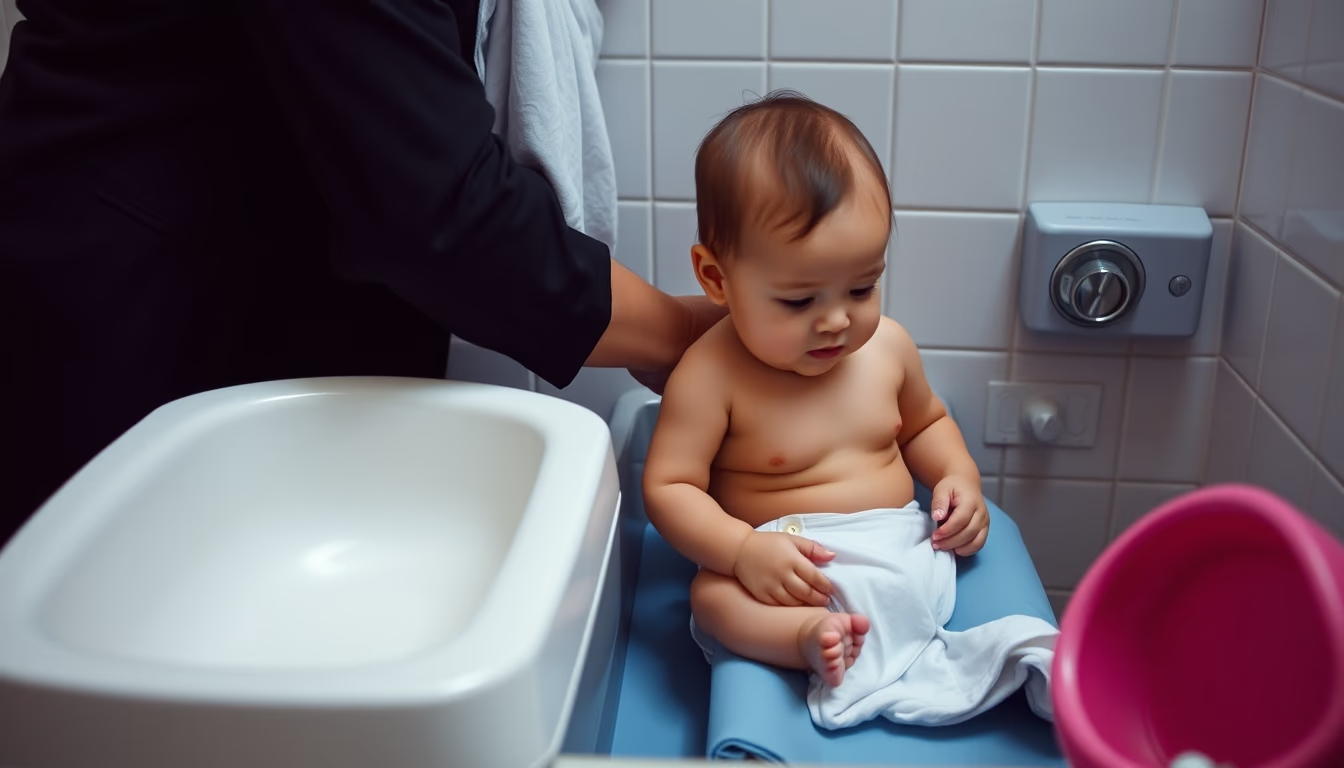
Diaper changing stations are common in public restrooms, providing convenience and hygiene for parents and babies.
About this subject
Diaper changing stations, also known as public changing tables, are padded surfaces installed in male, female, and family restrooms. Their widespread adoption began in the 1980s and 1990s, driven by movements for gender equality in childcare. Before that, many parents struggled to change diapers in public spaces, especially in men's restrooms, which rarely had such equipment.
Today, the presence of changing stations is mandated by legislation in many countries, such as the Americans with Disabilities Act and similar regulations in Brazil. They are made of durable plastic or metal, with safety straps and easy-to-clean surfaces. Foldable models save space and can be mounted on walls or free-standing supports.
Beyond functionality, changing stations reflect cultural shifts. Their installation in men's restrooms signals recognition of fathers' involvement in daily childcare. In shopping malls, airports, and restaurants, the availability of changing tables is a key factor for families. Studies show that the lack of this amenity can limit patronage of certain establishments.
Recent innovations include sensors for cleanliness, automatic disinfection, and even heating. In countries like Japan, some models have built-in timers. Despite progress, challenges remain: many places still provide changing stations only in women's restrooms, perpetuating inequalities. Family advocacy groups continue to push for more inclusive facilities.
Frequently Asked Questions
What is the ideal height for installing a public changing station?
The recommended height is about 90 cm (35 inches) from the floor, comfortable for average-height adults. Adjustable models are preferable to accommodate people with disabilities or wheelchair users.
Are public changing tables safe for babies?
Yes, when used with safety straps and under supervision. Modern models have rounded edges and hypoallergenic materials. Nevertheless, never leave a baby unattended.
Where are diaper changing stations mandatory?
In many countries, requirements apply to high-traffic family venues: shopping malls, airports, hospitals, parks, and restaurants. In Brazil, local laws may regulate the matter.
Direct URL
https://pub-c7d6a6ea828543ac903a74a341ccb2e1.r2.dev/imagens/diaper-changing-station-lo-fi-disposable-camera-p1.avifHow to credit
Include a visible link back to UtilizAí. Copy one of the snippets below:
<a href="https://xn--utiliza-eza.com/en/midia/imagens/diaper-changing-station-lo-fi-disposable-camera-p1">Diaper changing station</a> by <a href="https://xn--utiliza-eza.com">UtilizAí</a>, licensed under <a href="https://creativecommons.org/licenses/by/4.0/">CC BY 4.0</a>.
[Diaper changing station](https://xn--utiliza-eza.com/en/midia/imagens/diaper-changing-station-lo-fi-disposable-camera-p1) by [UtilizAí](https://xn--utiliza-eza.com), CC BY 4.0
License: CC-BY-4.0