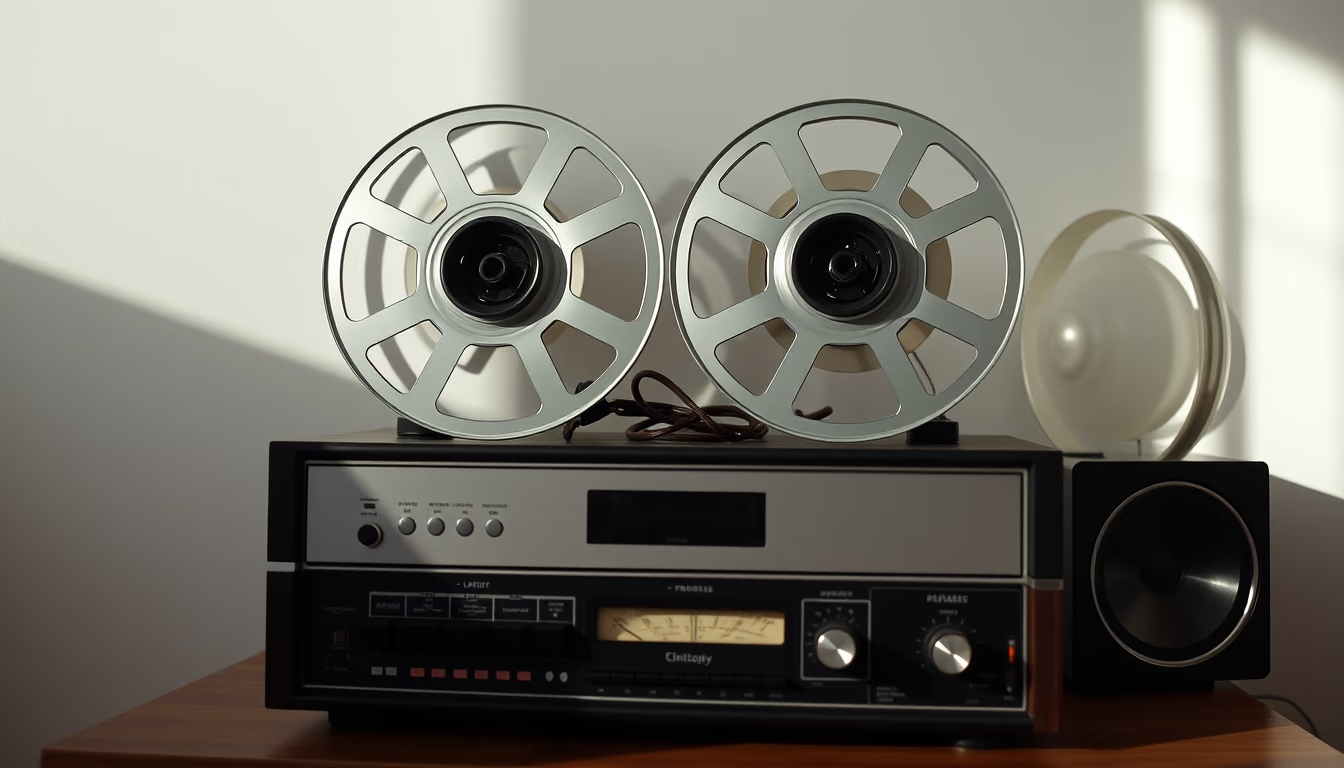
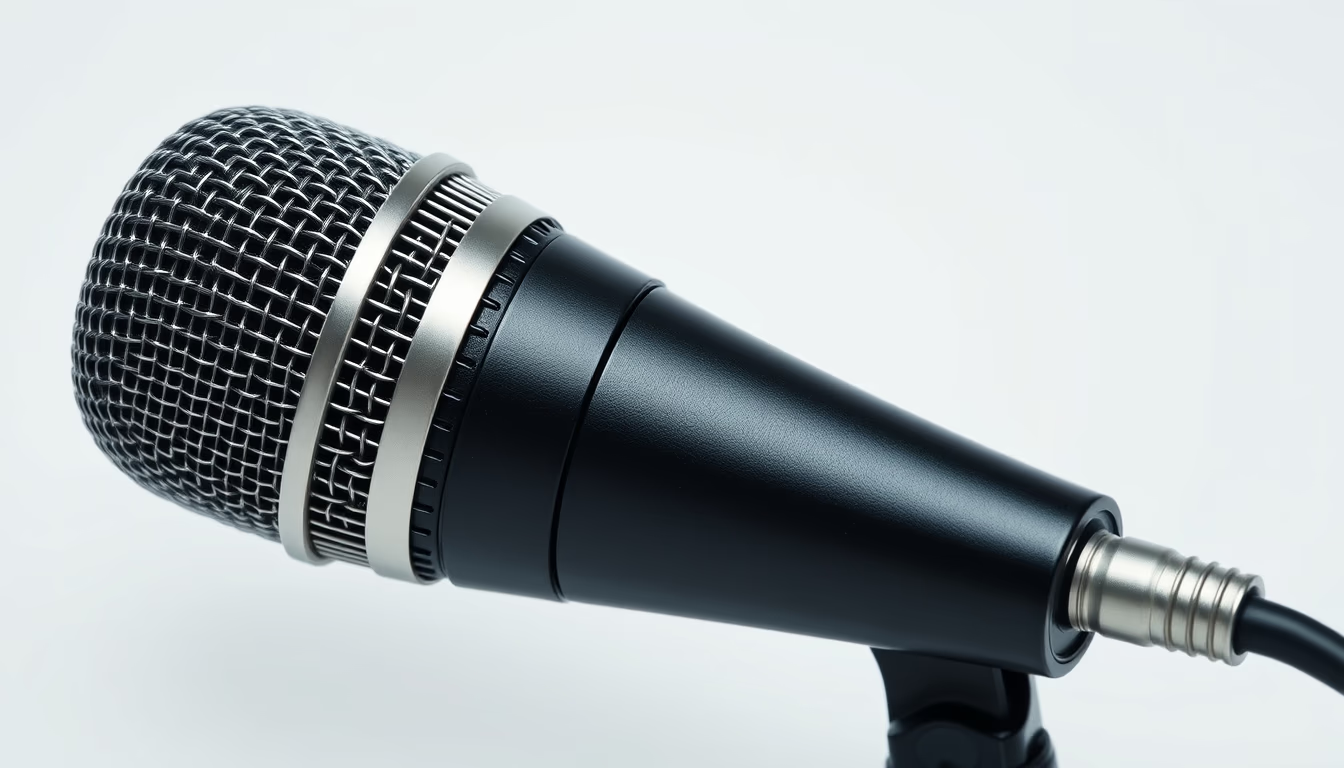
Dat tape recorder
1344×768 · AVIF · CC BY 4.0
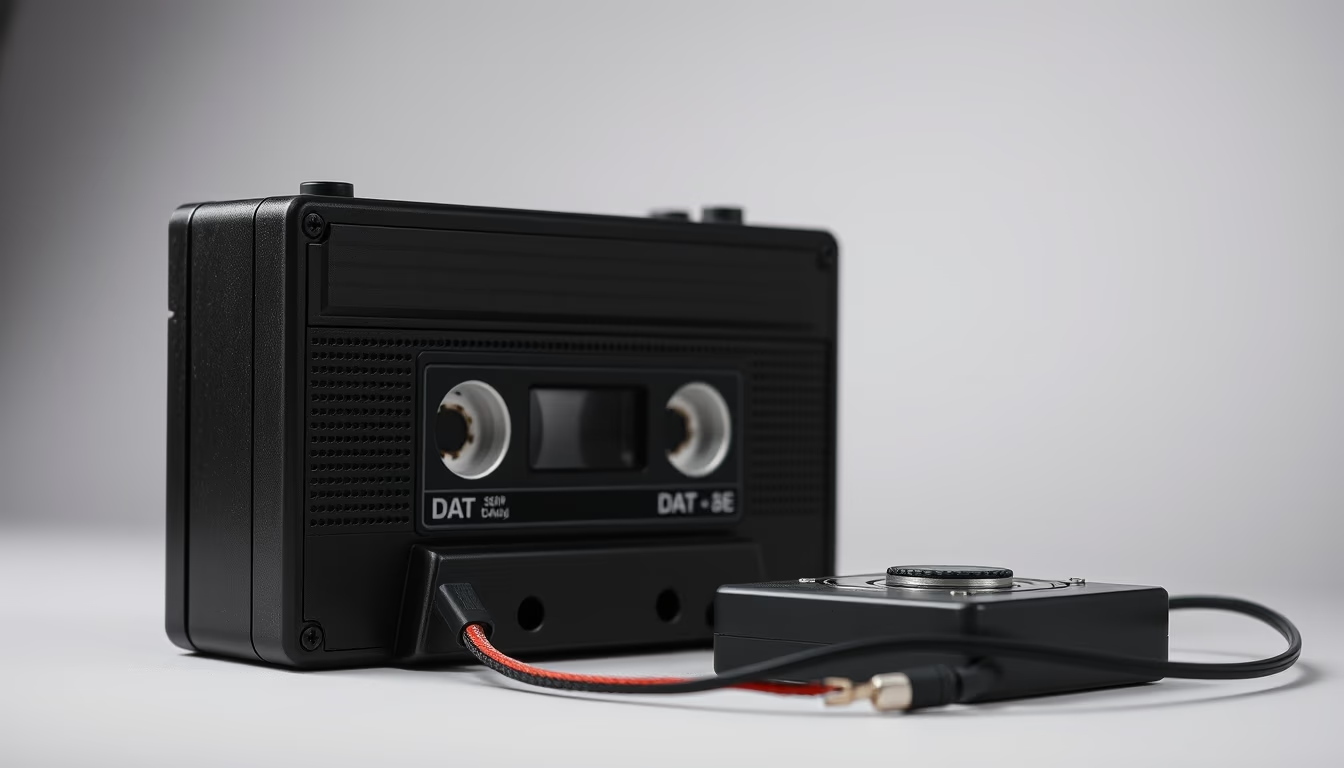
The DAT (Digital Audio Tape) recorder was a milestone in digital audio recording in the 1980s, used in professional studios and by audiophiles.
About this subject
The DAT (Digital Audio Tape) is a magnetic tape digital audio format developed by Sony and introduced in 1987. It used compact cassettes (about the size of a credit card) and offered 16-bit digital audio quality at sampling rates of 44.1 kHz (CD standard) or 48 kHz. It quickly became the standard in recording studios for mastering, backup, and exchanging digital masters, replacing analog multitrack tapes.
In the 1990s, professional studios adopted DAT for its portability, fidelity, and ability to store up to two hours of stereo lossless audio. Recorders like the Sony PCM-7030 and Tascam DA-30 allowed non-destructive editing and synchronization with analog equipment via SMPTE timecode. Many iconic rock and electronic music albums were mastered on DAT, and the format was used by radio broadcasters, journalists, and musicians for field recording.
The decline of DAT began with the rise of hard disk recording, CD-Rs, digital audio on computers, and later streaming. Production of DAT tapes ceased in 2005, and recorders became collector's items. Nevertheless, vintage studios and archives still use DAT equipment to access old recordings, and the format influenced the development of standards like ADAT (Alesis Digital Audio Tape), which expanded the concept to multitrack recording.
Interesting fact: DAT tape used helical scan recording, similar to VHS, and could store data beyond audio, being used in backup systems (DDS). Automotive DAT players were also produced but never gained popularity. The legacy of DAT remains as a milestone in digital audio innovation before the hard drive era.
Frequently Asked Questions
What is a DAT recorder?
A DAT recorder is a device that records and plays back digital audio on magnetic tape in the Digital Audio Tape format, introduced by Sony in 1987. It was used in professional studios for mastering and backup due to high fidelity and portability.
What is the difference between DAT and ADAT?
DAT is a stereo two-track format, while ADAT (Alesis Digital Audio Tape) allows recording up to 8 tracks simultaneously on S-VHS tape. ADAT evolved from DAT for multitrack recording, popular in home studios in the 1990s.
Why did DAT stop being used?
DAT was replaced by hard disk recording, CD-R, and computer-based digital audio, which offered greater capacity, non-linear editing, and lower cost. Production of DAT tapes ceased in 2005.
Direct URL
https://pub-c7d6a6ea828543ac903a74a341ccb2e1.r2.dev/imagens/dat-tape-recorder-studio-still-life-fresh3.avifHow to credit
Include a visible link back to UtilizAí. Copy one of the snippets below:
<a href="https://xn--utiliza-eza.com/en/midia/imagens/dat-tape-recorder-studio-still-life-fresh3">Dat tape recorder</a> by <a href="https://xn--utiliza-eza.com">UtilizAí</a>, licensed under <a href="https://creativecommons.org/licenses/by/4.0/">CC BY 4.0</a>.
[Dat tape recorder](https://xn--utiliza-eza.com/en/midia/imagens/dat-tape-recorder-studio-still-life-fresh3) by [UtilizAí](https://xn--utiliza-eza.com), CC BY 4.0
License: CC-BY-4.0