Dat tape recorder
1344×768 · AVIF · CC BY 4.0
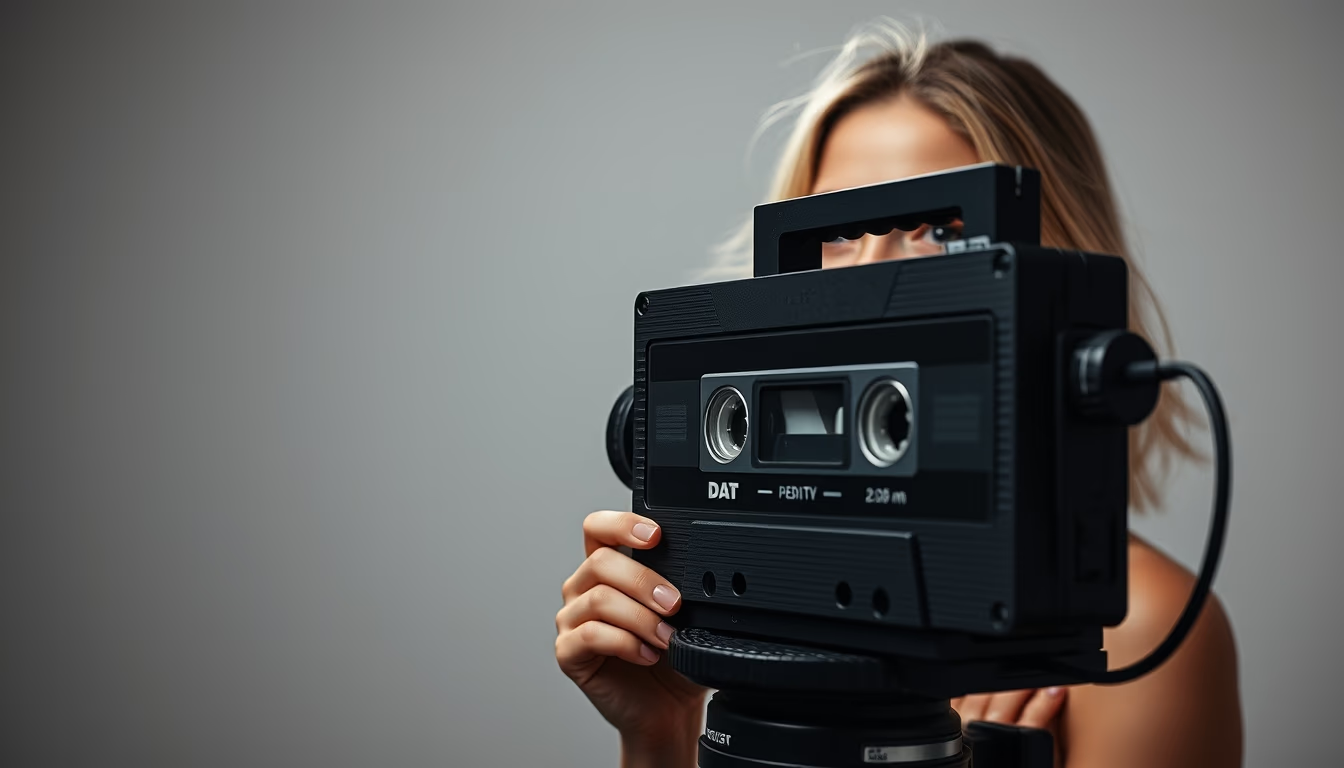
The DAT (Digital Audio Tape) recorder was a milestone in professional digital recording in the 1990s, offering lossless audio quality on magnetic tape.
About this subject
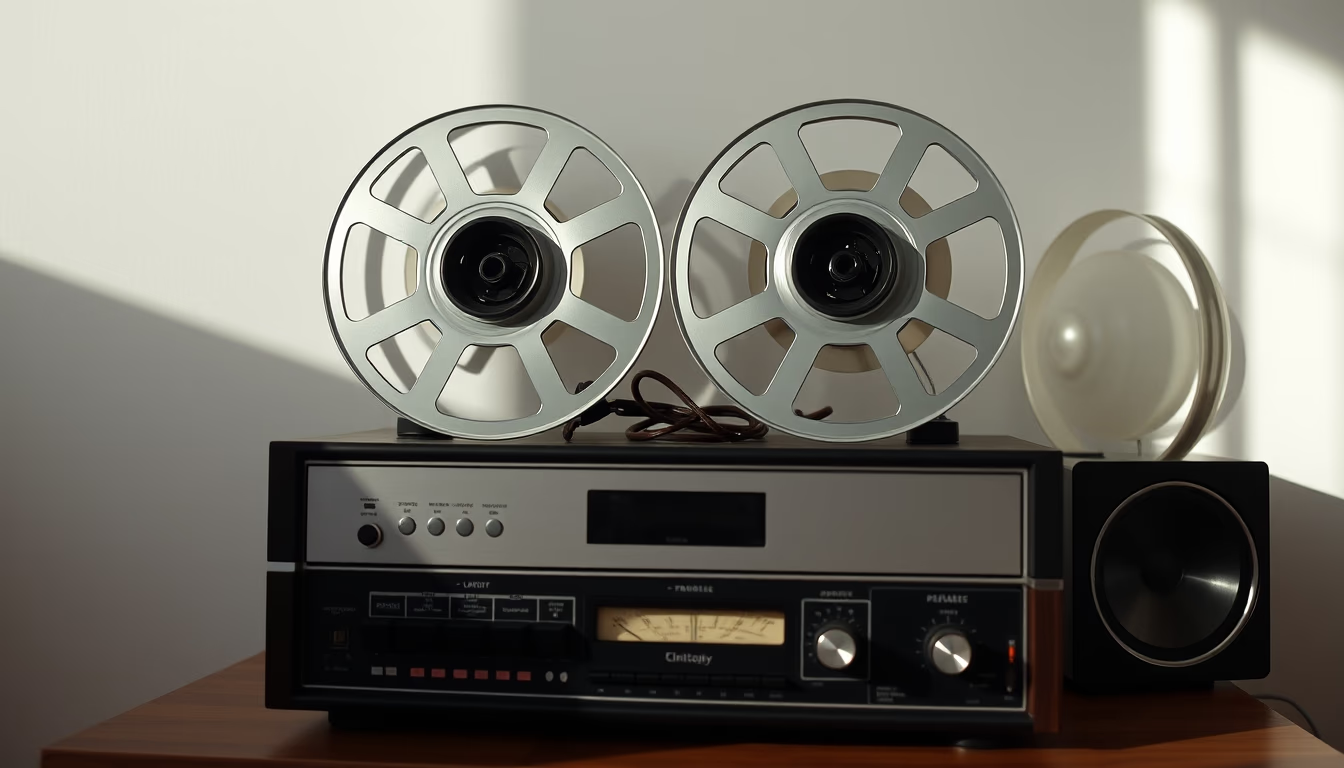
The DAT (Digital Audio Tape) was introduced in 1987 by Sony and Philips as the first digital audio recording format on magnetic tape. It used a rotating head similar to a VCR, reading and writing digital data on a 4 mm wide cassette tape. Typical sampling rates were 32 kHz, 44.1 kHz, and 48 kHz, with 16-bit linear quantization, providing CD-quality audio. DAT recorders became popular in professional recording studios, mastering, and field recording, especially in classical music and radio journalism.
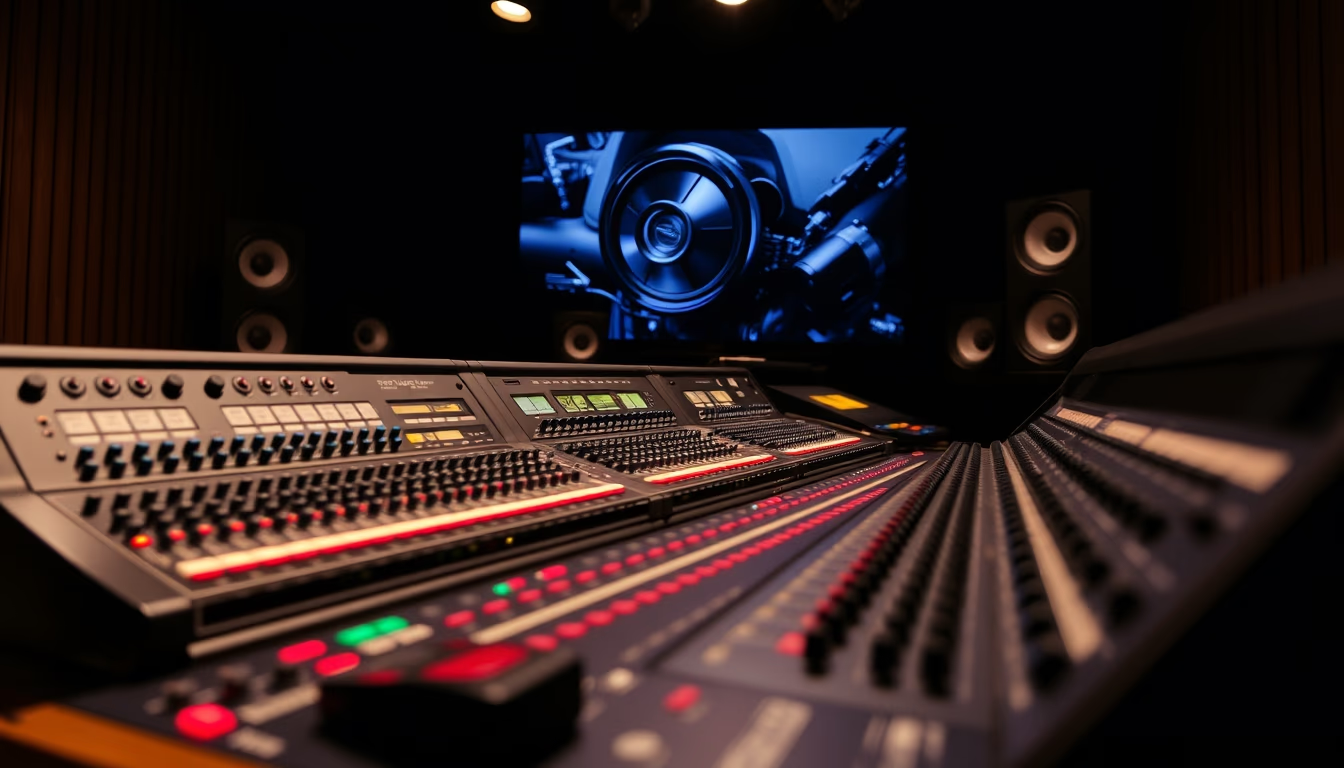
In the studio, DAT was used as a recording master, enabling lossless digital copies. Its portability and recording time of up to two hours (on 120-minute tapes) made it ideal for location work. Many audio engineers preferred DAT over the ADAT (Alesis Digital Audio Tape) system for its fidelity and compactness. Digital connection via SPDIF or AES/EBU ensured direct transfer to digital editors and CD-R.
Despite its advantages, the DAT suffered from tape mechanism fragility, the need for regular head cleaning, and obsolescence due to hard disk recording and optical media. By the 2000s, it fell out of favor but remained in audio archiving for its long-term reliability when stored properly. The DAT technology also served as the basis for the DDS (Digital Data Storage) standard, used for computer backups in the 1990s.
Interestingly, the DAT format was one of the first to provide affordable digital recording to independent musicians and small studios, foreshadowing the democratization of music production. Today, DAT recorders are collector's items and still used by vintage audio enthusiasts.
Frequently Asked Questions
What does DAT stand for?
DAT stands for Digital Audio Tape, a digital audio recording format on magnetic tape developed by Sony and Philips in the 1980s.
What is the audio quality of DAT?
DAT offers digital audio quality with sampling rates up to 48 kHz and 16-bit quantization, equivalent to CD quality.
Why did DAT become obsolete?
DAT was replaced by hard disk recording, CD-R, and digital streaming due to greater convenience, lower cost, and avoiding mechanical issues with tapes.
Direct URL
https://pub-c7d6a6ea828543ac903a74a341ccb2e1.r2.dev/imagens/dat-tape-recorder-studio-editorial-portrait-fresh11.avifHow to credit
Include a visible link back to UtilizAí. Copy one of the snippets below:
<a href="https://xn--utiliza-eza.com/en/midia/imagens/dat-tape-recorder-studio-editorial-portrait-fresh11">Dat tape recorder</a> by <a href="https://xn--utiliza-eza.com">UtilizAí</a>, licensed under <a href="https://creativecommons.org/licenses/by/4.0/">CC BY 4.0</a>.
[Dat tape recorder](https://xn--utiliza-eza.com/en/midia/imagens/dat-tape-recorder-studio-editorial-portrait-fresh11) by [UtilizAí](https://xn--utiliza-eza.com), CC BY 4.0
License: CC-BY-4.0