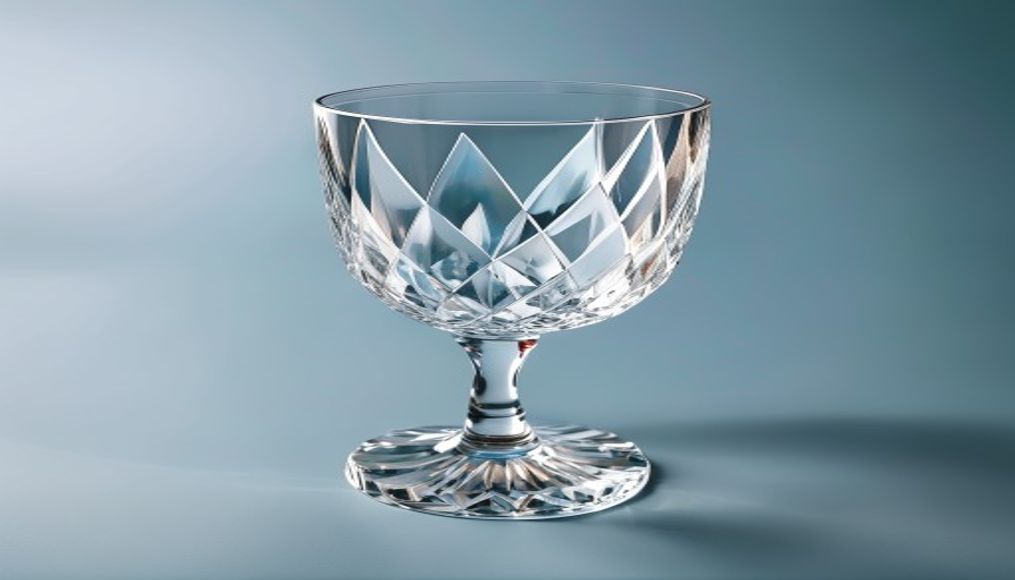
Crystal goblet hand cut
1344×768 · AVIF · CC BY 4.0
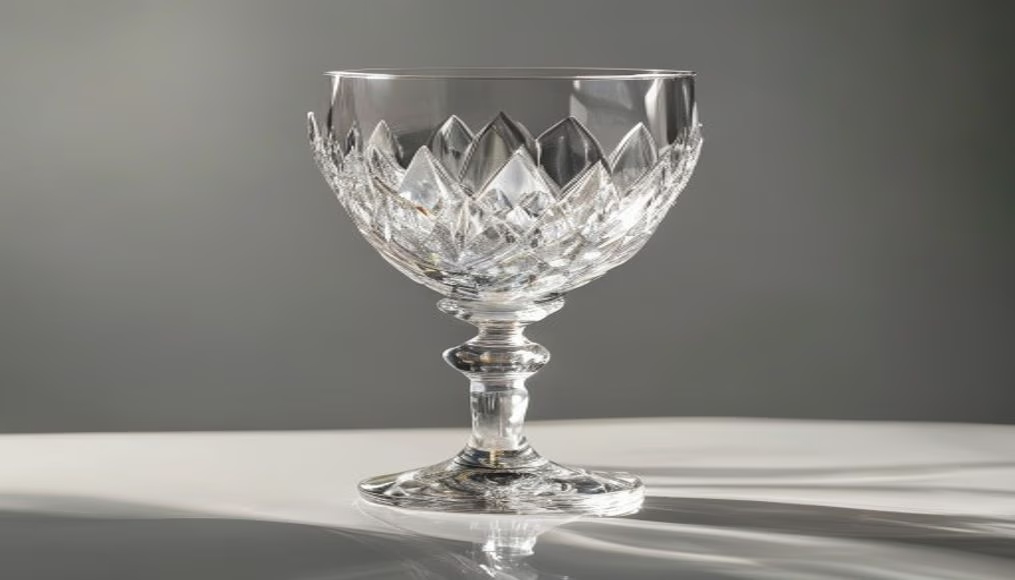
Hand-cut crystal goblet blends centuries-old craftsmanship with contemporary design, showcasing the legacy of global artistic glassware.
About this subject
The hand-cut crystal goblet exemplifies a glassmaking tradition dating back to the 15th century, when Murano, Venice became Europe's crystal production hub. Unlike ordinary glass, crystal contains lead oxide, giving it superior brilliance, clarity, and resonance. The hand-cutting process requires years of training: the artisan inscribes the surface with an abrasive copper wheel, creating precise facets that refract light from multiple angles. This technique was refined in Bohemia (now Czech Republic) during the 18th century, giving rise to styles like diamond cuts and deep relief.
This piece is part of the 'Wave Pollinations' project, a global initiative gathering artists to explore the intersection of nature, technology, and traditional crafts. The goblet, with its wave pattern, evokes water's fluidity and crystal's rigidity, a typical contrast in glass art. Its design may be inspired by ocean waves or Islamic arabesques found in Persian and Ottoman glassware. The choice of hand-cut crystal underscores the appreciation of craftsmanship over industrial production.
Today, hand-cut crystal production is rare and concentrated in a few regions: Murano, the Czech Republic, and France (Cristal Saint-Louis and Baccarat). Each piece takes hours to days to complete, depending on cut complexity. The goblet's fluid, undulating facets demand extreme precision to avoid cracking under pressure. It transcends its function as a drinking vessel, considered a work of glass art.
In a studio still life, such crystal objects are used to explore light, reflections, and transparency. The composition highlights the interplay between the controlled studio environment and the unpredictability of facet reflections, a technical challenge that art photographers master. The result is an image celebrating both the object and the craftsmanship behind it.
Frequently Asked Questions
What is the difference between glass and crystal in goblet production?
Crystal contains at least 24% lead oxide, which increases light refraction, clarity, and a metallic ring when tapped. Ordinary glass lacks this additive and is less brilliant.
How is manual crystal cutting performed?
The artisan sketches the pattern on the piece, then uses a rotating abrasive copper wheel to carve facets. The process is done dry or with lubricant, requiring a steady hand to avoid breakage.
What does 'Wave Pollinations' mean in the context of this piece?
Wave Pollinations is a collaborative global art project combining design, tradition, and technology. The goblet's wave pattern symbolizes nature's fluidity contrasted with crystal's precision.
Direct URL
https://pub-c7d6a6ea828543ac903a74a341ccb2e1.r2.dev/imagens/crystal-goblet-hand-cut-studio-still-life-p2.avifHow to credit
Include a visible link back to UtilizAí. Copy one of the snippets below:
<a href="https://xn--utiliza-eza.com/en/midia/imagens/crystal-goblet-hand-cut-studio-still-life-p2">Crystal goblet hand cut</a> by <a href="https://xn--utiliza-eza.com">UtilizAí</a>, licensed under <a href="https://creativecommons.org/licenses/by/4.0/">CC BY 4.0</a>.
[Crystal goblet hand cut](https://xn--utiliza-eza.com/en/midia/imagens/crystal-goblet-hand-cut-studio-still-life-p2) by [UtilizAí](https://xn--utiliza-eza.com), CC BY 4.0
License: CC-BY-4.0