Crystal goblet hand cut
1344×768 · JPG · CC BY 4.0
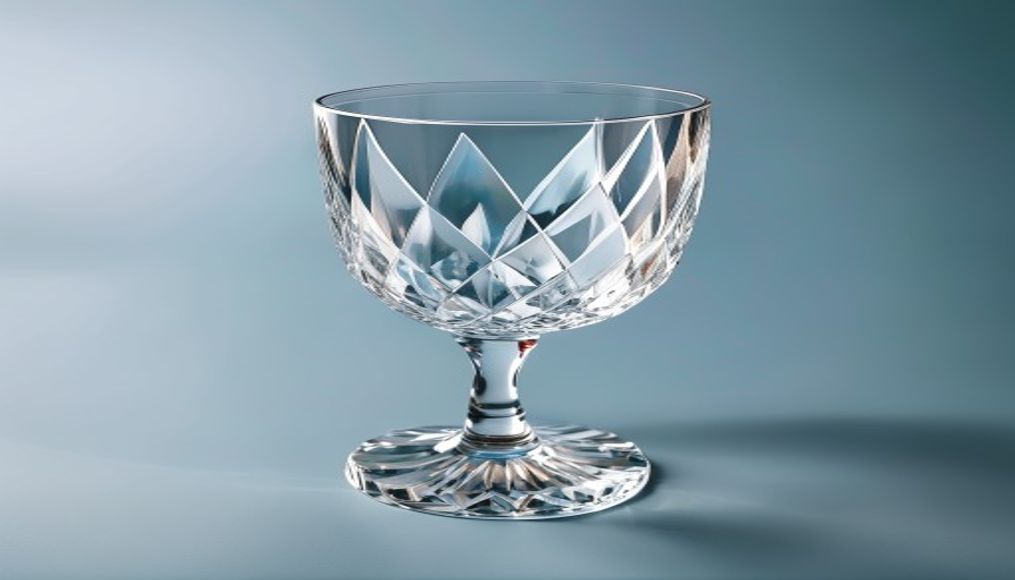
Hand-cut crystal goblet: a symbol of artisanal tradition, refinement, and centuries-old technique in fine glassmaking.
About this subject
A hand-cut crystal goblet represents the peak of glass craftsmanship. Unlike ordinary glass, crystal contains lead oxide (typically 24% to 36%), which increases its refractive index, giving it greater brilliance and resonance. Hand cutting is an ancient skill requiring years of training: the artisan uses metal or stone discs to carve precise grooves and facets on the goblet's surface, creating geometric or floral patterns.
The tradition of cut crystal dates back to Bohemia (now the Czech Republic) and the Lorraine region in France, where glassmaking families perfected the craft between the 17th and 19th centuries. Renowned brands such as Waterford (Ireland), Baccarat (France), and Lalique are world references in this art. Each piece can take 30 minutes to several hours to complete, depending on the complexity of the design.
Beyond aesthetic value, hand-cut crystal is known for its durability. Lead provides greater mechanical strength, though the material is sensitive to thermal shock. Therefore, it is recommended to wash these goblets by hand with warm water and mild detergent, avoiding dishwashers that can wear down the cut edges.
In Brazil, artisanal crystal production is less widespread, but some workshops import European techniques, especially in the South and Southeast regions. Collectors seek signed pieces or certificates of origin, as manual work ensures exclusivity and subtle imperfections that attest to authenticity.
Frequently Asked Questions
How to identify a hand-cut crystal goblet?
Check the edges of the cuts: hand-cut edges are slightly irregular and the facets reflect light uniquely. Also, authentic crystal produces a long, clear ring when lightly tapped, while ordinary glass sounds dull.
What is the difference between glass and crystal?
Crystal contains lead oxide (above 24%), giving it more brilliance, weight, and resonance. Common glass has no lead, making it lighter, cheaper, and less durable. Hand cutting is also a differentiator, though some industrial glass pieces have simulated cuts.
How to clean and preserve hand-cut crystal goblets?
Always wash them by hand with warm water and mild detergent. Avoid abrasive sponges. Dry with a soft, lint-free cloth. Do not put them in the dishwasher, as heat and vibration can damage the cuts and even cause cracks.
Direct URL
https://pub-c7d6a6ea828543ac903a74a341ccb2e1.r2.dev/imagens/crystal-goblet-hand-cut-isometric-flat-lay-p4.jpgHow to credit
Include a visible link back to UtilizAí. Copy one of the snippets below:
<a href="https://xn--utiliza-eza.com/en/midia/imagens/crystal-goblet-hand-cut-isometric-flat-lay-p4">Crystal goblet hand cut</a> by <a href="https://xn--utiliza-eza.com">UtilizAí</a>, licensed under <a href="https://creativecommons.org/licenses/by/4.0/">CC BY 4.0</a>.
[Crystal goblet hand cut](https://xn--utiliza-eza.com/en/midia/imagens/crystal-goblet-hand-cut-isometric-flat-lay-p4) by [UtilizAí](https://xn--utiliza-eza.com), CC BY 4.0
License: CC-BY-4.0