Crystal goblet hand cut
1344×768 · AVIF · CC BY 4.0
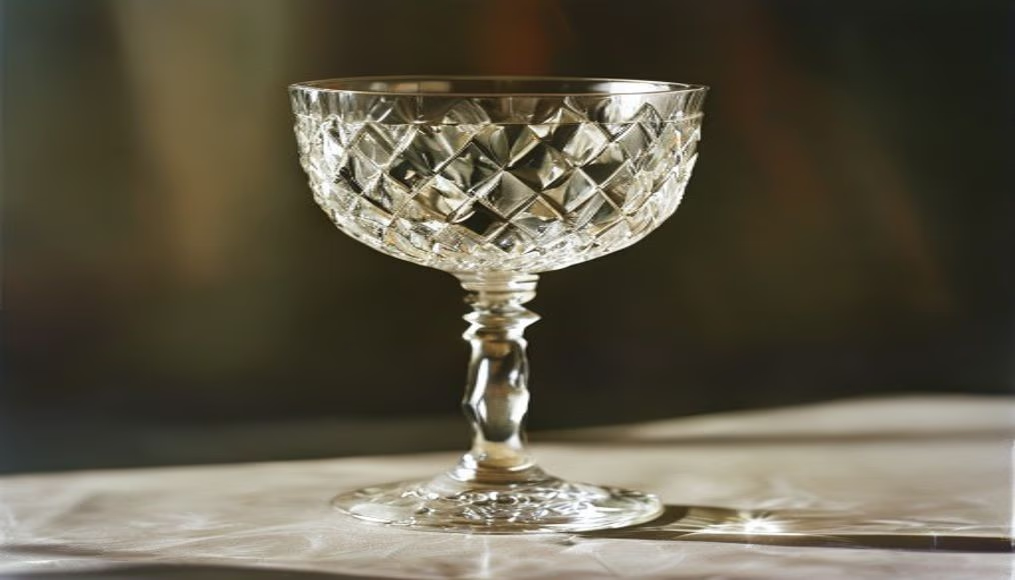
Hand-cut crystal goblet combines centuries-old tradition, meticulous craftsmanship, and unmatched transparency.
About this subject
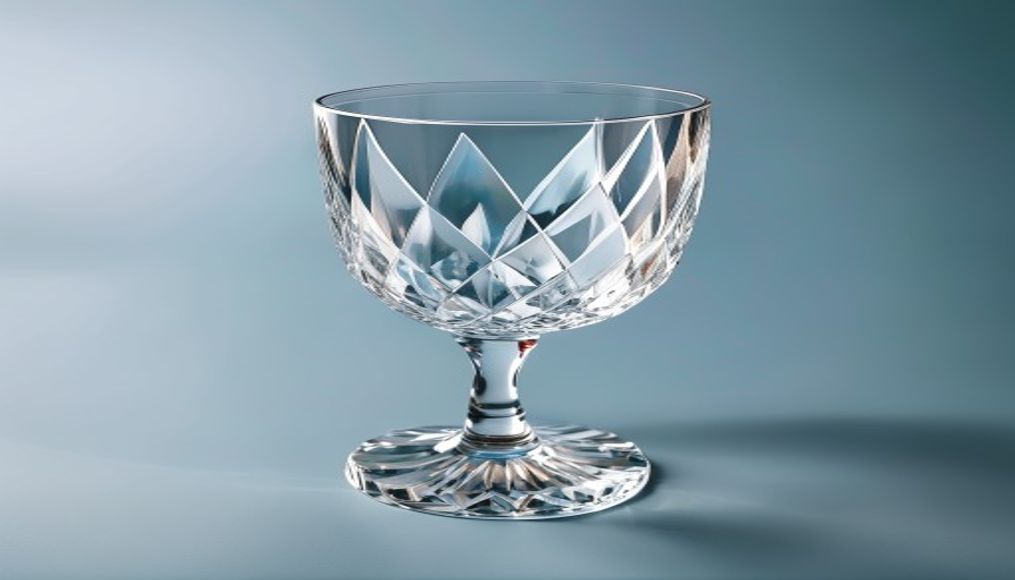
The hand-cut crystal goblet represents the pinnacle of glassware craftsmanship. Crystal differs from ordinary glass due to its lead oxide content (typically 24% or more), which gives it higher refractive index, brilliant sparkle, and a metallic ring when tapped. Hand cutting is a technique requiring years of training: the artisan uses stone or copper wheels with fine abrasives to carve precise geometric facets into the surface of the goblet. Each incision is made with controlled pressure and constant water irrigation to prevent overheating.
Historically, cut crystal production traces back to Bohemia (now Czech Republic) in the 17th century, where artisans mastered the secret of potash-lime glass. Later, in 18th-century England, George Ravenscroft added lead to the mixture, creating English lead crystal. Renowned brands such as Waterford (Ireland), Baccarat (France), and Moser (Czech Republic) are global references, with patterns like Waterford's 'Lismore' or Baccarat's 'St. Remy'. Hand cutting allows for unique designs, from simple stars to complex patterns like 'diamond' or 'oak leaf'.
Culturally, the hand-cut crystal goblet is a symbol of celebration and sophistication. At formal dinners, it is used for fine wines, champagne, or water. The transparency and brilliance enhance the beverage's color, while the weight and sound indicate quality. Interestingly, the crystal industry has faced competition from cheaper alternatives, but hand-cut pieces remain valued as collectibles and family heirlooms. The technique has been declared Intangible Cultural Heritage in some regions, such as the Czech Republic, where hand-cut glass is protected by law.
The image here captures this piece with film grain effect, evoking a nostalgic, artisanal feel. Soft lighting emphasizes the facets and purity of the crystal, inviting viewers to appreciate each detail of the manual work.
Frequently Asked Questions
What is the difference between crystal and ordinary glass?
Crystal contains lead oxide (at least 24%), giving it higher brilliance, transparency, and resonance. Ordinary glass lacks lead and has a lower refractive index.
How is a hand-cut crystal goblet made?
The artisan uses rotating stone or copper wheels with fine abrasives, applying constant pressure and water for cooling. Each facet is carved individually, requiring precision and skill.
What are the main centers of hand-cut crystal production?
Czech Republic (Bohemia), France (Baccarat), Ireland (Waterford), Austria (Swarovski), and Belgium (Val Saint Lambert). Each has its own traditions and styles.
Direct URL
https://pub-c7d6a6ea828543ac903a74a341ccb2e1.r2.dev/imagens/crystal-goblet-hand-cut-film-grain-authentic-p0.avifHow to credit
Include a visible link back to UtilizAí. Copy one of the snippets below:
<a href="https://xn--utiliza-eza.com/en/midia/imagens/crystal-goblet-hand-cut-film-grain-authentic-p0">Crystal goblet hand cut</a> by <a href="https://xn--utiliza-eza.com">UtilizAí</a>, licensed under <a href="https://creativecommons.org/licenses/by/4.0/">CC BY 4.0</a>.
[Crystal goblet hand cut](https://xn--utiliza-eza.com/en/midia/imagens/crystal-goblet-hand-cut-film-grain-authentic-p0) by [UtilizAí](https://xn--utiliza-eza.com), CC BY 4.0
License: CC-BY-4.0