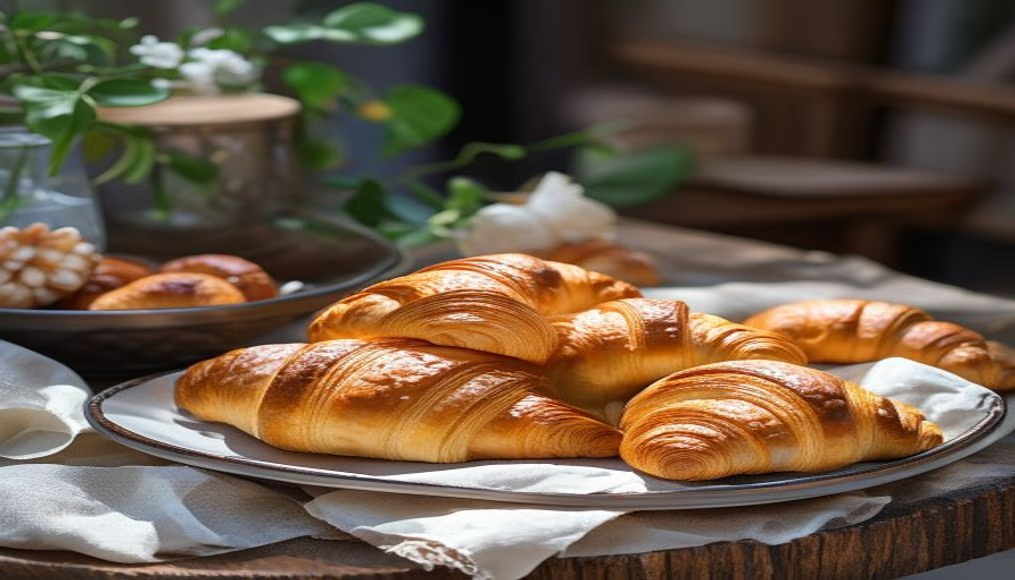
Croissants golden flaky
1344×768 · AVIF · CC BY 4.0
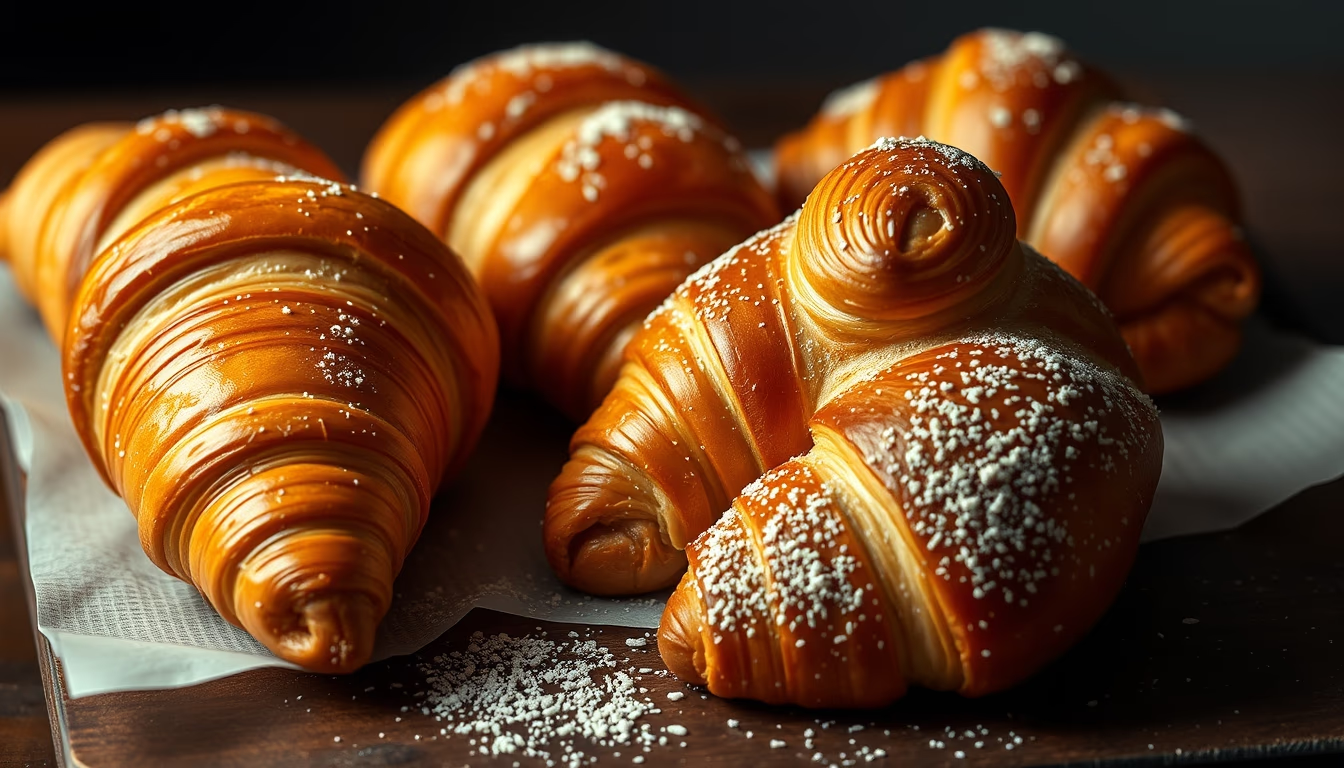
Golden flaky croissants, icons of French pastry, take center stage in fashion editorials that blend gastronomy and haute couture.
About this subject
The croissant, a symbol of French pastry, is one of the most recognized items in global confectionery. Originally from Austria, where it was known as "kipferl," it was perfected in France starting in the 19th century, with layers of butter creating its airy, flaky texture. The lamination technique, involving repeated folding and rolling of the dough, is essential to achieve the thin layers that separate during baking.
In the context of high fashion, the croissant has become a recurring element in editorials that explore the intersection of food and clothing. Its golden color and curved shape refer to design elements such as volumes and textures present in collections by brands like Chanel and Louis Vuitton. The presence of croissants in photo shoots is not merely decorative: it evokes a sophisticated lifestyle, associated with Parisian cafés and moments of pleasure.
Beyond visual appeal, the croissant carries a history of culinary innovation. Unlike other breads, its preparation requires precise temperature and timing, serving as a test of skill for bakers. In 1974, the first industrial croissant machine was patented, but artisans still value the manual method. This balance between tradition and modernity resonates with fashion, which constantly revisits classics under new perspectives.
Croissants also appear in seasonal contexts: versions with almond, chocolate, or cheese fillings are common in different cultures. In fashion editorials, they are often photographed in minimalist settings, highlighting their geometric form and contrast with fabrics and accessories. This unusual combination reinforces the idea that gastronomy can transcend its nutritional function and become part of visual storytelling.
Frequently Asked Questions
What is the origin of the croissant?
The croissant originates from the Austrian kipferl, a sweet crescent-shaped bread. It was introduced to France in the 19th century, where bakers perfected the lamination technique with butter to create the characteristic flaky texture.
Why are croissants used in fashion editorials?
Croissants are used for their visual and aesthetic appeal, associated with a luxurious Parisian lifestyle. Their curved shape and golden color dialogue with fashion design elements, creating compositions that blend gastronomy and haute couture.
What is the difference between an artisan and an industrial croissant?
Artisan croissants are handmade with high-quality butter, requiring lengthy preparation and skilled technique. Industrial croissants use margarine and lamination machines, resulting in a less airy texture and refined flavor.
Direct URL
https://pub-c7d6a6ea828543ac903a74a341ccb2e1.r2.dev/imagens/croissants-golden-flaky-high-fashion-editorial-p1.avifHow to credit
Include a visible link back to UtilizAí. Copy one of the snippets below:
<a href="https://xn--utiliza-eza.com/en/midia/imagens/croissants-golden-flaky-high-fashion-editorial-p1">Croissants golden flaky</a> by <a href="https://xn--utiliza-eza.com">UtilizAí</a>, licensed under <a href="https://creativecommons.org/licenses/by/4.0/">CC BY 4.0</a>.
[Croissants golden flaky](https://xn--utiliza-eza.com/en/midia/imagens/croissants-golden-flaky-high-fashion-editorial-p1) by [UtilizAí](https://xn--utiliza-eza.com), CC BY 4.0
License: CC-BY-4.0