Credit card chip macro shot
1344×768 · AVIF · CC BY 4.0
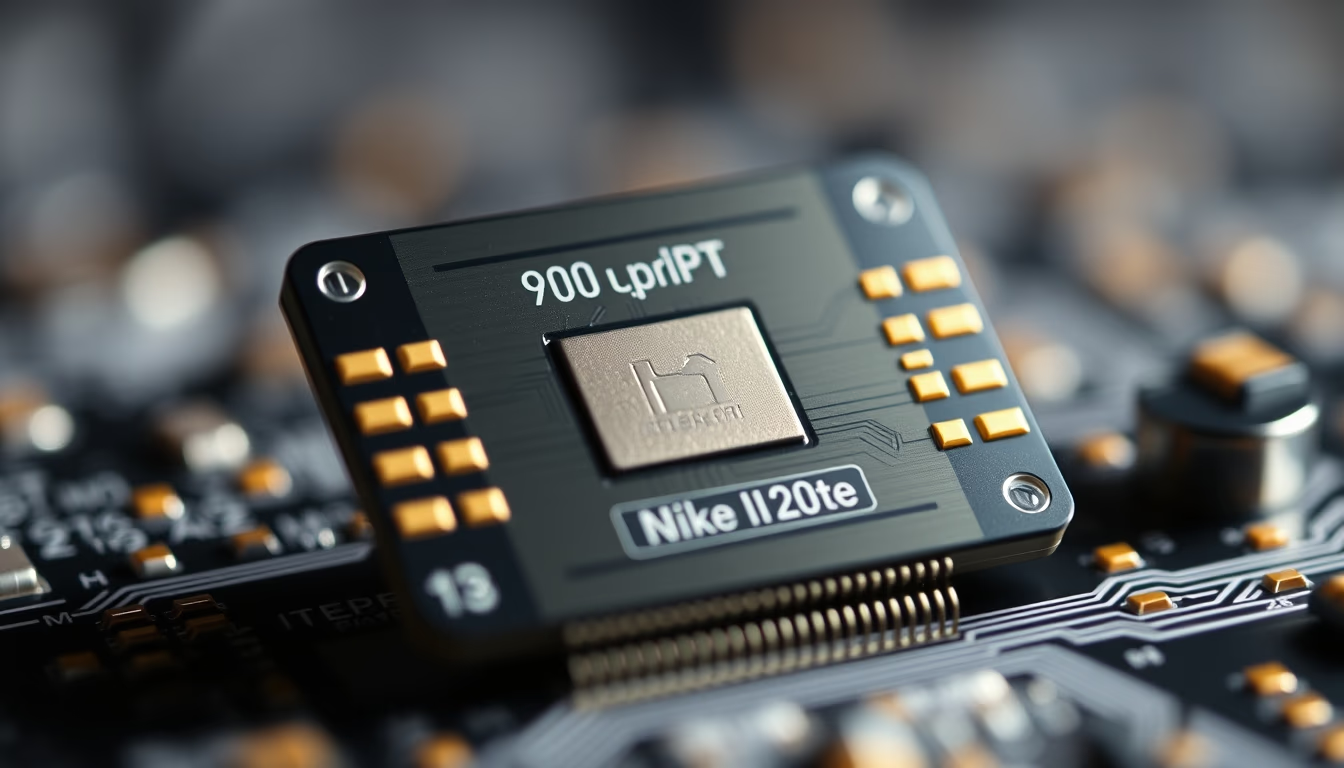
Macro shot of a credit card chip reveals intricate technical and security features embedded in the plastic.
About this subject
The chip on a credit card, also known as the EMV chip (Europay, Mastercard, and Visa), is a microprocessor that securely stores and processes data. Unlike magnetic stripes, which are more vulnerable to cloning, the chip generates a unique code for each transaction, making fraud much more difficult. The technology was introduced in Brazil from 2014 onward, with mandatory chip cards to reduce fraud. Today, virtually all credit and debit cards in the country have the chip, which follows international security standards.
The chips are made of a thin layer of silicon containing integrated circuits. In the macro image, you can see the gold contacts that connect electrically with the terminal reader. These contacts are arranged in a specific configuration, usually with six or eight pins, that transfer data and power. The chip surface is protected by an epoxy resin that resists impacts and tampering attempts.
Chip security is reinforced by encryption and the need for a PIN (Personal Identification Number) to authorize in-person transactions. In Brazil, chip usage with a PIN has been mandatory since 2017, replacing signatures as the verification method. Additionally, the chip enables contactless payments (NFC) on many cards, integrating the technology. Chip evolution includes tokenization, which replaces the actual card number with a temporary token during online transactions.
Interestingly, the credit card chip has a globally standardized design, but details can vary between brands and issuers. The macro photography highlights the micro-soldering and manufacturing precision, which involves photolithography and encapsulation processes. This technology exemplifies how microelectronics integrates into daily life, protecting billions of transactions every day.
Frequently Asked Questions
What does EMV stand for on the card chip?
EMV stands for Europay, Mastercard, and Visa, the three companies that developed the chip standard for payment cards. This global standard ensures interoperability and security of transactions.
Is the credit card chip secure?
Yes, the chip is much more secure than the magnetic stripe because it generates a unique code for each transaction, preventing cloning. It also requires a PIN to authorize in-person payments.
How does contactless payment work with the chip?
The chip has an NFC (Near Field Communication) antenna that enables contactless communication with the terminal. Simply tap the card near the reader to make a payment, without inserting the chip.
Direct URL
https://pub-c7d6a6ea828543ac903a74a341ccb2e1.r2.dev/imagens/credit-card-chip-macro-shot-studio-editorial-portrait-v3.avifHow to credit
Include a visible link back to UtilizAí. Copy one of the snippets below:
<a href="https://xn--utiliza-eza.com/en/midia/imagens/credit-card-chip-macro-shot-studio-editorial-portrait-v3">Credit card chip macro shot</a> by <a href="https://xn--utiliza-eza.com">UtilizAí</a>, licensed under <a href="https://creativecommons.org/licenses/by/4.0/">CC BY 4.0</a>.
[Credit card chip macro shot](https://xn--utiliza-eza.com/en/midia/imagens/credit-card-chip-macro-shot-studio-editorial-portrait-v3) by [UtilizAí](https://xn--utiliza-eza.com), CC BY 4.0
License: CC-BY-4.0