Credit card chip closeup macro photography of EMV chip
1344×768 · AVIF · CC BY 4.0
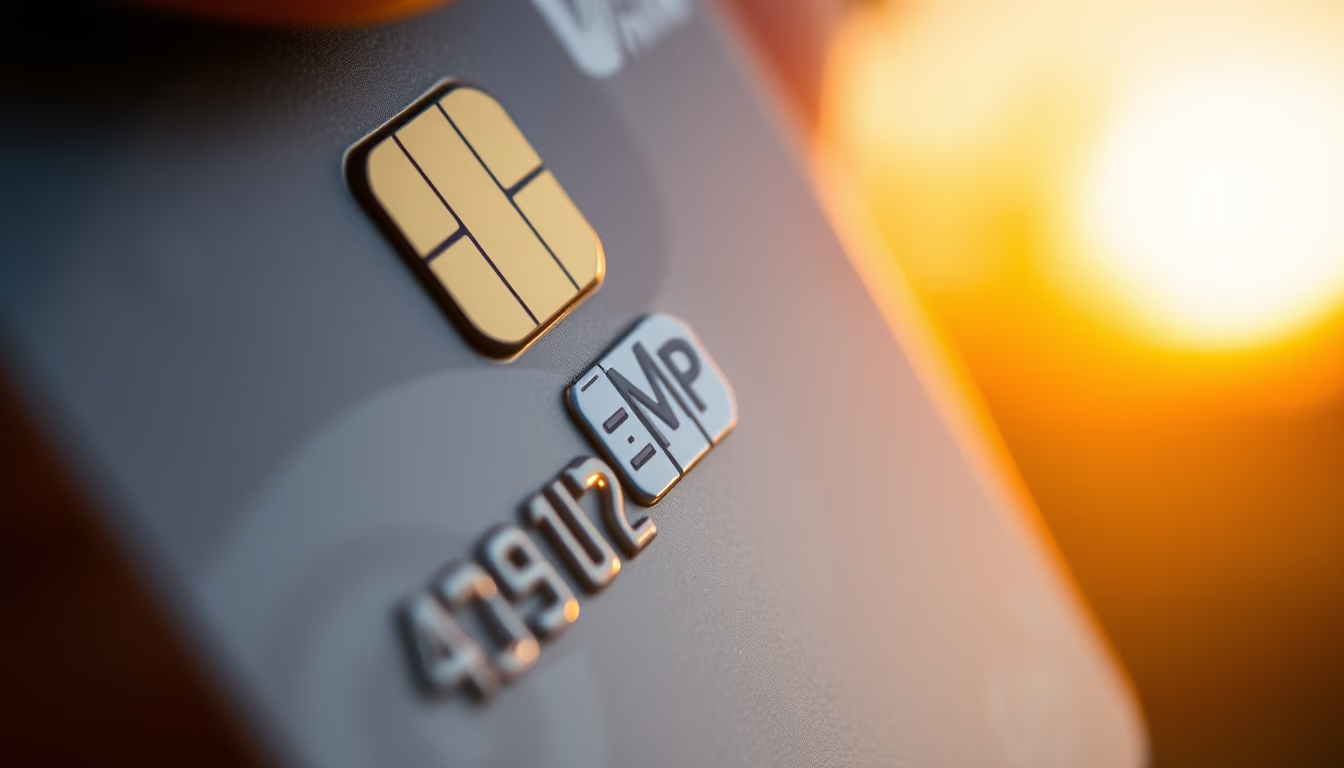
Closeup macro of the EMV chip on a credit card reveals the technology that revolutionized payment security in Brazil and worldwide.
About this subject
The EMV chip (Europay, Mastercard, and Visa) is the global security standard for card payments, adopted in Brazil starting in 2010. Unlike the magnetic stripe, which stores fixed data, the chip generates a dynamic code for each transaction, making cloning virtually impossible. In Brazil, the migration to chips was accelerated by a Central Bank mandate requiring all cards issued from 2014 onward to include the device. Today, over 90% of Brazilian cards have chips, drastically reducing in-person fraud.
The chip is a microprocessor with visible gold contacts on the surface. These contacts connect to the payment terminal when the card is inserted. The chip contains an embedded operating system that runs cryptographic algorithms, such as 3DES or AES, to authenticate the transaction. EMV technology was developed in the 1990s and became mandatory in several countries, including Brazil, which was a pioneer in Latin America in large-scale adoption.
A curiosity: the EMV chip is not limited to credit cards. It is also present in debit cards, prepaid cards, and even some public transit cards, such as São Paulo's Bilhete Único. The chip's resistance to tampering is tested by independent laboratories following EMVCo standards, the consortium that manages the standard. In Brazil, Febraban and card brands ran awareness campaigns to encourage chip adoption, especially after a rise in magnetic stripe fraud.
The chip is complemented by contactless technology, enabling payments without physical contact. In this case, the chip communicates via radio frequency with the terminal. Although the contactless chip is the same, the transaction is faster and more convenient. In 2023, the Central Bank reported that over 60% of in-person transactions in Brazil used contactless functionality, demonstrating the evolution of the payment system.
Frequently Asked Questions
What does EMV stand for?
EMV stands for Europay, Mastercard, and Visa, the three companies that developed the chip standard for payment cards. The standard is managed by EMVCo, a consortium that defines technical security specifications.
How does the EMV chip protect against fraud?
The chip generates a unique, encrypted transaction code for each purchase. This code cannot be reused, unlike the fixed data on a magnetic stripe. This prevents cloned information from being used in future transactions.
Do all cards in Brazil have a chip?
Since 2014, the Central Bank has required all credit and debit cards issued in Brazil to have a chip. Currently, over 90% of cards in circulation are chip-enabled, and payment terminals are required to support the technology.
Direct URL
https://pub-c7d6a6ea828543ac903a74a341ccb2e1.r2.dev/imagens/credit-card-chip-closeup-macro-photography-of-emv-chip-editorial-portrait-golden-hour-late-afternoon.avifHow to credit
Include a visible link back to UtilizAí. Copy one of the snippets below:
<a href="https://xn--utiliza-eza.com/en/midia/imagens/credit-card-chip-closeup-macro-photography-of-emv-chip-editorial-portrait-golden-hour-late-afternoon">Credit card chip closeup macro photography of EMV chip</a> by <a href="https://xn--utiliza-eza.com">UtilizAí</a>, licensed under <a href="https://creativecommons.org/licenses/by/4.0/">CC BY 4.0</a>.
[Credit card chip closeup macro photography of EMV chip](https://xn--utiliza-eza.com/en/midia/imagens/credit-card-chip-closeup-macro-photography-of-emv-chip-editorial-portrait-golden-hour-late-afternoon) by [UtilizAí](https://xn--utiliza-eza.com), CC BY 4.0
License: CC-BY-4.0