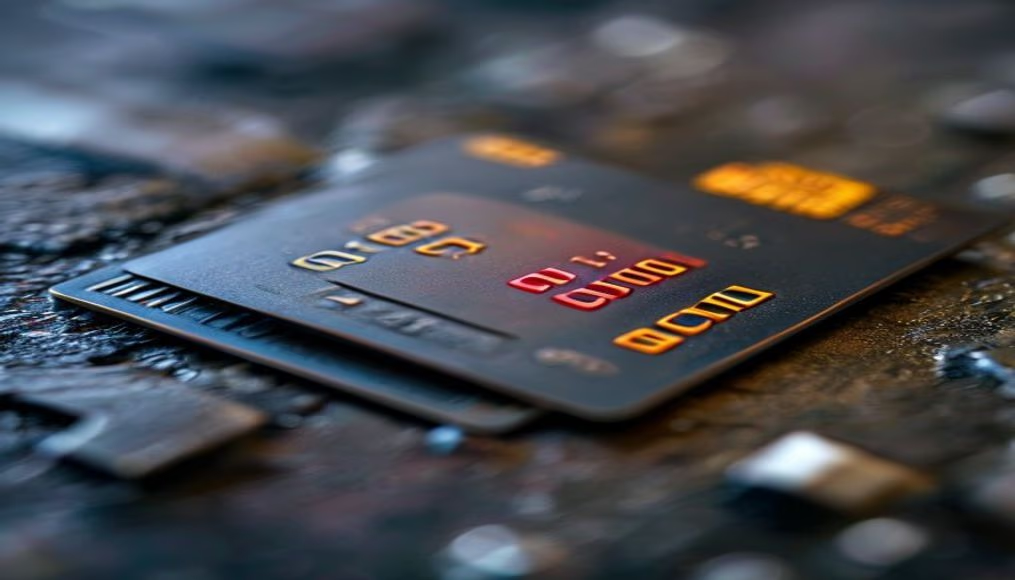
Credit card chip closeup macro photography of EMV chip
1344×768 · AVIF · CC BY 4.0

Close-up macro shot of an EMV chip on a credit card in morning natural light, highlighting the payment technology that reduced fraud worldwide.
About this subject
The EMV chip (Europay, Mastercard, and Visa) is a microprocessor embedded in credit and debit cards that securely stores and processes encrypted data. Unlike magnetic stripes, which contain static information, the chip generates a unique transaction code for each use, making cloning virtually impossible. Since its introduction in Brazil in the mid-2010s, EMV chip adoption has drastically reduced in-person fraud, with declines of up to 80% in some countries, according to EMVCo data.
EMV technology was initially developed in Europe in the 1990s to standardize electronic payments and combat counterfeiting. The chip consists of a small circuit board with a CPU, volatile and non-volatile memory, and an embedded operating system. When inserted into a payment terminal, the chip and terminal perform mutual authentication, ensuring both are legitimate. This process, called "dynamic cryptography," is what makes EMV so secure.
In Brazil, the migration to chip cards was driven by the Central Bank and card networks, with deadlines for terminal upgrades. Today, virtually all cards issued in the country have an EMV chip, though many still retain a magnetic stripe for international compatibility. Macro photography of the chip reveals minute details, such as the gold contacts that make electrical connection with the terminal, typically made of gold or palladium to resist corrosion.
Interestingly, the EMV chip is not exclusive to bank cards; it is also used in public transit cards, such as São Paulo's Bilhete Único, and in identification systems. The morning natural light in the image highlights the metallic textures and grooves of the chip, showcasing the precision of the engineering involved. Despite the rise of contactless payments (NFC) and digital wallets, the EMV chip remains the backbone of security for in-person transactions worldwide.
Frequently Asked Questions
What does EMV stand for?
EMV stands for Europay, Mastercard, and Visa, the three companies that originally developed the chip standard for electronic payments. The standard is now managed by EMVCo, a consortium that also includes American Express, JCB, and Discover.
How does the EMV chip protect against fraud?
The chip generates a unique, encrypted transaction code for each purchase, unlike magnetic stripes that store static data. This prevents cloned information from being used in fraudulent transactions.
Do all cards in Brazil have an EMV chip?
Yes, virtually all credit and debit cards issued in Brazil since 2015 have an EMV chip. However, many still retain a magnetic stripe for compatibility in countries that have not fully adopted the chip.
Direct URL
https://pub-c7d6a6ea828543ac903a74a341ccb2e1.r2.dev/imagens/credit-card-chip-closeup-macro-photography-of-emv-chip-closeup-macro-shot-morning-natural-light.avifHow to credit
Include a visible link back to UtilizAí. Copy one of the snippets below:
<a href="https://xn--utiliza-eza.com/en/midia/imagens/credit-card-chip-closeup-macro-photography-of-emv-chip-closeup-macro-shot-morning-natural-light">Credit card chip closeup macro photography of EMV chip</a> by <a href="https://xn--utiliza-eza.com">UtilizAí</a>, licensed under <a href="https://creativecommons.org/licenses/by/4.0/">CC BY 4.0</a>.
[Credit card chip closeup macro photography of EMV chip](https://xn--utiliza-eza.com/en/midia/imagens/credit-card-chip-closeup-macro-photography-of-emv-chip-closeup-macro-shot-morning-natural-light) by [UtilizAí](https://xn--utiliza-eza.com), CC BY 4.0
License: CC-BY-4.0