Credit card chip closeup macro photography of EMV chip
1344×768 · AVIF · CC BY 4.0
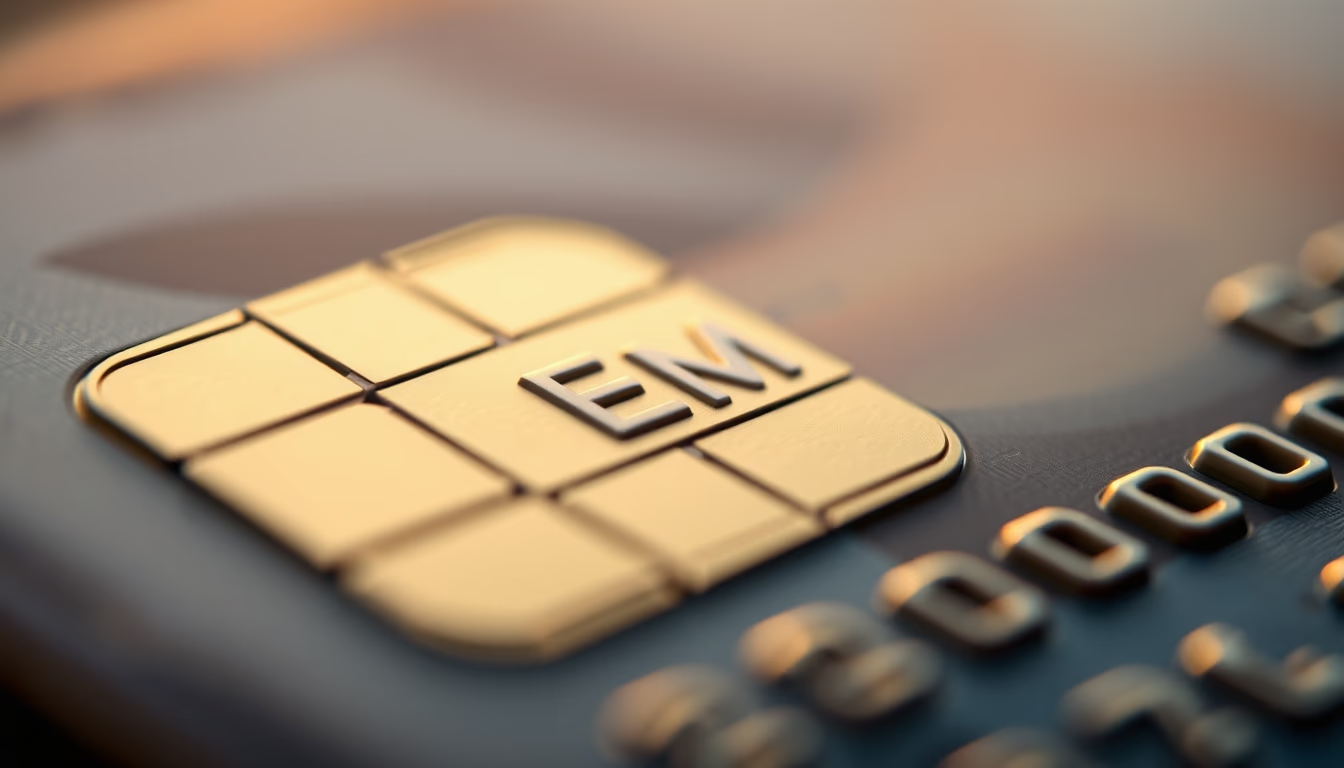
Close-up macro of an EMV chip on a credit card: security technology that revolutionized global payments since the 1990s.
About this subject
The EMV chip (Europay, Mastercard and Visa) is the global standard for card payment security. Introduced commercially in the mid-1990s, it gradually replaced the magnetic stripe in over 80% of cards issued worldwide. The chip generates a unique transaction code for each use, making it impossible for fraudsters to reuse, unlike the static data on a magnetic stripe. This technology has dramatically reduced in-person fraud, especially in countries like Brazil, where adoption accelerated from 2014 onwards.
The chip contains a microprocessor that cryptographically stores cardholder data and runs authentication algorithms. When inserted into a POS terminal, the chip and terminal perform a cryptographic handshake to validate the card's authenticity. Even if data is intercepted, it cannot be cloned for use in another chip. This security is complemented by a PIN or, in contactless transactions, by value limits and dynamic encryption.
Interestingly, Brazil was one of the first countries to massively migrate to chip technology, even before many European nations. Today, over 90% of in-person transactions in Brazil use chip or contactless. The EMV chip also enabled the evolution of contactless payments (NFC) and digital wallets, as the same security standard is used. The macro photo highlights the chip's gold contacts, which are actually a gold-copper alloy chosen for its conductivity and corrosion resistance.
Globally, EMV adoption reduced in-person card fraud by 70% in fully migrated countries. However, online fraud (card-not-present) increased, as criminals shifted to internet purchases where the chip is not used. This has driven technologies like 3D Secure and tokenization. The EMV chip remains the foundation of physical payment security, with newer versions supporting biometrics and multi-application storage.
Frequently Asked Questions
What does EMV stand for?
EMV stands for Europay, Mastercard and Visa, the three companies that created the standard. It is now managed by EMVCo, which also includes American Express, Discover, JCB and UnionPay.
Is the EMV chip more secure than a magnetic stripe?
Yes, because it generates a unique code for each transaction, which cannot be reused. The magnetic stripe contains static data that can be easily copied.
Why does the EMV chip have gold contacts?
The contacts are made of a gold-copper alloy to ensure high electrical conductivity and corrosion resistance, essential for the chip's durability.
Direct URL
https://pub-c7d6a6ea828543ac903a74a341ccb2e1.r2.dev/imagens/credit-card-chip-closeup-macro-photography-of-emv-chip-closeup-macro-shot-golden-hour-late-afternoon.avifHow to credit
Include a visible link back to UtilizAí. Copy one of the snippets below:
<a href="https://xn--utiliza-eza.com/en/midia/imagens/credit-card-chip-closeup-macro-photography-of-emv-chip-closeup-macro-shot-golden-hour-late-afternoon">Credit card chip closeup macro photography of EMV chip</a> by <a href="https://xn--utiliza-eza.com">UtilizAí</a>, licensed under <a href="https://creativecommons.org/licenses/by/4.0/">CC BY 4.0</a>.
[Credit card chip closeup macro photography of EMV chip](https://xn--utiliza-eza.com/en/midia/imagens/credit-card-chip-closeup-macro-photography-of-emv-chip-closeup-macro-shot-golden-hour-late-afternoon) by [UtilizAí](https://xn--utiliza-eza.com), CC BY 4.0
License: CC-BY-4.0