Credit card chip closeup macro photography of EMV chip
1344×768 · AVIF · CC BY 4.0
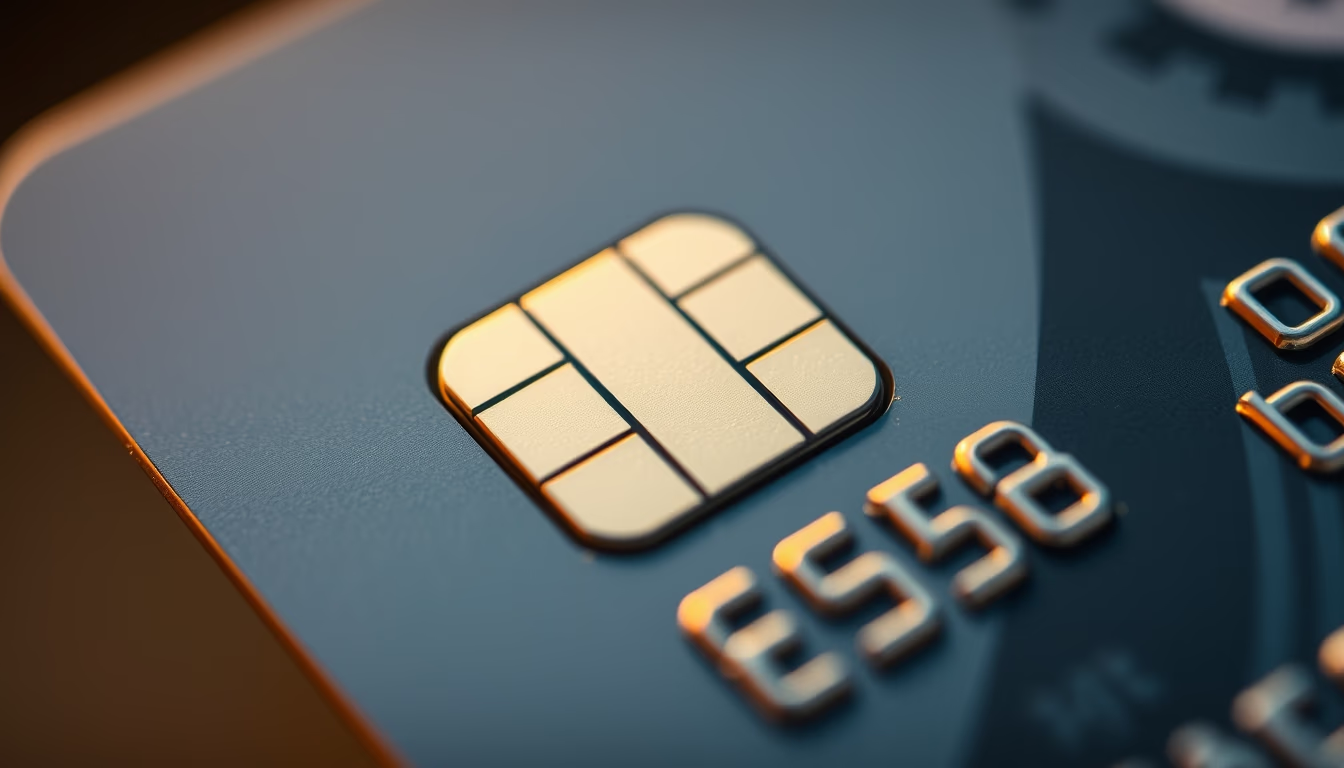
Close-up macro shot of an EMV chip: the technology that standardized card payments worldwide, reducing fraud and enabling contactless transactions.
About this subject
The credit card chip you see in this image is a microprocessor that follows the EMV standard (Europay, Mastercard, and Visa), created in 1994 to unify payment systems. Before EMV, each brand used magnetic stripe or proprietary technology, leading to incompatibilities and high cloning rates. The chip stores encrypted data and generates dynamic codes for each transaction, making cloning virtually impossible. Today, over 9 billion EMV cards are in global circulation, according to EMVCo, and Brazil is one of the countries with the highest adoption, with over 90% of in-person transactions using chip since 2014.
EMV adoption was accelerated by pressure from insurers and payment networks demanding fraud reduction. In the United States, migration only began in 2015 after years of resistance, but now over 70% of terminals accept chip. The standard also enabled contactless payments, which use the same chip encryption technology. In Brazil, contactless payments grew 300% between 2020 and 2023, driven by the pandemic and terminal modernization.
Fun fact: the first chip cards were launched in France in 1986, even before the EMV standard. The current chip can store up to 80 kilobytes of data, enough for multiple cryptographic keys and loyalty apps. Security is so robust that even if a criminal physically extracts the chip, the encrypted data is useless without the issuer's private key.
The macro close-up reveals the chip's gold contacts, made of gold due to its high conductivity and corrosion resistance. Each chip manufacturer (such as Infineon, NXP, and Samsung) has slightly different designs, but all follow EMV specifications to ensure global interoperability.
Frequently Asked Questions
What does EMV stand for in credit card chips?
EMV stands for Europay, Mastercard, and Visa, the three companies that created the standard in 1994 to ensure security and global interoperability in card payments.
Does the EMV chip really eliminate card cloning?
Yes, because the chip generates a unique encrypted code for each transaction, which cannot be reused. Unlike magnetic stripes, which store fixed data and can be copied.
Why are the chip contacts gold-colored?
Gold is used for its excellent electrical conductivity and resistance to corrosion, ensuring reliable contact over years of use.
Direct URL
https://pub-c7d6a6ea828543ac903a74a341ccb2e1.r2.dev/imagens/credit-card-chip-closeup-macro-photography-of-emv-chip-aerial-drone-shot-golden-hour-late-afternoon.avifHow to credit
Include a visible link back to UtilizAí. Copy one of the snippets below:
<a href="https://xn--utiliza-eza.com/en/midia/imagens/credit-card-chip-closeup-macro-photography-of-emv-chip-aerial-drone-shot-golden-hour-late-afternoon">Credit card chip closeup macro photography of EMV chip</a> by <a href="https://xn--utiliza-eza.com">UtilizAí</a>, licensed under <a href="https://creativecommons.org/licenses/by/4.0/">CC BY 4.0</a>.
[Credit card chip closeup macro photography of EMV chip](https://xn--utiliza-eza.com/en/midia/imagens/credit-card-chip-closeup-macro-photography-of-emv-chip-aerial-drone-shot-golden-hour-late-afternoon) by [UtilizAí](https://xn--utiliza-eza.com), CC BY 4.0
License: CC-BY-4.0