Coral reef vibrant
1344×768 · AVIF · CC BY 4.0
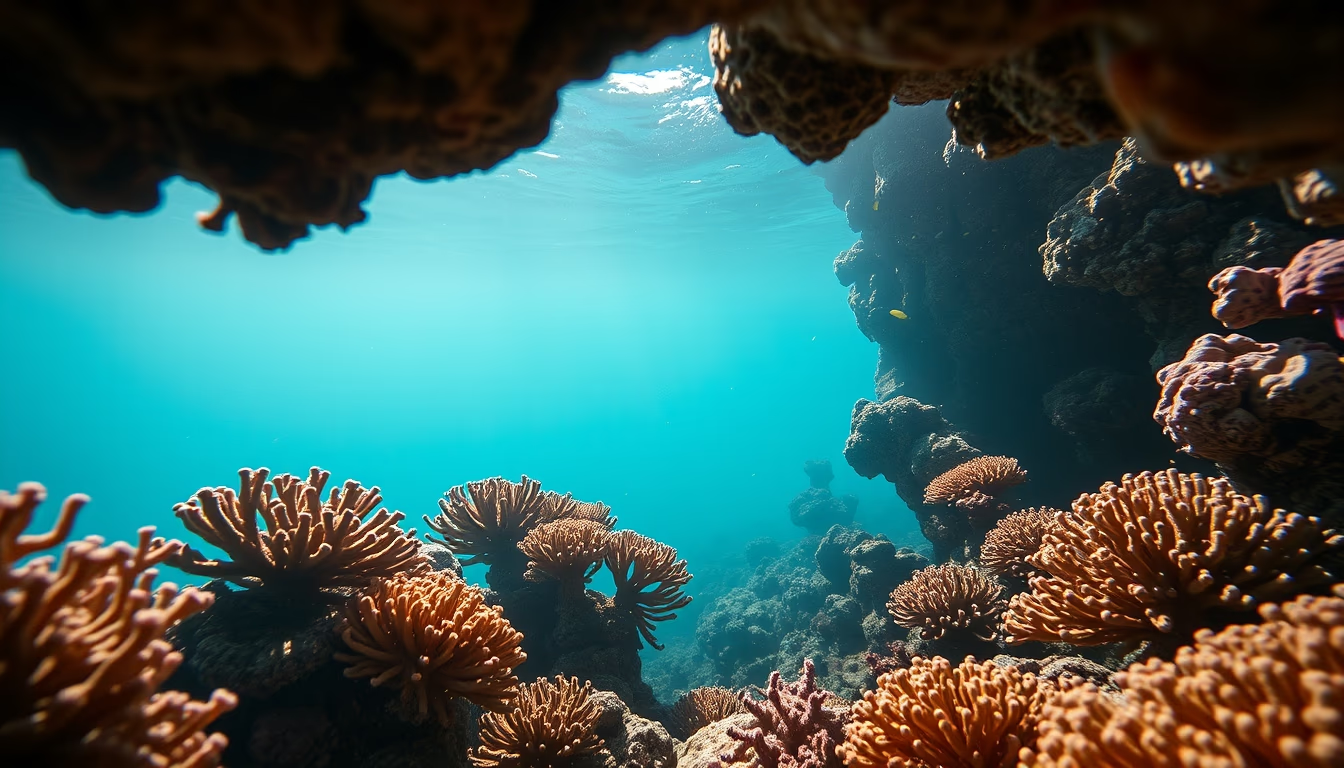
Coral reefs are highly biodiverse marine ecosystems, essential for ocean life and coastal protection.
About this subject
Coral reefs are underwater structures built by colonies of coral polyps that secrete calcium carbonate, creating one of the most diverse ecosystems on Earth. Covering less than 0.1% of the ocean surface, they host about 25% of all known marine species, including fish, mollusks, crustaceans, and algae. These ecosystems are often called "rainforests of the sea" due to their biological richness.
Geographically, coral reefs are concentrated in tropical and subtropical waters, mainly in the Indo-Pacific, Caribbean, and Red Sea. The Coral Triangle, between Indonesia, the Philippines, and Papua New Guinea, has the highest coral diversity globally, with over 500 species. In Brazil, reefs are less extensive but include the Abrolhos Marine National Park, which features unique formations called "chapeirões."
Culturally and economically, reefs are vital: they provide coastal protection against storms, support artisanal fishing and tourism, and are sources of bioactive compounds for medicine. It is estimated that reefs generate about US$36 billion per year in ecosystem services. However, they face serious threats such as bleaching caused by global warming, ocean acidification, pollution, and overfishing.
A notable curiosity is that corals have a symbiotic relationship with zooxanthellae algae, which provide nutrients and vibrant colors. When stressed, corals expel these algae, turning white and vulnerable. Although they resemble plants, corals are animals belonging to the phylum Cnidaria. Recovery of degraded reefs is possible but slow, requiring conservation actions such as marine protected areas and active restoration with coral fragments.
Frequently Asked Questions
Why are coral reefs important for the environment?
Coral reefs host about 25% of marine species, protect coastlines from erosion and storms, and cycle essential nutrients. They also support fishing and tourism, generating billions of dollars annually.
What causes coral bleaching?
Bleaching occurs when corals expel zooxanthellae algae due to stresses like rising water temperature, pollution, or acidification. Without the algae, corals lose their color and become vulnerable to death.
Where are the largest coral reefs in the world?
The Great Barrier Reef in Australia is the largest coral structure, stretching over 2,300 km. Other major reefs include the Belize Barrier Reef and the Coral Triangle in Southeast Asia.
Direct URL
https://pub-c7d6a6ea828543ac903a74a341ccb2e1.r2.dev/imagens/coral-reef-vibrant-documentary-photography.avifHow to credit
Include a visible link back to UtilizAí. Copy one of the snippets below:
<a href="https://xn--utiliza-eza.com/en/midia/imagens/coral-reef-vibrant-documentary-photography">Coral reef vibrant</a> by <a href="https://xn--utiliza-eza.com">UtilizAí</a>, licensed under <a href="https://creativecommons.org/licenses/by/4.0/">CC BY 4.0</a>.
[Coral reef vibrant](https://xn--utiliza-eza.com/en/midia/imagens/coral-reef-vibrant-documentary-photography) by [UtilizAí](https://xn--utiliza-eza.com), CC BY 4.0
License: CC-BY-4.0