Colosseum rome aerial drone
1344×768 · AVIF · CC BY 4.0
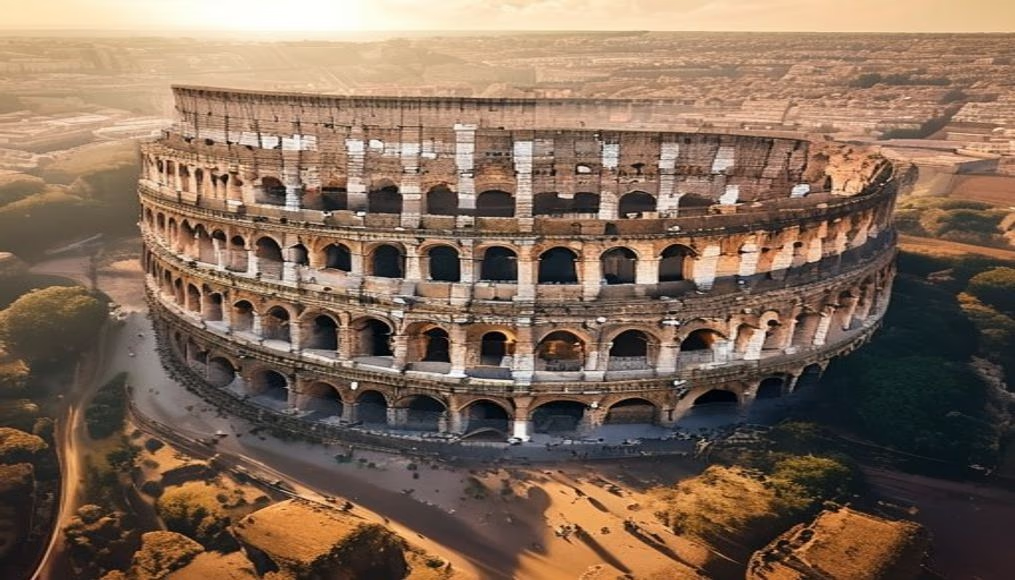
Aerial view of the Colosseum in Rome reveals the grandeur of the largest amphitheater of the Roman Empire, an eternal symbol of ancient engineering and entertainment.
About this subject
The Colosseum, also known as the Flavian Amphitheatre, was completed in 80 AD under Emperor Titus, following construction begun by Vespasian. With an estimated capacity between 50,000 and 80,000 spectators, it was the largest amphitheater in the ancient world, surpassing similar structures in cities like Puteoli and Capua. Its elliptical shape measures 189 meters in length, 156 meters in width, and 48 meters in height, with a central arena of 87 by 55 meters. The original facade was clad in travertine and marble, featuring four levels of arcades adorned with statues and decorations.
Within its walls, the Colosseum hosted spectacles lasting up to 100 days, including gladiator fights, simulated naval battles (naumachiae), and hunts of exotic animals imported from across the empire. The underground area, called the hypogeum, was a complex network of tunnels and chambers where animals and scenery were raised using pulley and ramp systems. After the fall of the Roman Empire, the building suffered damage from earthquakes (such as those in 847 and 1231) and stone robbery for construction of churches and palaces, losing about two-thirds of its original mass.
Today, it is a UNESCO World Heritage Site and one of the New Seven Wonders of the World, receiving over 7 million visitors annually. The aerial view highlights its precise geometry and impressive scale, as well as allowing observation of the ruins of the Roman Forum and Palatine Hill nearby. Recent restorations, such as those funded by businessman Diego Della Valle, cleaned the facade and revealed architectural details previously hidden by pollution. The Colosseum remains an icon of Roman engineering and the history of entertainment.
Frequently Asked Questions
What was the capacity of the Colosseum?
The Colosseum is estimated to have held between 50,000 and 80,000 spectators, seated in tiered stands based on social class.
Why is the Colosseum partially ruined?
Earthquakes in the 9th and 13th centuries damaged the structure, and during the Middle Ages its stones were quarried to build palaces and churches, including St. Peter's Basilica.
What events took place at the Colosseum?
It hosted gladiator fights, animal hunts, public executions, and even simulated naval battles, serving as a center for entertainment and social control.
Direct URL
https://pub-c7d6a6ea828543ac903a74a341ccb2e1.r2.dev/imagens/colosseum-rome-aerial-drone-street-photography-v11.avifHow to credit
Include a visible link back to UtilizAí. Copy one of the snippets below:
<a href="https://xn--utiliza-eza.com/en/midia/imagens/colosseum-rome-aerial-drone-street-photography-v11">Colosseum rome aerial drone</a> by <a href="https://xn--utiliza-eza.com">UtilizAí</a>, licensed under <a href="https://creativecommons.org/licenses/by/4.0/">CC BY 4.0</a>.
[Colosseum rome aerial drone](https://xn--utiliza-eza.com/en/midia/imagens/colosseum-rome-aerial-drone-street-photography-v11) by [UtilizAí](https://xn--utiliza-eza.com), CC BY 4.0
License: CC-BY-4.0