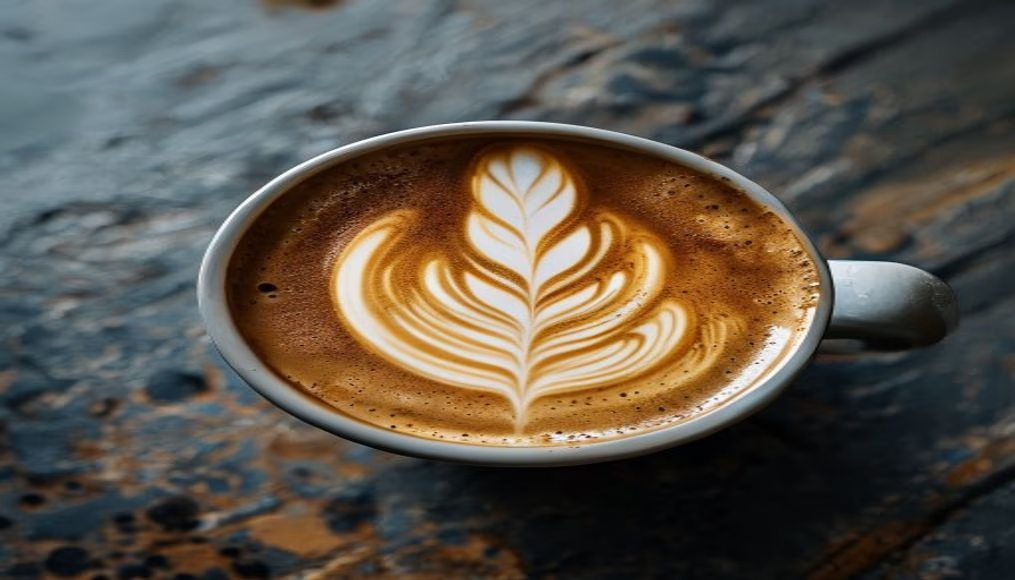
Coffee with latte art top down
1344×768 · AVIF · CC BY 4.0
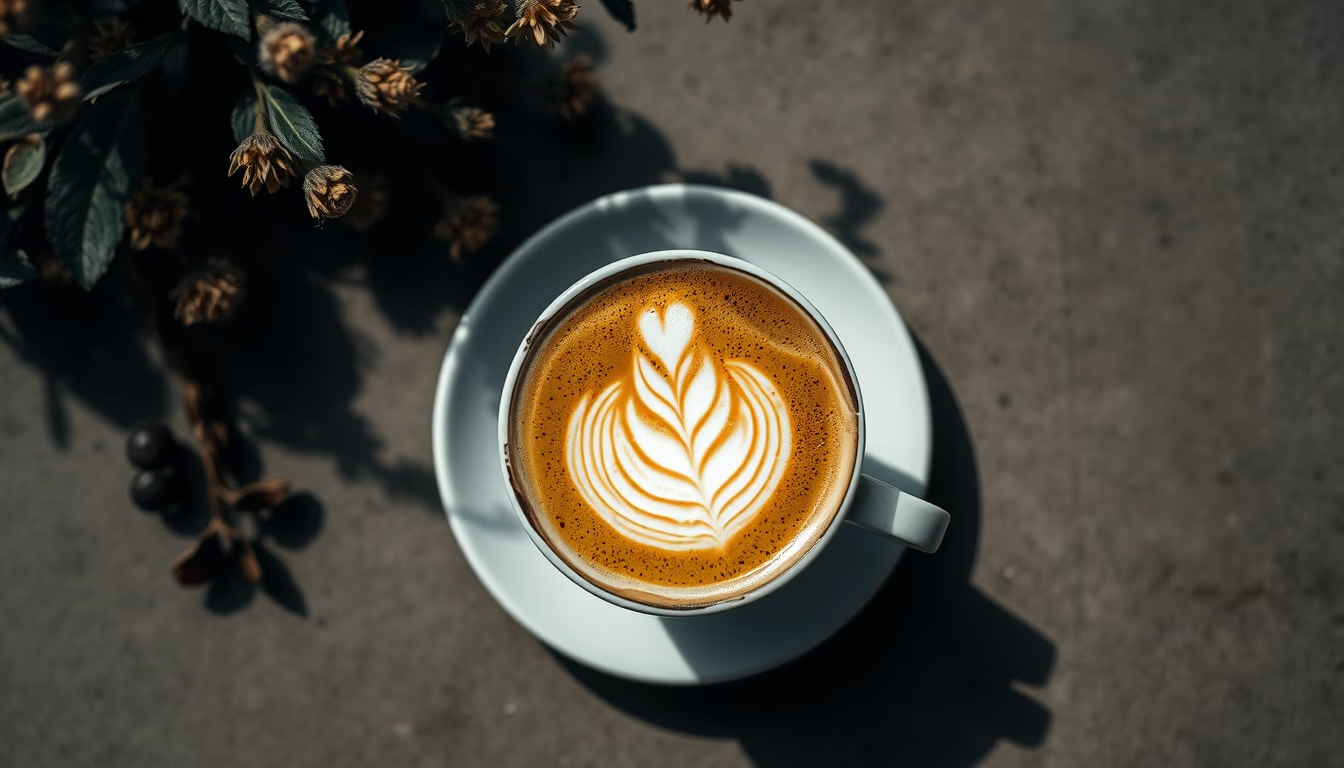
Latte art is the technique of drawing figures on the coffee surface with steamed milk, combining manual skill and perfect crema.
About this subject
Latte art has become a hallmark of specialty coffee culture over the past few decades. The technique requires the barista to pour steamed milk over espresso in a controlled manner, creating patterns such as rosettes, tulips, hearts, and swans. The coffee crema, an emulsion of oils and carbon dioxide, serves as the canvas for microfoamed milk, which must have a velvety texture and temperature between 55°C and 65°C.
Although often associated with third-wave coffee shops, latte art originated in the United States in the 1980s when baristas began experimenting with simple designs. Italian Luigi Lupi is credited as one of the pioneers, and the technique spread globally with the World Latte Art Championship, held since 2004. Today, competitions evaluate contrast, symmetry, creativity, and execution.
From a chemical perspective, successful latte art depends on foam stability. Whole milk or alternatives like oat milk (higher protein content) produce more stable microfoam. The espresso must have thick, persistent crema, requiring fresh beans, fine grind, and extraction between 25 and 30 seconds. Cup temperature also matters: preheated cups help maintain milk fluidity.
In Brazil, specialty coffee consumption has grown over 30% in the last five years, and latte art has become a differentiator in coffee shops in São Paulo, Rio de Janeiro, and Belo Horizonte. Brazilian baristas have excelled in international competitions, such as Fernanda Carvalho, world latte art champion in 2019. The technique has also spawned a niche of courses and workshops, attracting both professionals and home enthusiasts.
Frequently Asked Questions
What is the difference between latte art and cappuccino art?
Latte art is made on a latte (espresso with steamed milk and little foam), while cappuccino art uses milk with more foam, resulting in less defined designs due to the thick layer.
Can you make latte art at home without a professional machine?
Yes, with an aeroccino or manually frothed milk, but achieving the ideal microfoam texture is harder. Practicing with whole milk and a well-extracted espresso increases chances.
Why is latte art important to coffee culture?
It enhances presentation, demonstrates barista skill, and attracts customers on social media, helping differentiate coffee shops and promote the full sensory experience.
Direct URL
https://pub-c7d6a6ea828543ac903a74a341ccb2e1.r2.dev/imagens/coffee-with-latte-art-top-down-fine-art-photography.avifHow to credit
Include a visible link back to UtilizAí. Copy one of the snippets below:
<a href="https://xn--utiliza-eza.com/en/midia/imagens/coffee-with-latte-art-top-down-fine-art-photography">Coffee with latte art top down</a> by <a href="https://xn--utiliza-eza.com">UtilizAí</a>, licensed under <a href="https://creativecommons.org/licenses/by/4.0/">CC BY 4.0</a>.
[Coffee with latte art top down](https://xn--utiliza-eza.com/en/midia/imagens/coffee-with-latte-art-top-down-fine-art-photography) by [UtilizAí](https://xn--utiliza-eza.com), CC BY 4.0
License: CC-BY-4.0