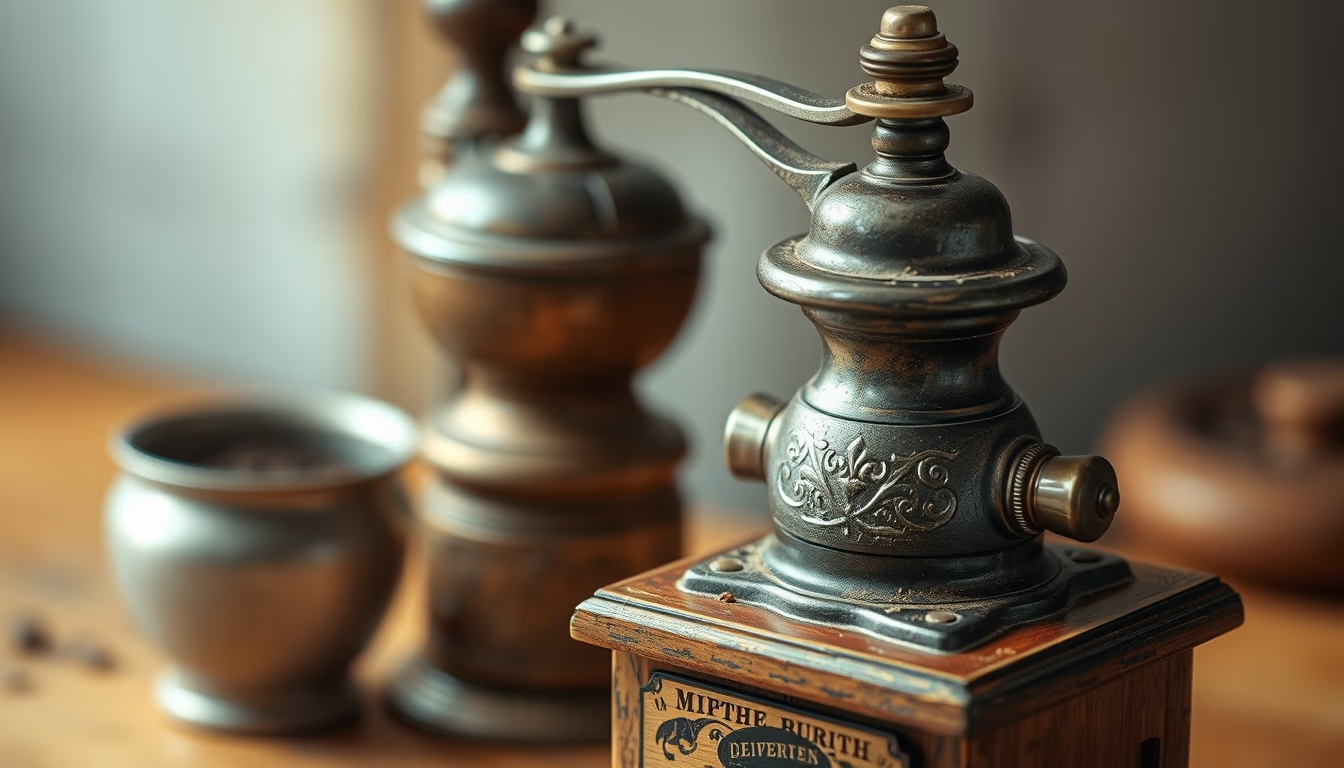
Coffee grinder antique
1344×768 · AVIF · CC BY 4.0
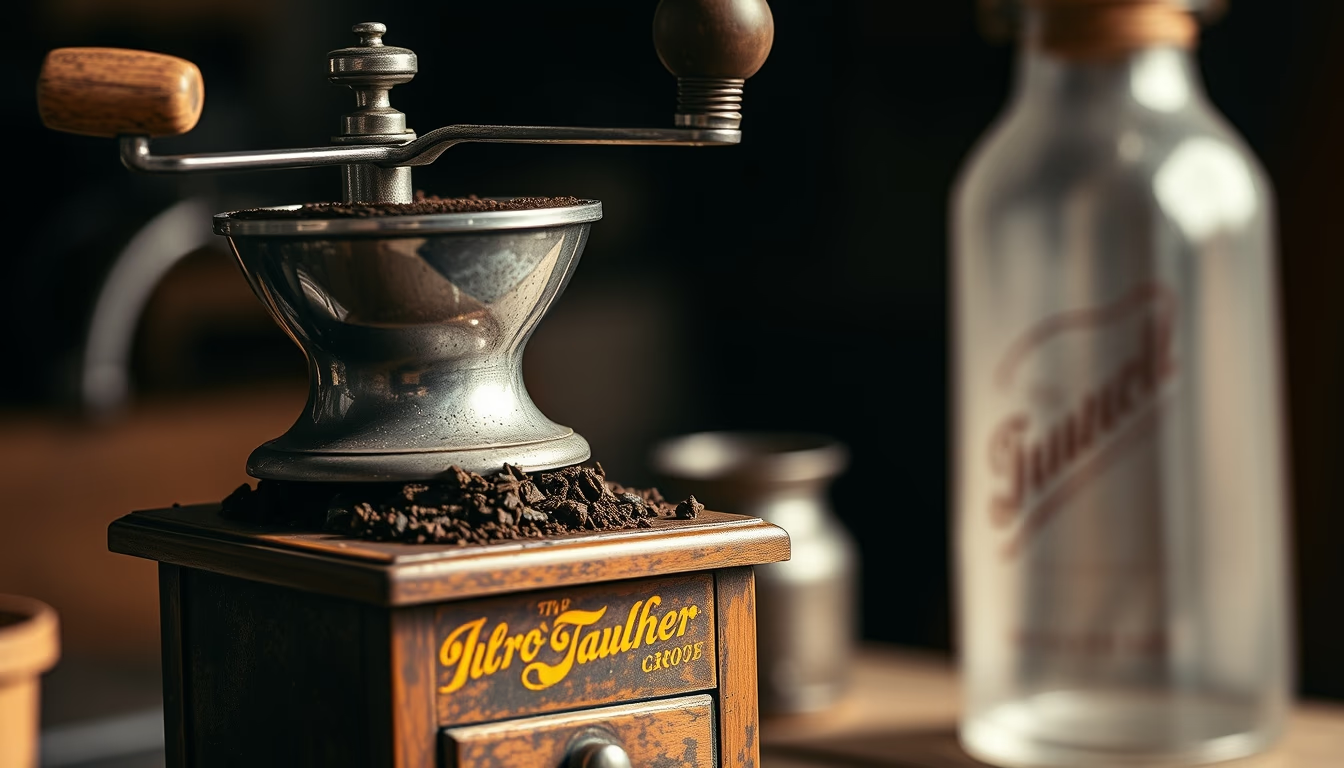
Antique coffee grinder, a collector's piece dating back to the 19th century when coffee became popular in Brazil and worldwide.
About this subject
Antique coffee grinders are testimonies to the evolution of coffee consumption. Until the 18th century, coffee was prepared with whole beans or crushed in mortars. It was only in the mid-19th century that the first mechanical grinders appeared, many made of cast iron or wood, with ornate designs reflecting Victorian style. In Brazil, the world's largest coffee producer, these utensils became common in farm kitchens and urban homes, especially among elites who imported pieces from Europe.
The basic operation of these grinders involves two serrated discs or cones that crush the beans by friction. The ideal grind size varies with brewing method: for drip coffee, a fine grind; for French press, a coarse grind. Antique grinders usually allow adjustment via a central screw. Many models have a drawer at the base to collect the powder, while others have a top compartment for whole beans.
Beyond functionality, these objects are valued for their aesthetic and historical appeal. Manufacturers like German Zassenhaus and American Enterprise Manufacturing Company produced models that are now collectibles. Antique shops and auctions often sell early 20th century grinders for amounts that can exceed a thousand reais, depending on condition and rarity. Restoring them requires care: lubricate moving parts with mineral oil and avoid abrasive products that damage the original patina.
The artisanal coffee culture has boosted interest in manual grinders, both antiques and modern replicas. Many enthusiasts believe that grinding just before brewing better preserves the bean's essential oils and aromas, resulting in a superior cup. Thus, these utensils are not merely relics but living tools for those seeking a richer sensory experience connected to tradition.
Frequently Asked Questions
How can I tell if an antique coffee grinder is original?
Check for manufacturer marks, usually engraved on the body or drawer. Look at materials: cast iron, solid wood, and brass parts are common in originals. Even wear and patina indicate age, while recent paint or welds may suggest modern restoration.
What is the difference between a blade grinder and a burr grinder?
Antique grinders are almost always burr grinders, which crush beans between two serrated surfaces for a uniform grind. Blade grinders chop unevenly and heat up the coffee, harming flavor. Burr grinders are preferred by experts.
Can I use an antique grinder every day?
Yes, if it's in good condition. Clean it thoroughly and lubricate moving parts with food-grade mineral oil. Adjust the grind size according to your brewing method. Well-maintained antique grinders work perfectly and can last for decades.
Direct URL
https://pub-c7d6a6ea828543ac903a74a341ccb2e1.r2.dev/imagens/coffee-grinder-antique-fine-art-photography-p2.avifHow to credit
Include a visible link back to UtilizAí. Copy one of the snippets below:
<a href="https://xn--utiliza-eza.com/en/midia/imagens/coffee-grinder-antique-fine-art-photography-p2">Coffee grinder antique</a> by <a href="https://xn--utiliza-eza.com">UtilizAí</a>, licensed under <a href="https://creativecommons.org/licenses/by/4.0/">CC BY 4.0</a>.
[Coffee grinder antique](https://xn--utiliza-eza.com/en/midia/imagens/coffee-grinder-antique-fine-art-photography-p2) by [UtilizAí](https://xn--utiliza-eza.com), CC BY 4.0
License: CC-BY-4.0