Coffee farm beans plant
1344×768 · AVIF · CC BY 4.0
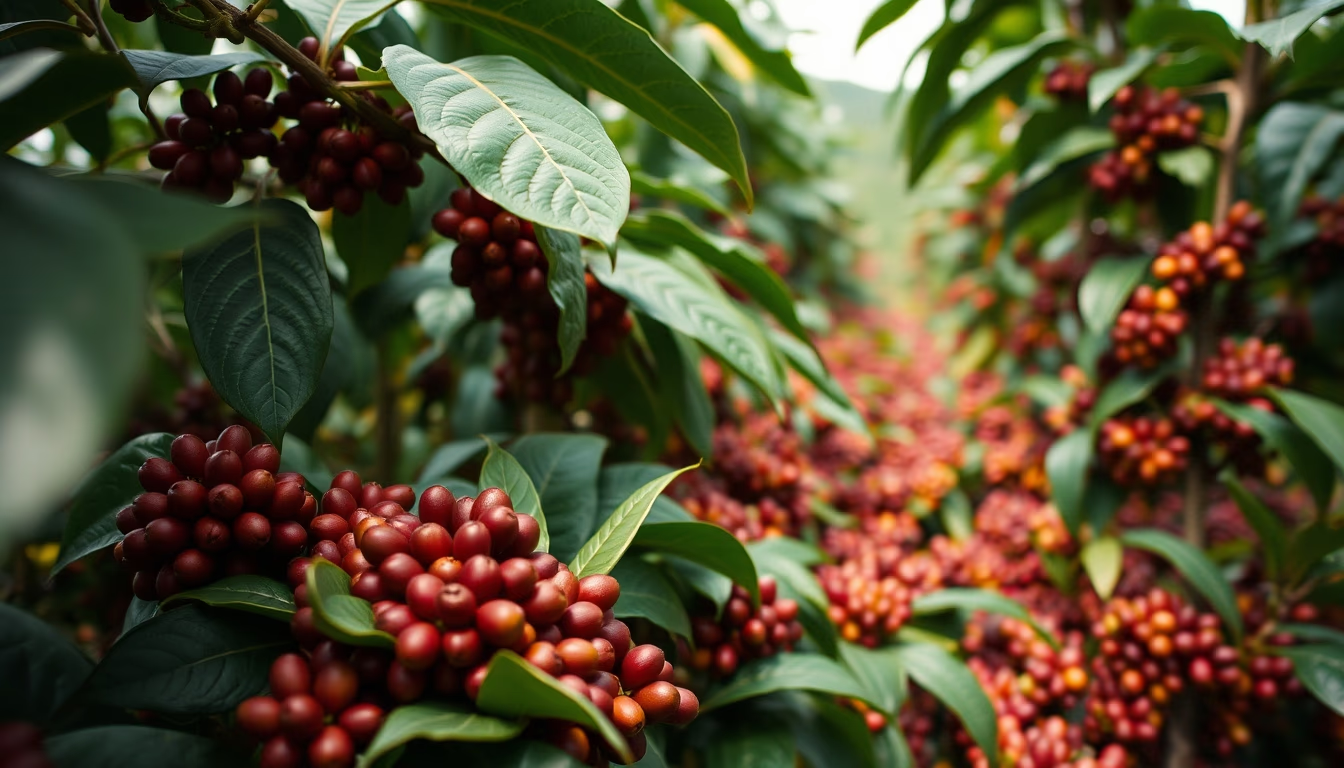
Coffee: from fruit to cup, the cultivation of beans on Brazilian farms combines tradition and technology to produce one of the world's most beloved beverages.
About this subject
Coffee cultivation in Brazil dates back to the 18th century, when the first seedlings arrived in Pará from French Guiana. Today, the country is the world's largest producer and exporter of coffee, responsible for about one third of all coffee consumed globally. Plantations are mainly concentrated in the states of Minas Gerais, Espírito Santo, São Paulo, and Bahia, where the tropical highland climate and nutrient-rich soils provide ideal conditions for the plant's development.
The coffee plant, belonging to the genus Coffea, is a perennial shrub that produces fruits known as cherries. Each cherry contains two seeds, the coffee beans. The cultivation process requires meticulous care: from choosing the variety, such as Arabica or Robusta, to managing pruning, irrigation, and pest control. Harvesting can be selective, manual, or mechanized, depending on the topography and farm size. After harvest, the beans undergo processing, drying, and roasting, steps that define the final sensory profile.
A notable fact is that Brazilian coffee is classified by the Ministry of Agriculture into different types, such as gourmet, superior, and traditional, based on criteria of flavor, aroma, acidity, and body. Additionally, sustainable practices have gained ground, with certifications like Rainforest Alliance and Organic ensuring responsible production. Coffee cultivation also boosts the local economy, creating jobs and fostering rural tourism in regions like Cerrado Mineiro and Alta Mogiana.
Frequently Asked Questions
What is the difference between Arabica and Robusta coffee?
Arabica is smoother with higher acidity and complex aroma, grown at higher altitudes. Robusta has more caffeine, a stronger and bitter taste, and is more resistant, grown at lower altitudes.
How is coffee harvested?
Harvesting can be manual (selective, picking only ripe cherries) or mechanized (using machines that shake the branches). The choice depends on topography and farming type.
What is the Rainforest Alliance certification for coffee?
It is a seal ensuring that coffee was produced following sustainable practices, respecting the environment, workers' rights, and biodiversity.
Direct URL
https://pub-c7d6a6ea828543ac903a74a341ccb2e1.r2.dev/imagens/coffee-farm-beans-plant-film-grain-authentic-p0.avifHow to credit
Include a visible link back to UtilizAí. Copy one of the snippets below:
<a href="https://xn--utiliza-eza.com/en/midia/imagens/coffee-farm-beans-plant-film-grain-authentic-p0">Coffee farm beans plant</a> by <a href="https://xn--utiliza-eza.com">UtilizAí</a>, licensed under <a href="https://creativecommons.org/licenses/by/4.0/">CC BY 4.0</a>.
[Coffee farm beans plant](https://xn--utiliza-eza.com/en/midia/imagens/coffee-farm-beans-plant-film-grain-authentic-p0) by [UtilizAí](https://xn--utiliza-eza.com), CC BY 4.0
License: CC-BY-4.0