Coffee farm beans plant
1344×768 · AVIF · CC BY 4.0
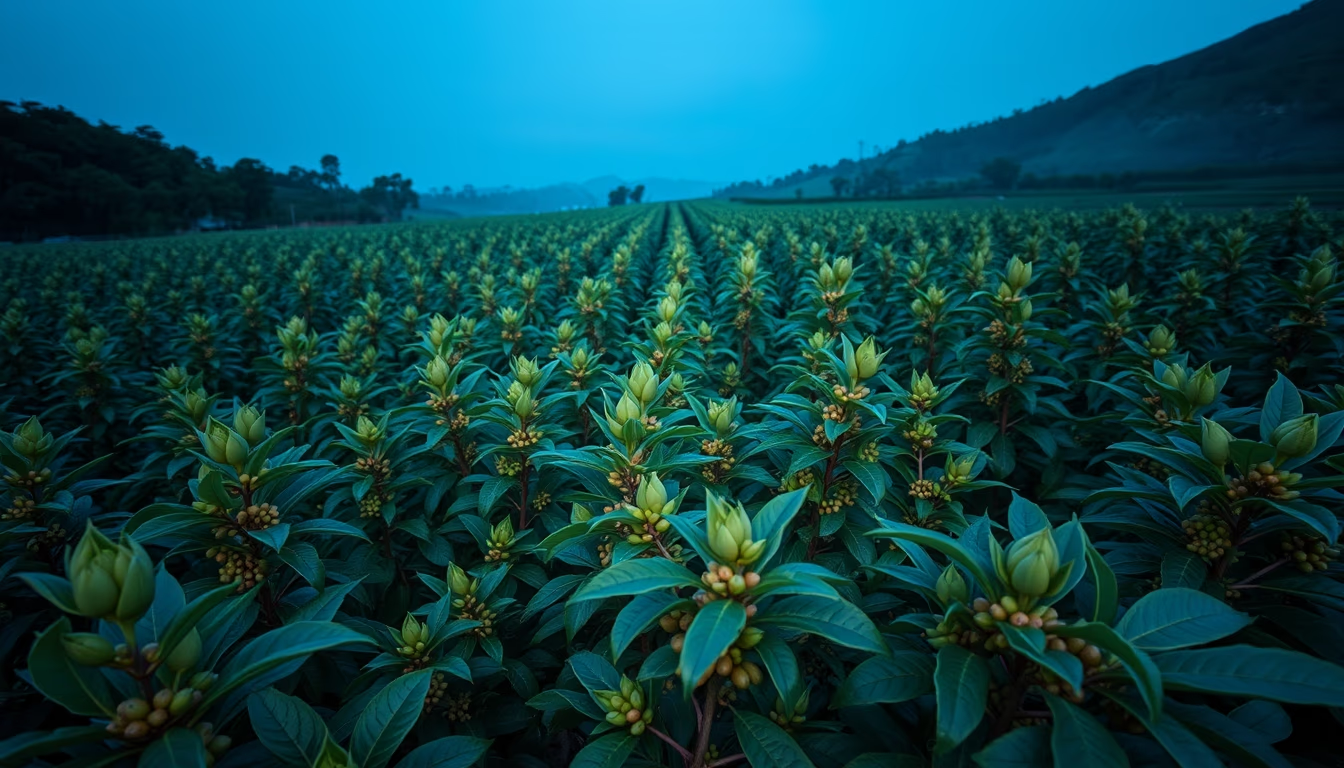
An aerial view of a coffee plantation reveals geometric patterns and the importance of coffee cultivation for the global economy.
About this subject
Coffee, one of the most consumed beverages worldwide, originates from the highlands of Ethiopia and is now grown in over 70 countries. The two main species are Coffea arabica and Coffea canephora (robusta). Arabica, considered superior, thrives at altitudes between 600 and 2,000 meters with mild temperatures and well-distributed rainfall. Robusta is hardier and grows in warmer lowlands. Brazil has been the global leader for decades, producing about one-third of the world's coffee, followed by Vietnam, Colombia, and Indonesia.
Coffee farming requires specific care. Seedlings are planted in spaced rows to facilitate harvesting and management. Soil must be well-drained and rich in organic matter. It takes three to four years for the plant to bear its first fruits, called cherries. Each cherry typically contains two seeds, the coffee beans. Harvesting can be manual, selective (only ripe cherries), or mechanical, depending on topography and farm size.
Post-harvest processing defines the beverage's sensory profile. There are two main methods: dry (natural) processing, where cherries are sun-dried whole, and wet (washed) processing, where pulp is removed before drying. Natural coffees tend to be sweeter and fuller-bodied, while washed ones are more acidic and clean. Recently, the market has valued specialty coffees (scoring above 80 on the SCA scale) and sustainable practices such as fair trade and regenerative agriculture.
Coffee cultivation faces challenges like climate change, which threatens to reduce suitable growing areas, and pests like the coffee berry borer. In response, resistant varieties and agroforestry systems have been developed. The aerial view of a coffee farm highlights the spatial organization of the crop, showing how technology and traditional knowledge combine to produce one of the world's most valuable commodities.
Frequently Asked Questions
What is the difference between Arabica and Robusta coffee?
Arabica is grown at high altitudes, has a milder and more complex flavor, and contains less caffeine. Robusta is hardier, grown at low altitudes, has a stronger, bitterer taste, and about twice the caffeine.
How is coffee harvested?
Harvesting can be manual, picking only ripe cherries (selective), or mechanical using harvesters. In traditional strip picking, all cherries are removed at once, mixing green and ripe ones.
Why is coffee grown in mountainous regions?
High altitudes provide cooler temperatures and greater temperature variation, slowing fruit maturation and developing more complex flavors. Well-drained slopes also prevent waterlogging.
Direct URL
https://pub-c7d6a6ea828543ac903a74a341ccb2e1.r2.dev/imagens/coffee-farm-beans-plant-aerial-drone-shot-p5.avifHow to credit
Include a visible link back to UtilizAí. Copy one of the snippets below:
<a href="https://xn--utiliza-eza.com/en/midia/imagens/coffee-farm-beans-plant-aerial-drone-shot-p5">Coffee farm beans plant</a> by <a href="https://xn--utiliza-eza.com">UtilizAí</a>, licensed under <a href="https://creativecommons.org/licenses/by/4.0/">CC BY 4.0</a>.
[Coffee farm beans plant](https://xn--utiliza-eza.com/en/midia/imagens/coffee-farm-beans-plant-aerial-drone-shot-p5) by [UtilizAí](https://xn--utiliza-eza.com), CC BY 4.0
License: CC-BY-4.0