Clinical trial vials
1344×768 · AVIF · CC BY 4.0
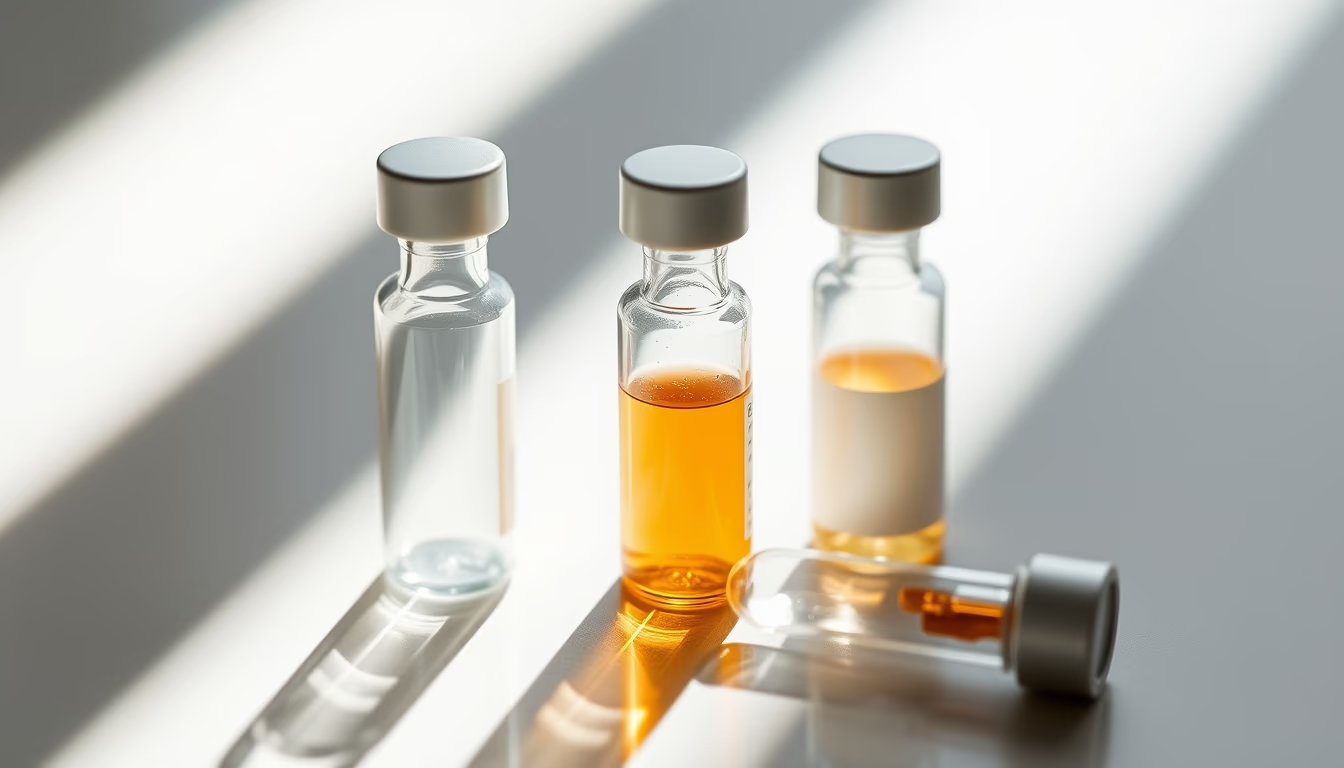
Clinical trial vials are standard containers for experimental drugs, crucial for testing safety and efficacy before regulatory approval.
About this subject
Clinical trials are human studies to evaluate new drugs, vaccines, or medical devices. The vials used in these tests are designed to ensure compound integrity, protecting against contamination, light, and temperature variations. Typically made of Type I borosilicate glass or high-barrier polymers, they must meet stringent pharmacopeial standards, such as those from the Brazilian Pharmacopoeia and the USP (United States Pharmacopeia).
Each vial is labeled with a unique code, batch number, expiration date, and often a barcode or RFID for traceability. During the trial, vials are stored under controlled conditions, such as cold chambers between 2°C and 8°C, and transported in special packaging with temperature loggers. The filling process takes place in clean areas (ISO 5 or higher) to avoid microbiological contamination.
In Brazil, the National Health Surveillance Agency (ANVISA) regulates clinical trials through RDC 09/2015 and RDC 348/2020. The packaging must be compatible with the drug, preventing adsorption or degradation. For instance, some photosensitive compounds require amber vials or opaque film coating. Additionally, vials can be single-dose or multidose, depending on the protocol.
The importance of vials goes beyond protection: they ensure the patient receives exactly the prescribed dosage. In blinded trials, vials are coded so that neither the physician nor the patient knows whether it is the active drug or placebo. At the end of the study, drug stability data inside the vial are essential for product registration.
Frequently Asked Questions
Why do clinical trials use glass vials instead of plastic?
Borosilicate glass offers low chemical reactivity, gas impermeability, and resistance to temperature changes, ensuring the drug does not interact with the container. Plastics may leach substances or adsorb the compound, compromising the study.
How is traceability of vials ensured in a clinical trial?
Each vial receives a batch code and unique identification, often with a barcode or RFID. This allows monitoring from manufacturing to patient administration, ensuring no dose is lost or swapped.
What happens to the vials after the clinical trial ends?
Unused or expired samples must be returned to the sponsor or disposed of according to sanitary regulations, such as incineration. Stability data are analyzed to support the drug's marketing application.
Direct URL
https://pub-c7d6a6ea828543ac903a74a341ccb2e1.r2.dev/imagens/clinical-trial-vials-magazine-editorial-p5.avifHow to credit
Include a visible link back to UtilizAí. Copy one of the snippets below:
<a href="https://xn--utiliza-eza.com/en/midia/imagens/clinical-trial-vials-magazine-editorial-p5">Clinical trial vials</a> by <a href="https://xn--utiliza-eza.com">UtilizAí</a>, licensed under <a href="https://creativecommons.org/licenses/by/4.0/">CC BY 4.0</a>.
[Clinical trial vials](https://xn--utiliza-eza.com/en/midia/imagens/clinical-trial-vials-magazine-editorial-p5) by [UtilizAí](https://xn--utiliza-eza.com), CC BY 4.0
License: CC-BY-4.0