Claymore scottish
1344×768 · AVIF · CC BY 4.0
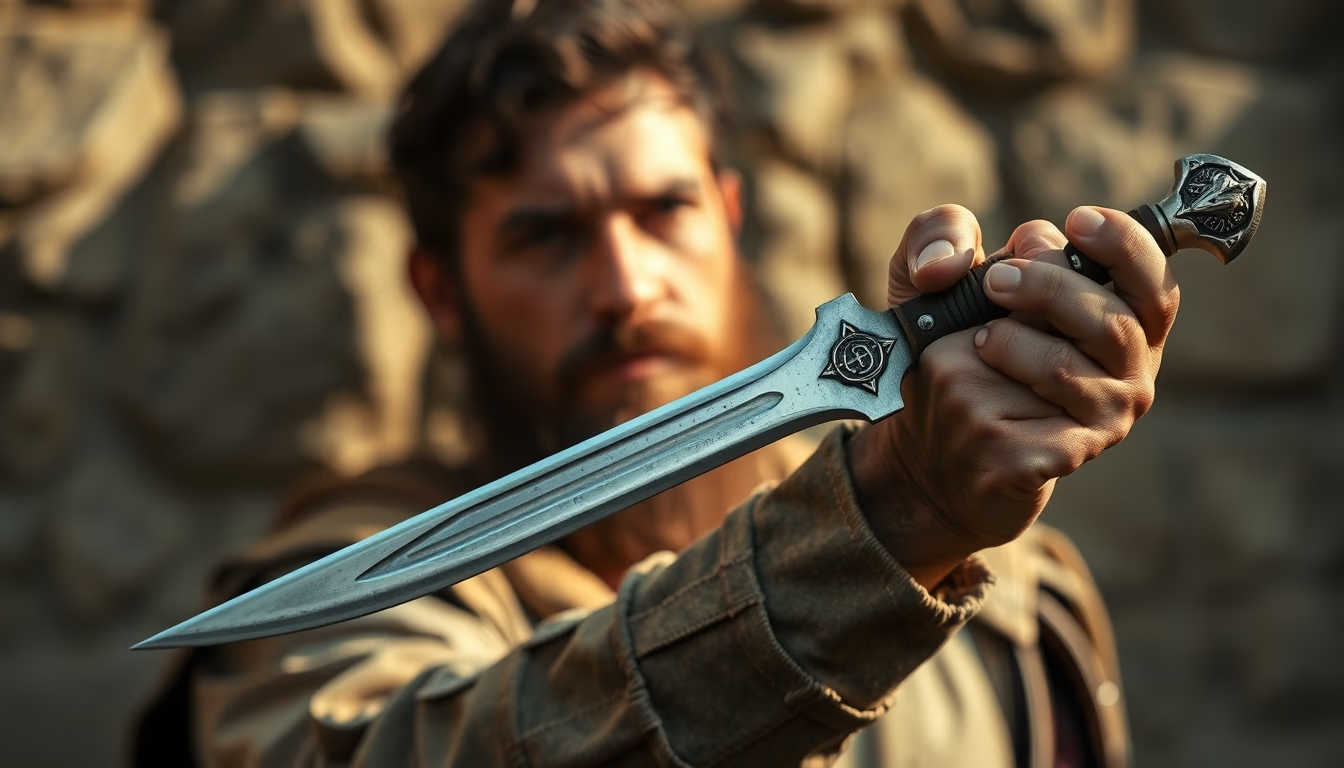
The Scottish claymore is a large, broad-bladed sword, emblematic of Highland warriors from the 15th to 17th centuries.
About this subject
The claymore, from Scottish Gaelic "claidheamh-mòr" meaning "great sword", is an iconic weapon of medieval Scotland. It features a broad, straight blade approximately 100 to 120 cm long, with a long grip designed for two-handed use. The distinctive forward-angled quillons (crossguard arms) in a "V" or "S" shape helped catch an opponent's blade. The claymore was widely used by Scottish clans in the Wars of Independence against England and in the border conflicts of the 15th and 16th centuries.
Unlike other large European swords, the claymore was relatively light for its size, weighing between 2.5 and 3.5 kg, allowing for fast, powerful strikes. Highland warriors wielded it with great skill, often paired with a small circular shield called a targe. The blade was forged from carbon steel with a central fuller to reduce weight without sacrificing strength. Swords were often decorated with Celtic carvings and clan symbols, making each piece unique.
Historically, the claymore was gradually replaced by lighter swords and the basket-hilted broadsword from the 17th century onward, but its legacy endures as a symbol of Scottish bravery and independence. Preserved examples can be found in museums such as the National Museum of Scotland in Edinburgh and the Museum of the Highlands in Inverness. The claymore also appears in fictional works like "Braveheart" and various Arthurian legends, though often anachronistically.
A point of interest: contrary to popular belief, the claymore was not William Wallace's preferred weapon (he used a typical 13th-century longsword). The classic claymore emerged about a century after his death. The term is also mistakenly applied to two-handed swords from other cultures, but the Scottish claymore has a unique design, especially the forward-angled quillons for disarming opponents.
Frequently Asked Questions
What is the difference between a claymore and other large swords?
The Scottish claymore is distinguished by its forward-angled crossguard (forming a V or S shape) and long two-handed grip. Other large swords like the European montante or Japanese nodachi have different designs and purposes.
How heavy was a typical claymore?
A typical claymore weighed between 2.5 and 3.5 kg, surprisingly light for its size, allowing quick strikes and precise control in battle.
Was the claymore used by William Wallace?
No. The classic claymore emerged in the 15th century, about a century after Wallace's death (13th century). He likely used a hand-and-a-half longsword, different from the later claymore design.
Direct URL
https://pub-c7d6a6ea828543ac903a74a341ccb2e1.r2.dev/imagens/claymore-scottish-tilt-shift-miniature-fresh17.avifHow to credit
Include a visible link back to UtilizAí. Copy one of the snippets below:
<a href="https://xn--utiliza-eza.com/en/midia/imagens/claymore-scottish-tilt-shift-miniature-fresh17">Claymore scottish</a> by <a href="https://xn--utiliza-eza.com">UtilizAí</a>, licensed under <a href="https://creativecommons.org/licenses/by/4.0/">CC BY 4.0</a>.
[Claymore scottish](https://xn--utiliza-eza.com/en/midia/imagens/claymore-scottish-tilt-shift-miniature-fresh17) by [UtilizAí](https://xn--utiliza-eza.com), CC BY 4.0
License: CC-BY-4.0