Claymore scottish
1344×768 · AVIF · CC BY 4.0
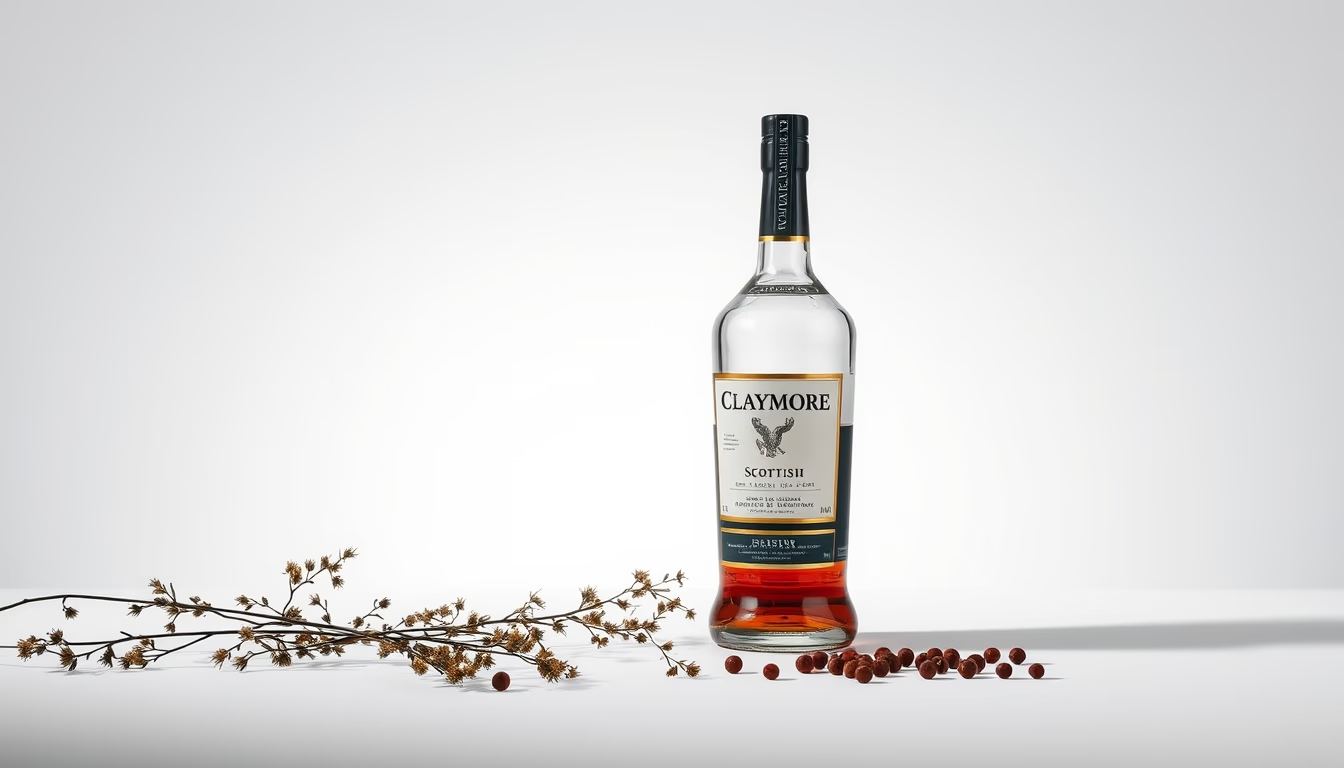
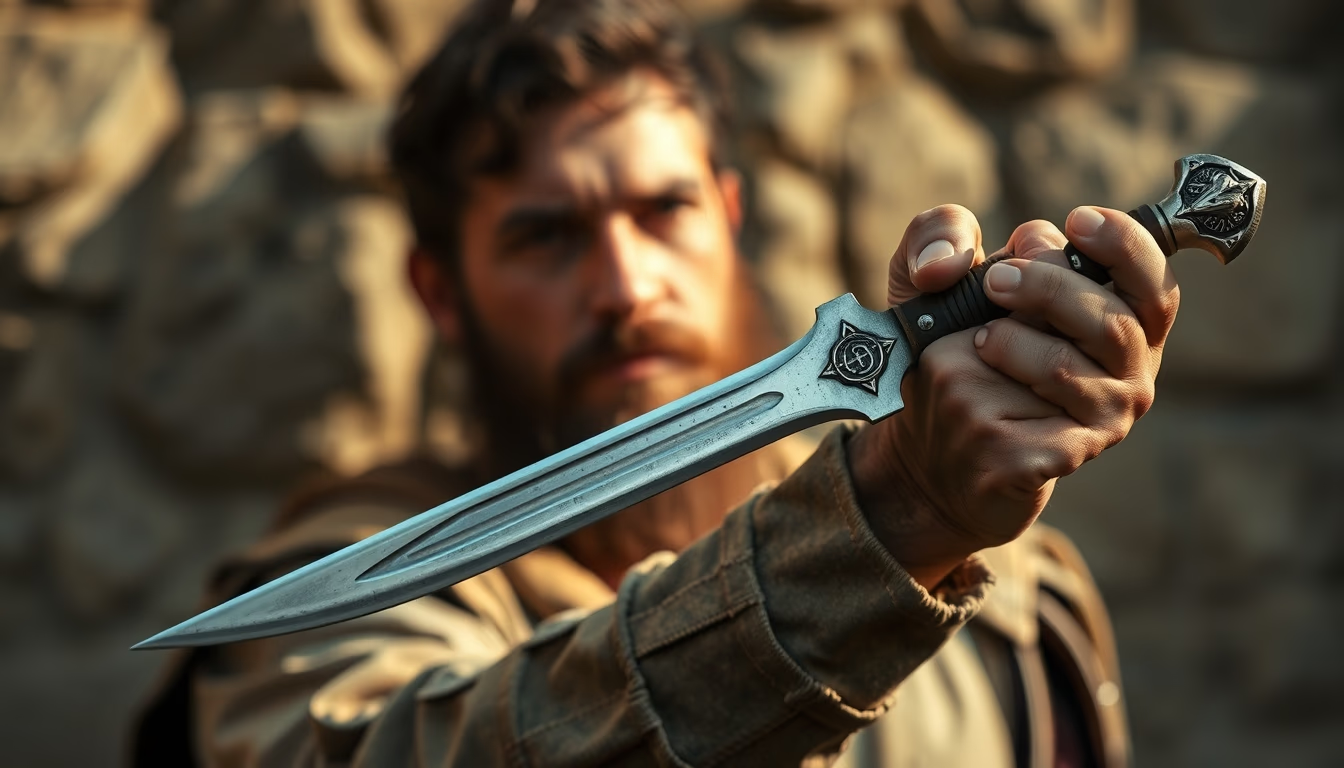
The Scottish claymore is a broad, long-bladed sword used from the 15th to 17th centuries, iconic to Highland warriors.
About this subject
The claymore (from Gaelic claidheamh-mòr, "great sword") is a two-handed weapon that distinguished itself in Scottish military history between the 15th and 17th centuries. With a blade that could exceed 1.2 meters and a weight of 2.5 to 3.5 kilograms, it was designed for powerful cutting strokes against opponents wearing mail or light plate armor. Its characteristic hilt featured a cross-shaped guard tilted forward, often decorated with trefoils or Celtic knots, and an elongated grip allowing use with both hands.
Historically, the claymore was employed by Highland clans in conflicts such as the Scottish Wars of Independence and battles against the English and between clans. Unlike continental longswords, the claymore had a broader blade and a slightly lighter profile, optimized for fast, brutal slashes in close combat. The forward-curving quillons of the guard helped trap an opponent's blade and deflect strikes.
Though often associated with William Wallace and Robert the Bruce, the claymore as a standardized weapon emerged later, around 1500. It was gradually replaced by shorter swords and the advent of gunpowder, but its symbolism endured as an icon of Scottish resistance and independence. Today, replicas are popular in collections and historical reenactments, and the image of the claymore is ubiquitous in films and games, representing Highland bravery.
Interestingly, the term "claymore" is used generically in the English-speaking world for any two-handed Scottish sword, but there is also a one-handed variant called the basket-hilted claymore from the 18th century. However, the classic form remains the great Highland sword, a landmark of late medieval weaponry.
Frequently Asked Questions
What is the difference between a claymore and a typical European longsword?
The claymore has a broader blade and a guard with forward-curved quillons, while continental longswords usually have narrower blades and straight guards. The claymore was also lighter and focused on cuts, wielded with both hands.
Was the claymore actually used in historical battles?
Yes, it was actively used by Scottish clans in the wars of independence and inter-clan conflicts from the 15th to 17th centuries. However, its use declined with the introduction of firearms and linear infantry tactics.
Why is the claymore considered a symbol of Scotland?
It represents the resistance and identity of Highland warriors, and is associated with legendary figures like William Wallace. Its imposing form and Celtic decoration reinforce its cultural appeal.
Direct URL
https://pub-c7d6a6ea828543ac903a74a341ccb2e1.r2.dev/imagens/claymore-scottish-studio-still-life-fresh13.avifHow to credit
Include a visible link back to UtilizAí. Copy one of the snippets below:
<a href="https://xn--utiliza-eza.com/en/midia/imagens/claymore-scottish-studio-still-life-fresh13">Claymore scottish</a> by <a href="https://xn--utiliza-eza.com">UtilizAí</a>, licensed under <a href="https://creativecommons.org/licenses/by/4.0/">CC BY 4.0</a>.
[Claymore scottish](https://xn--utiliza-eza.com/en/midia/imagens/claymore-scottish-studio-still-life-fresh13) by [UtilizAí](https://xn--utiliza-eza.com), CC BY 4.0
License: CC-BY-4.0