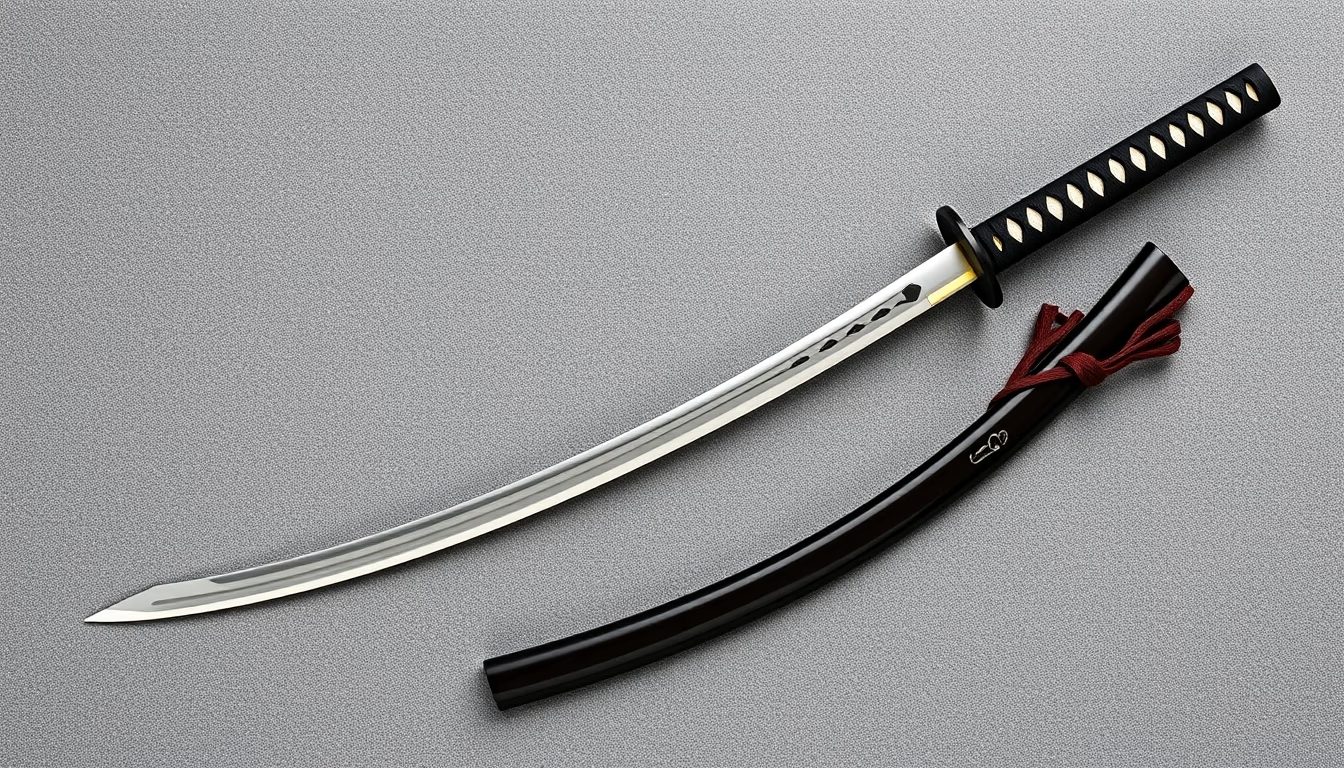
Claymore scottish
1344×768 · AVIF · CC BY 4.0
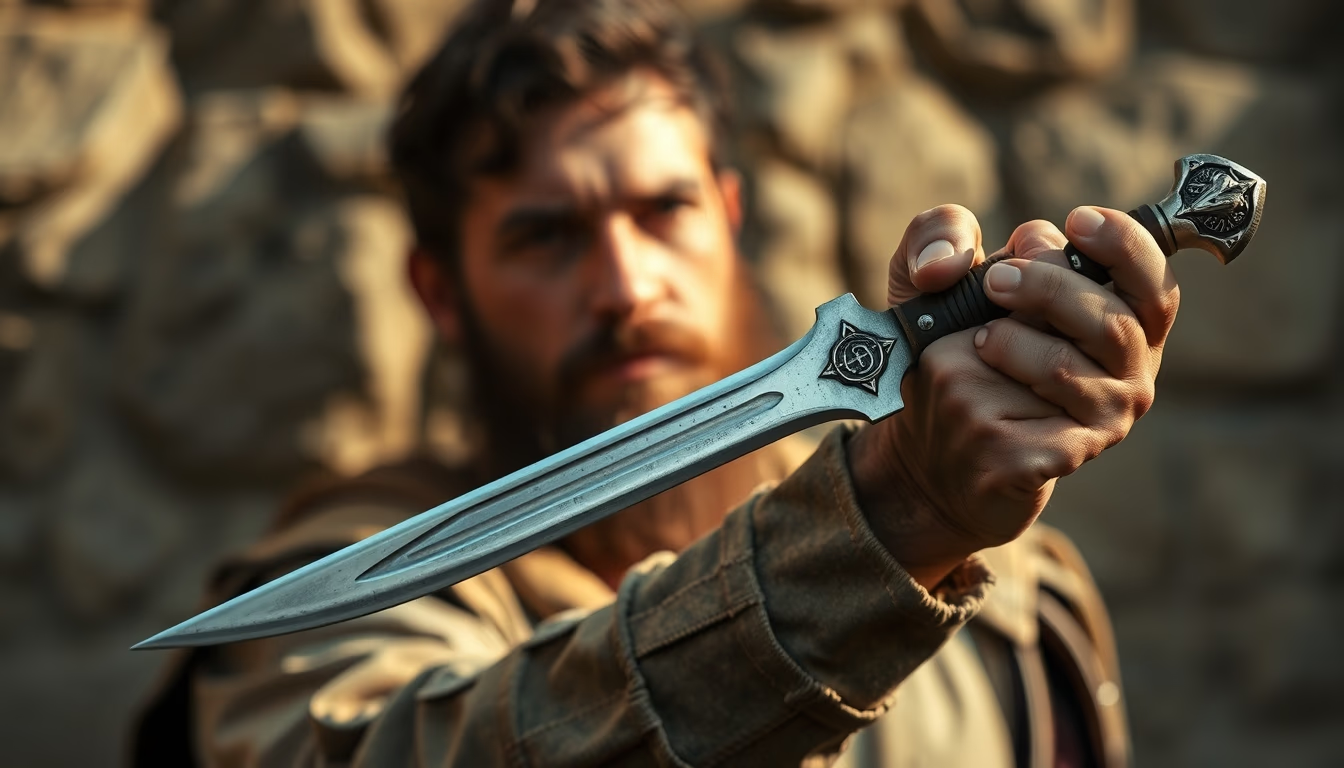
The claymore is a large two-handed sword, symbol of Scottish Highland warriors, used between the 15th and 17th centuries.
About this subject
The claymore, from Scottish Gaelic 'claidheamh-mòr' (great sword), is an iconic weapon associated with the Highland clans of Scotland. It emerged around the 15th century, evolving from medieval European swords but adapted to Scottish fighting style. Typically, it measured between 120 and 140 centimeters in total length, with a blade of about 100 to 110 centimeters, and weighed 2 to 3 kilograms. Its long hilt allowed two-handed use but could also be wielded with one hand in closer combat. The trefoil or disc-shaped pommel and the guard with forward-sloping arms (basket hilts) are distinctive features.
Historically, the claymore was used by Scottish mercenaries in continental wars and by Highlanders in battles against the English, such as the Battle of Culloden (1746), where the Jacobite army wielded it. After the defeat, the British government attempted to suppress Highland culture, banning the carrying of weapons including the claymore. Nevertheless, the sword remained a symbol of resistance and Scottish pride.
In popular culture, the claymore appears in films like 'Braveheart' and series like 'Outlander', often romanticized as the weapon of indomitable warriors. However, its actual use was more restricted to trained soldiers, and its size made it less practical in open-field battles against pike formations. Interestingly, the term 'claymore' is also used for a modern anti-personnel mine, but there is no direct connection.
Frequently Asked Questions
What is the difference between a claymore and a common longsword?
The claymore has a guard with forward-sloping arms (basket hilt) and a trefoil-shaped pommel, while the European longsword typically uses a straight guard. Additionally, the claymore was designed for Scottish combat, with a hilt allowing broad swings.
Was the claymore actually used with two hands?
Yes, the name 'claidheamh-mòr' means 'great sword' and its design prioritizes two-handed use, but skilled soldiers could wield it with one hand in specific situations. The long hilt allowed this versatility.
Why was the claymore banned after the Battle of Culloden?
After the Jacobite defeat at Culloden (1746), the British government enacted the Disarming Acts, which prohibited the carrying of weapons, including the claymore, as part of suppressing Highland culture and the clan system.
Direct URL
https://pub-c7d6a6ea828543ac903a74a341ccb2e1.r2.dev/imagens/claymore-scottish-magazine-editorial-fresh6.avifHow to credit
Include a visible link back to UtilizAí. Copy one of the snippets below:
<a href="https://xn--utiliza-eza.com/en/midia/imagens/claymore-scottish-magazine-editorial-fresh6">Claymore scottish</a> by <a href="https://xn--utiliza-eza.com">UtilizAí</a>, licensed under <a href="https://creativecommons.org/licenses/by/4.0/">CC BY 4.0</a>.
[Claymore scottish](https://xn--utiliza-eza.com/en/midia/imagens/claymore-scottish-magazine-editorial-fresh6) by [UtilizAí](https://xn--utiliza-eza.com), CC BY 4.0
License: CC-BY-4.0