Claymore scottish
1344×768 · AVIF · CC BY 4.0

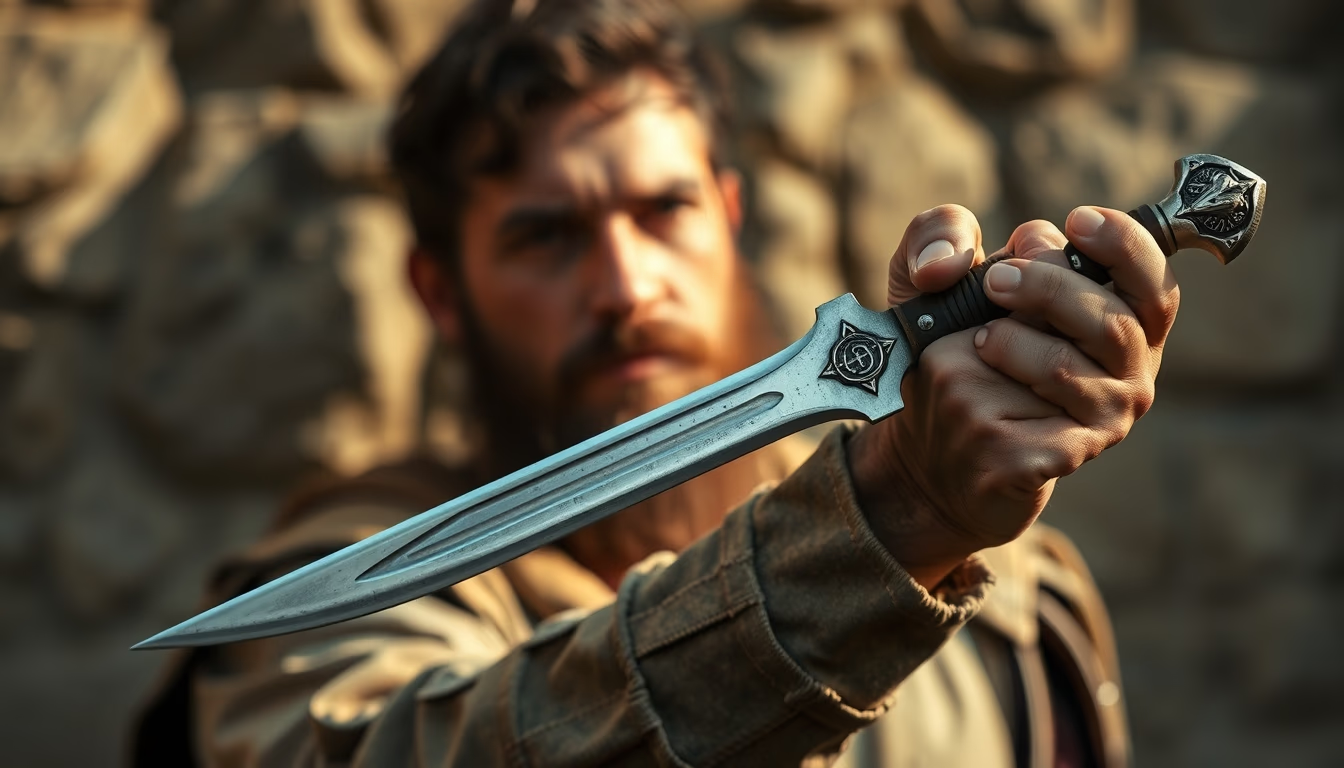
The Scottish claymore, a two-handed sword used from the 15th to 17th centuries, is an iconic symbol of Highland warrior culture.
About this subject
The claymore (from Gaelic claidheamh-mòr, 'great sword') is a two-handed sword characteristic of Scotland, particularly associated with the Highland clans. Its use flourished between the 15th and 17th centuries, a period marked by constant clan warfare and English attempts at domination. The blade, typically made of steel with a fuller to reduce weight, measured between 1.2 and 1.5 meters, and the grip allowed both hands to deliver powerful blows capable of shattering spears and piercing armor.
Unlike continental longswords, the claymore featured a forward-slanting crossguard with long arms ending in quatrefoil or trefoil shapes, known as a 'cruciform guard.' This design parried attacks and protected the hands. The pommel was often disc- or ball-shaped. Each claymore was forged by skilled smiths, sometimes bearing clan marks.
Historically, the claymore saw action in battles such as Flodden Field (1513) and the Scottish Civil War. With the rise of firearms, its use declined, but it remained a symbol of Scottish resistance and identity, featured in ceremonies and heraldry. Today, it is a cultural icon in films, games, and decorative art.
Frequently Asked Questions
What is the difference between a claymore and a European longsword?
The claymore is larger and heavier than a typical longsword, with a blade between 1.2 and 1.5 m and average weight of 2.5 kg. Its forward-slanting quatrefoil crossguard is distinctive, whereas longswords have a straight guard.
How was the claymore used in battle?
It was wielded with both hands to deliver wide, powerful swings. Highland warriors used it to break pike formations and attack cavalry, leveraging its reach and force.
Was the claymore used only by Scots?
Yes, it is a specifically Scottish sword, though similar two-handed swords existed elsewhere. The claymore became a national symbol of Scotland, particularly associated with Highland clans.
Direct URL
https://pub-c7d6a6ea828543ac903a74a341ccb2e1.r2.dev/imagens/claymore-scottish-fine-art-photography-fresh5.avifHow to credit
Include a visible link back to UtilizAí. Copy one of the snippets below:
<a href="https://xn--utiliza-eza.com/en/midia/imagens/claymore-scottish-fine-art-photography-fresh5">Claymore scottish</a> by <a href="https://xn--utiliza-eza.com">UtilizAí</a>, licensed under <a href="https://creativecommons.org/licenses/by/4.0/">CC BY 4.0</a>.
[Claymore scottish](https://xn--utiliza-eza.com/en/midia/imagens/claymore-scottish-fine-art-photography-fresh5) by [UtilizAí](https://xn--utiliza-eza.com), CC BY 4.0
License: CC-BY-4.0