Clarinet keys closeup
1344×768 · AVIF · CC BY 4.0
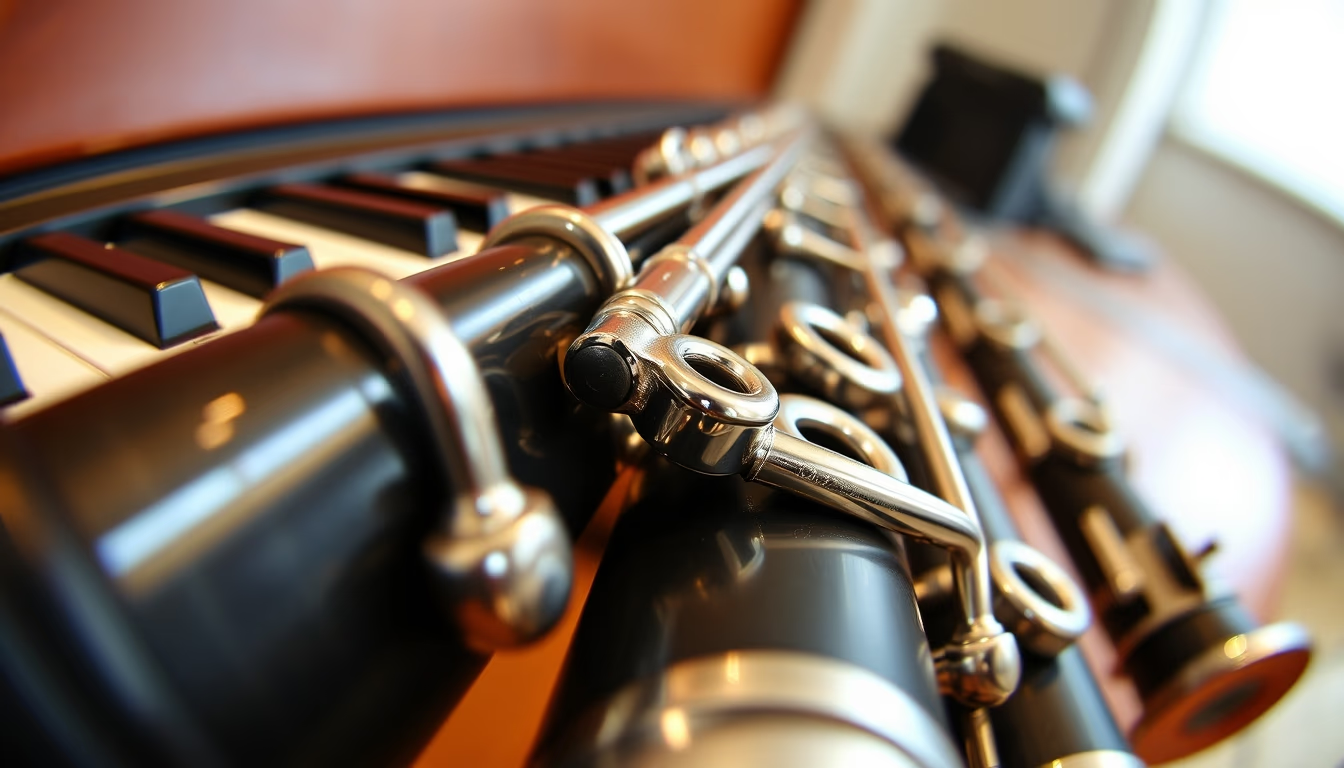
Close-up details of the clarinet key mechanism, a woodwind instrument essential in classical and popular music.
About this subject
The clarinet is a woodwind instrument invented in the early 18th century by Johann Christoph Denner in Nuremberg, Germany. Its single reed and nearly cylindrical bore distinguish it from instruments like the oboe. The keys are the lever mechanism that allows the musician to cover and uncover tone holes along the tube, changing the pitch. The modern key system is based on the Boehm system, developed by Hyacinthe Klosé and Louis-Auguste Buffet around 1840. This system provides more agile fingering and better intonation. Keys are typically made of nickel-plated or silver-plated metal, with springs and felt pads ensuring seal and return. Maintenance is crucial: misaligned keys can cause air leaks and out-of-tune notes. The clarinet has a wide range of about three and a half octaves, and its versatility makes it present in symphony orchestras, jazz bands, folk music, and even progressive rock. Famous clarinetists like Benny Goodman and Artie Shaw popularized the instrument in swing, while Sabine Meyer and Martin Fröst pushed it into contemporary classical repertoire. Key ergonomics vary: some models have rings, others have spoon-shaped keys for the pinky fingers. The complexity can exceed 20 keys on professional instruments. Each key is designed to minimize finger effort and maximize speed in fast passages.
Frequently Asked Questions
How many keys does a professional clarinet have?
A professional clarinet can have between 17 and 23 keys, depending on the model and extra mechanisms such as trill keys or those for specific fingerings.
What is the difference between the Boehm and Oehler systems?
The Boehm system, used in most clarinets, has simpler fingering and is common in orchestras. The Oehler system, more complex, is mainly used in Germany and Austria, with additional keys for better intonation and timbre.
Why do clarinet keys require frequent maintenance?
Keys have springs and pads that wear out over time. Air leaks caused by misaligned keys or worn pads affect tuning and ease of playing, requiring periodic adjustments by a technician.
Direct URL
https://pub-c7d6a6ea828543ac903a74a341ccb2e1.r2.dev/imagens/clarinet-keys-closeup-fish-eye-wide-angle-p4.avifHow to credit
Include a visible link back to UtilizAí. Copy one of the snippets below:
<a href="https://xn--utiliza-eza.com/en/midia/imagens/clarinet-keys-closeup-fish-eye-wide-angle-p4">Clarinet keys closeup</a> by <a href="https://xn--utiliza-eza.com">UtilizAí</a>, licensed under <a href="https://creativecommons.org/licenses/by/4.0/">CC BY 4.0</a>.
[Clarinet keys closeup](https://xn--utiliza-eza.com/en/midia/imagens/clarinet-keys-closeup-fish-eye-wide-angle-p4) by [UtilizAí](https://xn--utiliza-eza.com), CC BY 4.0
License: CC-BY-4.0