Civil servant at counter assisting citizen with documents
1344×768 · AVIF · CC BY 4.0
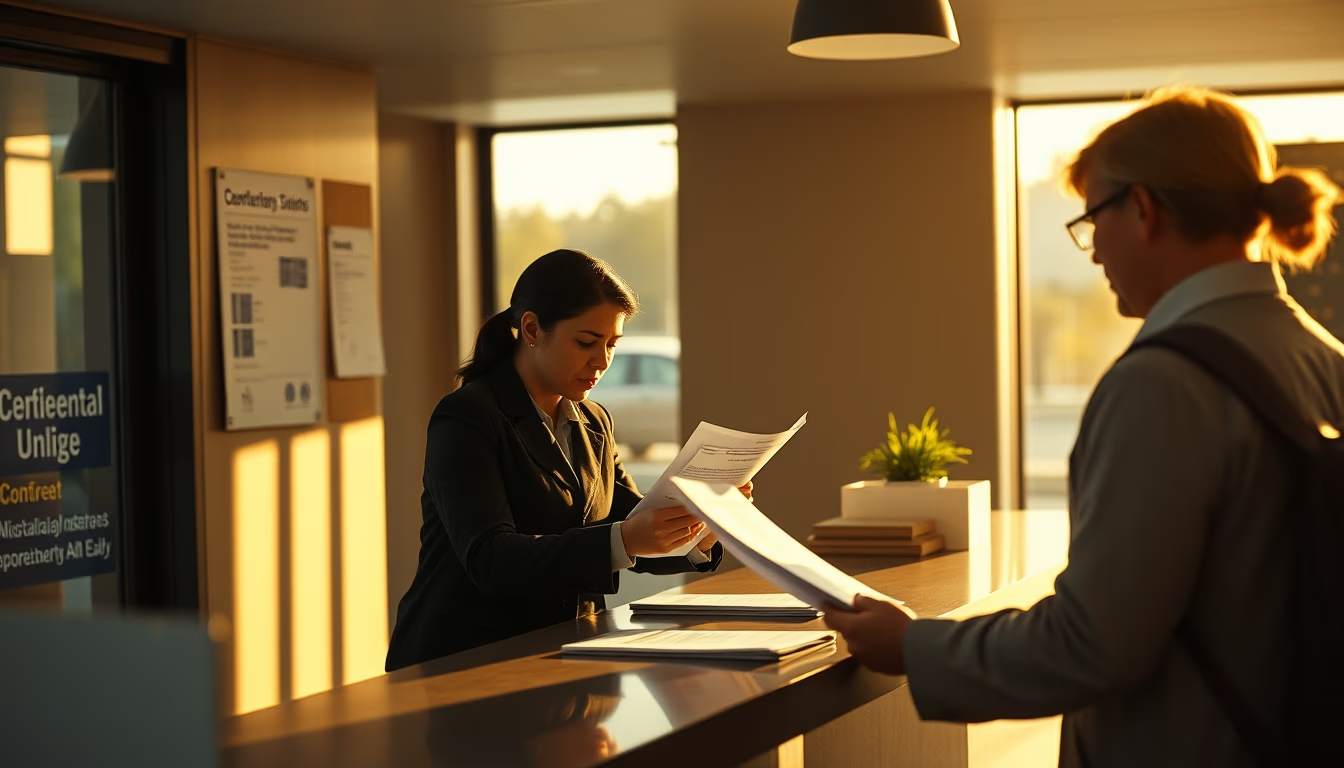
A civil servant assists a citizen at a government counter, reviewing documents and providing information about public services.
About this subject
In Brazil, in-person service at government counters is a common reality for millions of citizens seeking services such as document issuance, registration updates, or benefit inquiries. The image shows a civil servant, likely from an agency like Poupatempo, INSS, or the Federal Revenue, working during late afternoon office hours. This type of service requires patience and technical knowledge, as the server must handle varied demands and often deal with citizens unfamiliar with bureaucratic procedures.
The counter environment is marked by a standardized layout, with a desk, computer, and equipment such as fingerprint readers or scanners. The interaction between server and citizen follows security and privacy protocols, especially when personal data is involved. In Brazil, the Access to Information Law (Law 12.527/2011) and the General Data Protection Law (Law 13.709/2018) regulate this contact, ensuring transparency and confidentiality.
Interestingly, late afternoon is a peak time in many government offices, as citizens take advantage of the post-work period to resolve pending issues. Despite the digitization of services, in-person assistance remains essential for people without internet access or with low digital literacy. Studies indicate that about 30% of the Brazilian population relies exclusively on in-person service for public services, according to IBGE data.
The figure of the civil servant is often associated with bureaucracy, but also represents the State in its most basic function: welcoming and guiding citizens. Continuous training of these professionals is the focus of public policies, such as the Public Management Modernization Program, which seeks to humanize service and reduce queues.
Frequently Asked Questions
What documents are needed to be served at a government counter?
Generally, you need an official photo ID, such as a RG or driver's license, and proof of residence. Specific services may require additional documents, such as a birth certificate or proof of income.
What are typical business hours for public offices in Brazil?
Most operate Monday to Friday, from 8 am to 5 pm, with variations. Some offices, like Poupatempo in São Paulo, have extended hours and are open on Saturdays.
Can I schedule an in-person appointment at government agencies?
Yes, many agencies offer online scheduling to avoid queues. Examples include the Poupatempo website and Meu INSS. Scheduling is recommended but not required for all services.
Direct URL
https://pub-c7d6a6ea828543ac903a74a341ccb2e1.r2.dev/imagens/civil-servant-at-counter-assisting-citizen-with-documents-wide-late-afternoon-3.avifHow to credit
Include a visible link back to UtilizAí. Copy one of the snippets below:
<a href="https://xn--utiliza-eza.com/en/midia/imagens/civil-servant-at-counter-assisting-citizen-with-documents-wide-late-afternoon-3">Civil servant at counter assisting citizen with documents</a> by <a href="https://xn--utiliza-eza.com">UtilizAí</a>, licensed under <a href="https://creativecommons.org/licenses/by/4.0/">CC BY 4.0</a>.
[Civil servant at counter assisting citizen with documents](https://xn--utiliza-eza.com/en/midia/imagens/civil-servant-at-counter-assisting-citizen-with-documents-wide-late-afternoon-3) by [UtilizAí](https://xn--utiliza-eza.com), CC BY 4.0
License: CC-BY-4.0
Tags
Related images
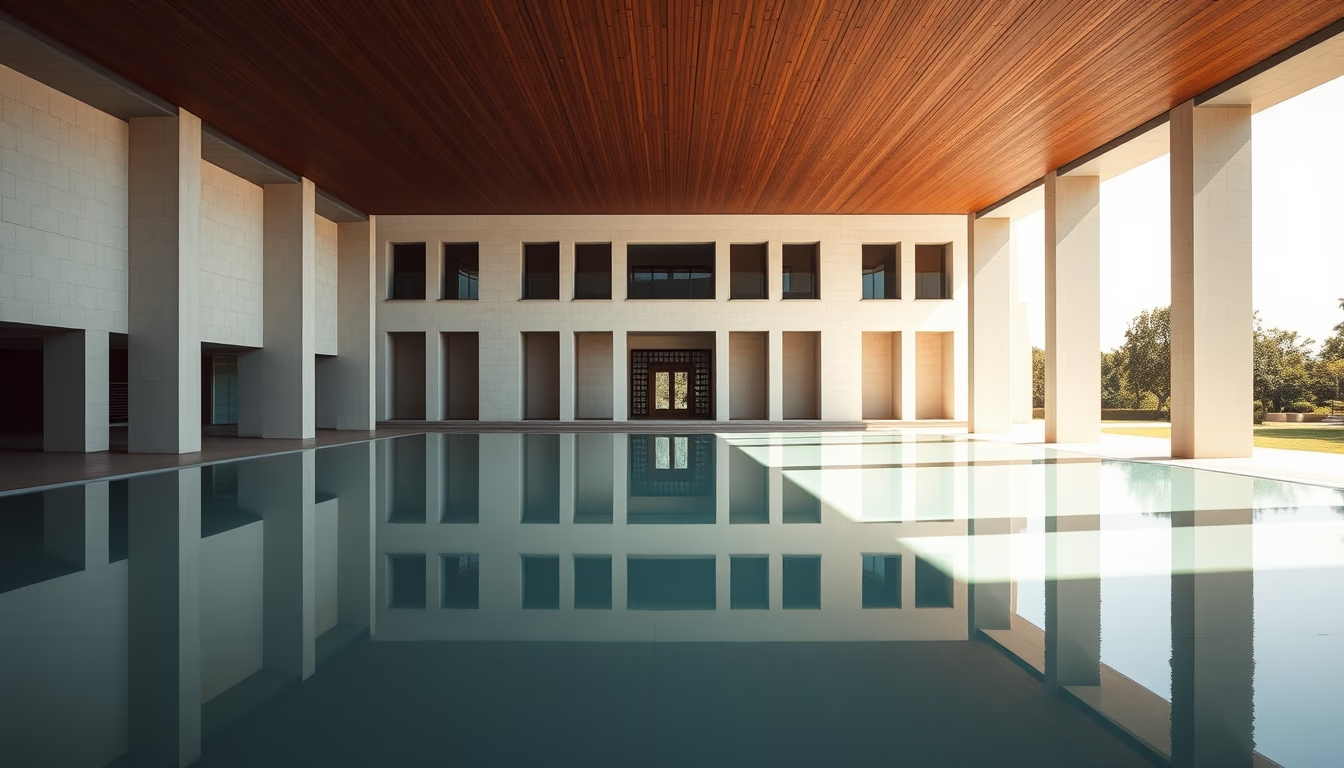 Itamaraty Palace modernist exterior with reflecting pool in Brasília
 Itamaraty Palace modernist exterior with reflecting pool in Brasília
 Itamaraty Palace modernist exterior with reflecting pool in Brasília
 Itamaraty Palace modernist exterior with reflecting pool in Brasília
 Itamaraty Palace modernist exterior with reflecting pool in Brasília
 Itamaraty Palace modernist exterior with reflecting pool in Brasília