Chinese cash coins string
1344×768 · AVIF · CC BY 4.0
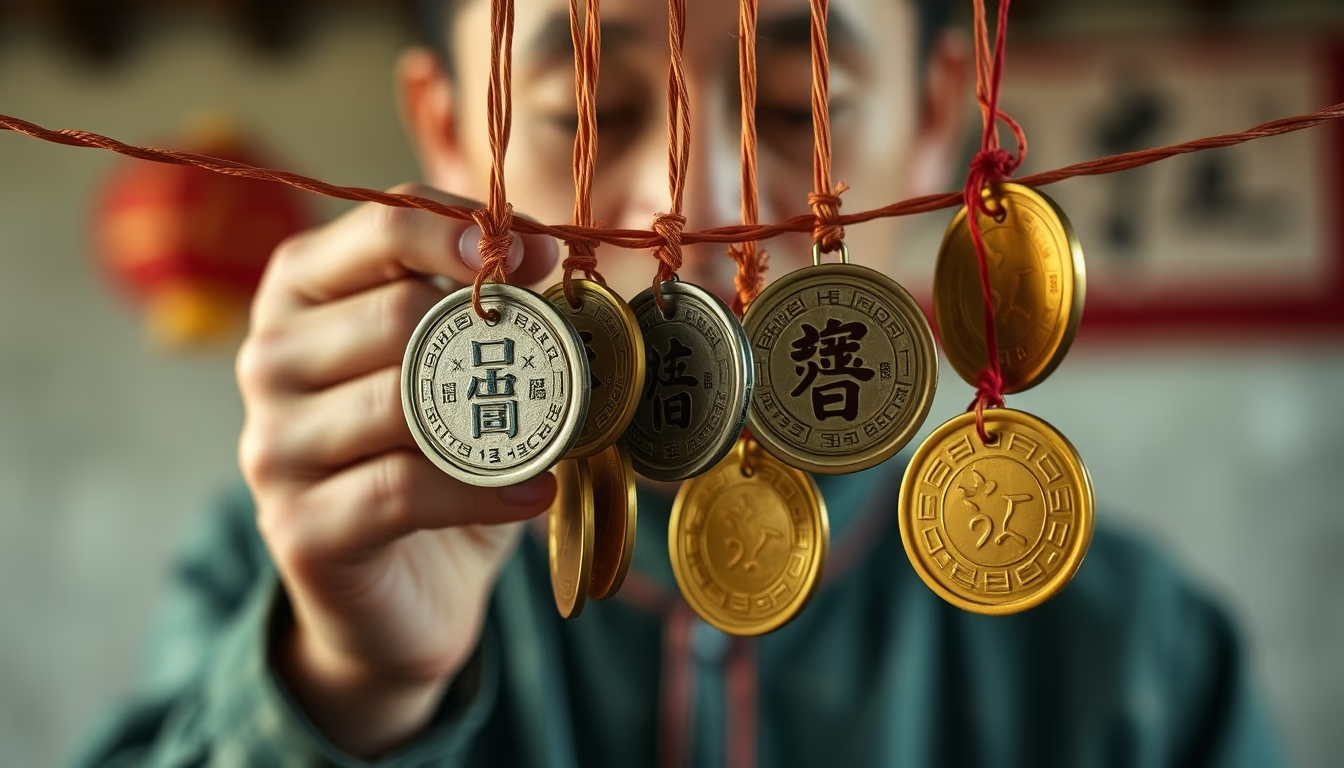
Chinese cash coins strung on cords represent the monetary history of imperial China and their daily use for centuries.
About this subject
Chinese cash coins, also known as wén, were the primary currency in China for over two millennia, from the Qin dynasty (221, 206 BCE) to the early 20th century. Typically made from copper, tin, and lead alloys, they featured a square hole in the center, allowing them to be strung on cords for easy transport and counting. A standard string contained 100 or 1000 coins, forming a unit of value called a diào or guàn.
In imperial China, government officials paid salaries and collected taxes using these coin strings. The practice of tying them also reflected practicality: common people carried strings hanging from their belts or necks for daily transactions. During the Tang dynasty (618, 907), standardized strings became mandatory, and each square hole symbolized the Chinese cosmological concept of round heaven and square earth.
Beyond monetary use, these coins held deep cultural significance. They were often buried with the dead to ensure prosperity in the afterlife, or used in feng shui practices to attract good fortune. Strings of coins were also given as gifts at weddings and during Chinese New Year celebrations. Production of cash coins officially ended in 1912 with the fall of the Qing dynasty, but they are still reproduced as amulets and souvenirs.
Manufacturing involved casting in molds, and coins were produced in large quantities by state mints. Each dynasty engraved its own characters and symbols, allowing historians to date and authenticate pieces. Today, numismatic collectors value original strings of cash coins for their preservation and the history they carry.
Frequently Asked Questions
Why did Chinese cash coins have a square hole?
The square hole allowed coins to be strung on cords for easy transport and counting. Additionally, the round shape with a square hole represented the Chinese cosmological view of round heaven and square earth.
How many coins were in a typical string?
A standard string contained 100 or 1000 coins, forming units of value called diào (100) or guàn (1000). In practice, the number could vary by region and period.
Are cash coins still used today?
Not as currency, as they were discontinued in 1912. However, replicas are sold as good luck charms, and original strings are highly valued by numismatic collectors.
Direct URL
https://pub-c7d6a6ea828543ac903a74a341ccb2e1.r2.dev/imagens/chinese-cash-coins-string-documentary-photography-fresh18.avifHow to credit
Include a visible link back to UtilizAí. Copy one of the snippets below:
<a href="https://xn--utiliza-eza.com/en/midia/imagens/chinese-cash-coins-string-documentary-photography-fresh18">Chinese cash coins string</a> by <a href="https://xn--utiliza-eza.com">UtilizAí</a>, licensed under <a href="https://creativecommons.org/licenses/by/4.0/">CC BY 4.0</a>.
[Chinese cash coins string](https://xn--utiliza-eza.com/en/midia/imagens/chinese-cash-coins-string-documentary-photography-fresh18) by [UtilizAí](https://xn--utiliza-eza.com), CC BY 4.0
License: CC-BY-4.0