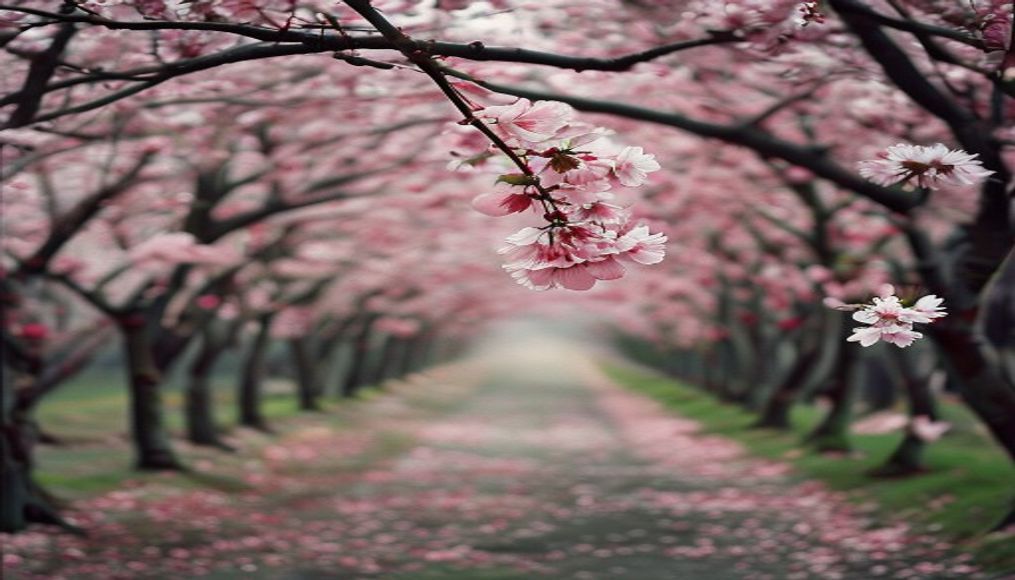
Cherry blossom tunnel
1344×768 · AVIF · CC BY 4.0
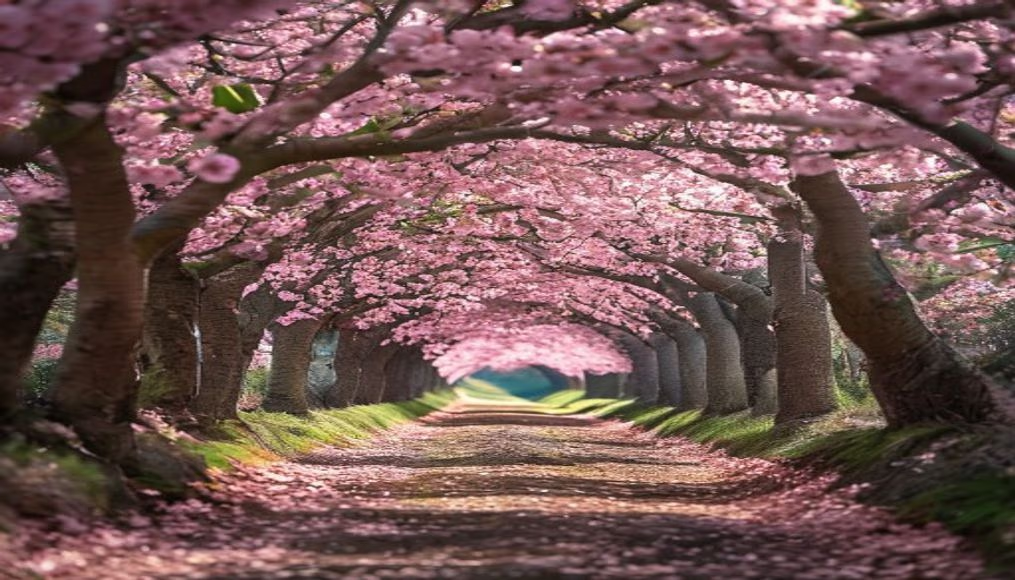
Cherry blossom tunnels create stunning landscapes in Japan and other countries, attracting visitors during the brief blooming season.
About this subject
Cherry blossom tunnels are natural or planned formations where the canopies of cherry trees meet over roads or paths, creating a canopy of pink or white blossoms. The phenomenon is most famous in Japan, where the tradition of hanami (flower viewing) celebrates the ephemeral beauty of sakura (cherry trees). Locations like the Philosopher's Path in Kyoto and Mount Yoshino offer corridors of centuries-old cherry trees that bloom for only one or two weeks in spring. The Somei Yoshino variety is the most common, but over 200 cultivated types exist in the country.
Beyond Japan, cherry blossom tunnels appear in urban parks worldwide, such as the Brooklyn Botanic Garden (New York), Parque del Retiro (Madrid), and Nara National Park (Japan). Countries like South Korea and the United States have also planted cherry tree avenues that form tunnels during bloom. Duration and intensity vary with climate and species, with warmer temperatures potentially advancing or shortening the period.
Historically, ornamental cherry cultivation in Japan dates to the Nara period (710, 794 AD), but the popularization of blossom tunnels occurred in the 20th century through large-scale planting along avenues and riverbanks. During World War II, many trees were lost, but replanting campaigns after the conflict restored and expanded these floral corridors. Today, cherry blossom tunnels are symbols of renewal and fleeting beauty, featured in festivals and photography.
Interestingly, the formation of a dense tunnel depends on proper spacing and pruning. Young trees take decades to reach the necessary size. In some places, like the Hirosaki Cherry Blossom Tunnel in northern Japan, branches intertwine to form an almost continuous canopy. The falling petals create a pink snow effect known as "sakura fubuki" (petal storm).
Frequently Asked Questions
When is the best time to see cherry blossom tunnels in Japan?
The cherry blossom season in Japan typically occurs from late March to early April, depending on the region and weather. The peak lasts 7 to 14 days.
What is hanami and how does it relate to cherry blossom tunnels?
Hanami is the Japanese tradition of appreciating flowers, especially sakura. Cherry blossom tunnels are popular spots for picnics and walks during hanami, celebrating the ephemeral nature of life.
Are there cherry blossom tunnels outside Japan?
Yes. Countries like South Korea (Jinhae), United States (Washington D.C. and Brooklyn), Spain (Madrid), and United Kingdom (London) have cherry tree avenues that form tunnels during bloom, usually in spring.
Direct URL
https://pub-c7d6a6ea828543ac903a74a341ccb2e1.r2.dev/imagens/cherry-blossom-tunnel-national-geographic-style-p1.avifHow to credit
Include a visible link back to UtilizAí. Copy one of the snippets below:
<a href="https://xn--utiliza-eza.com/en/midia/imagens/cherry-blossom-tunnel-national-geographic-style-p1">Cherry blossom tunnel</a> by <a href="https://xn--utiliza-eza.com">UtilizAí</a>, licensed under <a href="https://creativecommons.org/licenses/by/4.0/">CC BY 4.0</a>.
[Cherry blossom tunnel](https://xn--utiliza-eza.com/en/midia/imagens/cherry-blossom-tunnel-national-geographic-style-p1) by [UtilizAí](https://xn--utiliza-eza.com), CC BY 4.0
License: CC-BY-4.0