Champagne cellar reims
1344×768 · AVIF · CC BY 4.0
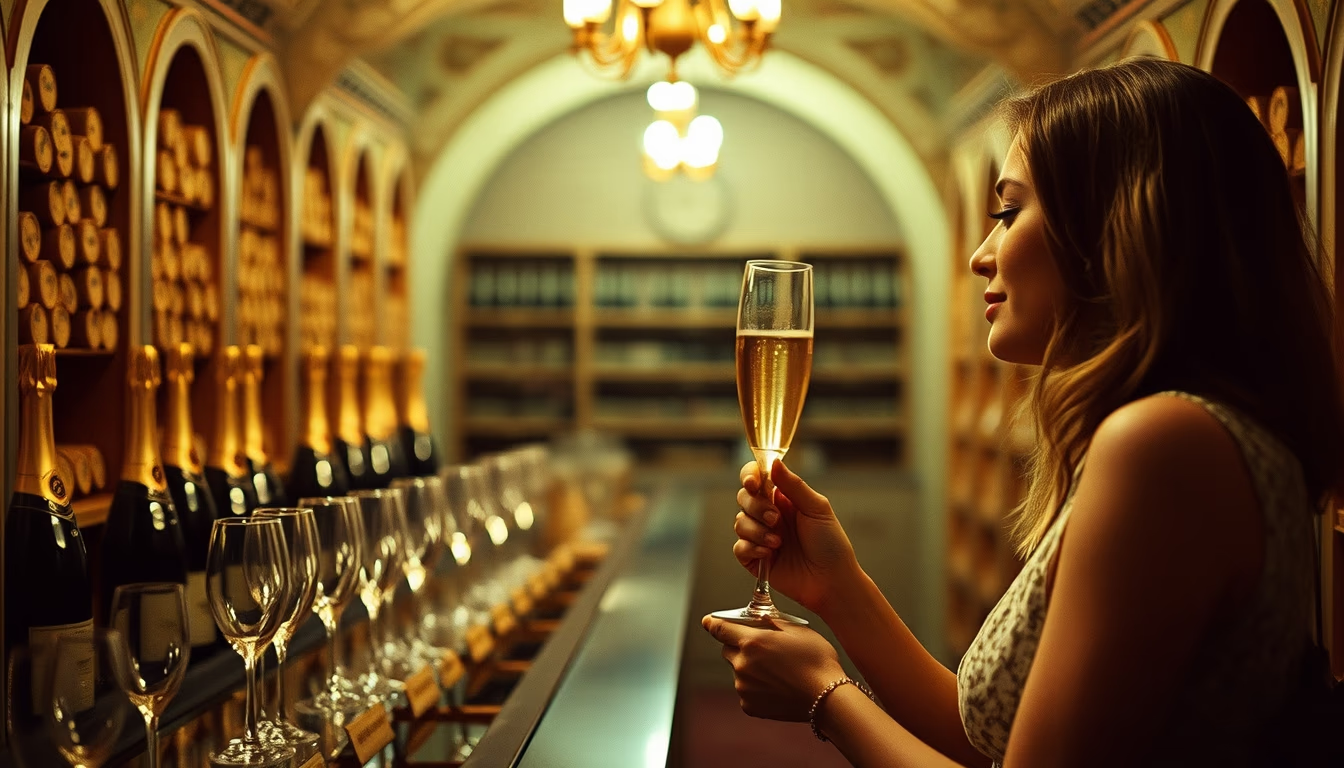
The champagne cellars in Reims, carved into Roman chalk, store millions of bottles at constant temperature to age the world's most famous sparkling wine.
About this subject
The champagne cellars in Reims are underground tunnels carved out of ancient chalk quarries, some dating back to Roman times. These galleries, known as crayères, extend over 200 kilometers beneath the city and house major producers like Moët & Chandon, Veuve Clicquot, and Taittinger. Chalk, being porous, maintains humidity around 80% and temperature between 10°C and 12°C, ideal conditions for the secondary fermentation and extended aging of wines.
The tradition of storing champagne in these cellars dates back to the 17th century, when Benedictine monks like Dom Pérignon began refining the sparkling wine production method. The conversion of quarries into wine cellars happened gradually, taking advantage of thermal stability and darkness. Today, these spaces are a UNESCO World Heritage site since 2015, as part of the Champagne hillsides, houses and cellars.
The aging process in the cellars is crucial for developing champagne's characteristic aromas: notes of toast, dried fruits, and brioche. Bottles may rest for 15 months or more, depending on the type. Guided tours allow visitors to walk several kilometers of these corridors, where millions of bottles rest at an angle on pupitres, being turned manually or by machines (riddlers) to remove sediment.
Besides major brands, there are cellars of small growers (récoltants-manipulants) offering a more intimate experience. The Reims region produces about 300 million bottles per year, and the cellars are an essential part of local cultural and economic identity. Visitation exceeds 1 million tourists annually, establishing the cellars as a tourist attraction and symbol of winemaking excellence.
Frequently Asked Questions
What is the ideal temperature for aging champagne in Reims cellars?
The ideal temperature is between 10°C and 12°C, naturally maintained by the chalk insulation. This range allows slow flavor development without compromising quality.
Why are champagne cellars carved into chalk?
Chalk provides natural drainage, humidity regulation, and thermal stability. Additionally, ancient Roman quarries already existed, making adaptation for wine storage easier.
Which champagne houses can be visited in Reims?
Major ones include Moët & Chandon, Veuve Clicquot, Taittinger, Ruinart, and Pommery. Many offer guided tours with tastings and visits to historic cellars.
Direct URL
https://pub-c7d6a6ea828543ac903a74a341ccb2e1.r2.dev/imagens/champagne-cellar-reims-film-grain-authentic-fresh0.avifHow to credit
Include a visible link back to UtilizAí. Copy one of the snippets below:
<a href="https://xn--utiliza-eza.com/en/midia/imagens/champagne-cellar-reims-film-grain-authentic-fresh0">Champagne cellar reims</a> by <a href="https://xn--utiliza-eza.com">UtilizAí</a>, licensed under <a href="https://creativecommons.org/licenses/by/4.0/">CC BY 4.0</a>.
[Champagne cellar reims](https://xn--utiliza-eza.com/en/midia/imagens/champagne-cellar-reims-film-grain-authentic-fresh0) by [UtilizAí](https://xn--utiliza-eza.com), CC BY 4.0
License: CC-BY-4.0