Champagne bubbles closeup
1344×768 · AVIF · CC BY 4.0
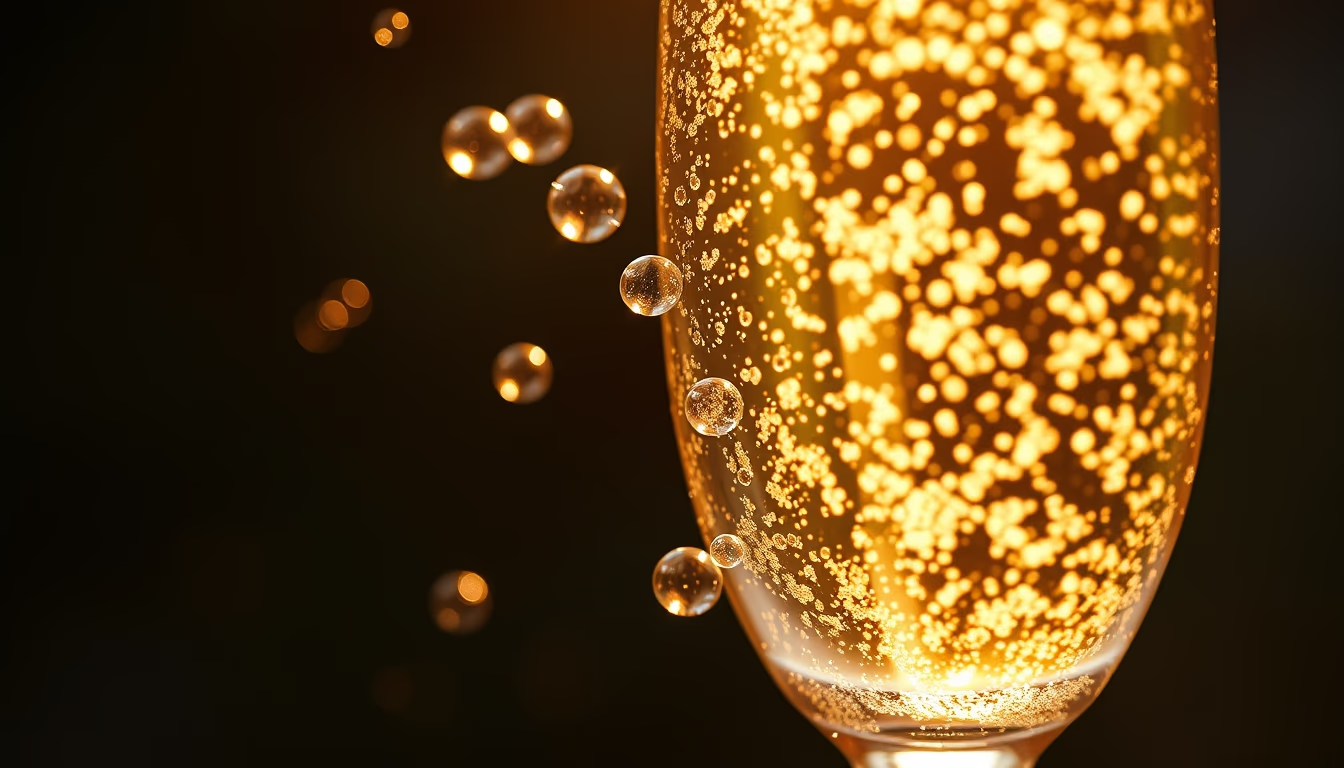
Champagne bubbles are not just decorations: they reveal the quality and origin of the wine, forming during the second fermentation in the bottle.
About this subject
Champagne bubbles have a history dating back to the 17th century, when the Benedictine monk Dom Pérignon supposedly exclaimed: “Come quickly, I am drinking stars!”. Although he did not invent champagne, he helped refine the production method. In reality, the effervescence results from the second fermentation in the bottle, where sugar and yeast are added to the base wine, generating carbon dioxide. This gas is trapped under pressure, forming microscopic bubbles when the bottle is opened.
The quality of the bubbles is an indicator of champagne excellence. Very fine bubbles that form a persistent collar in the glass signal a well-crafted wine, while coarse and fleeting bubbles suggest less careful production. Bubble diameter, typically between 0.5 and 1 millimeter, depends on the nucleation rate influenced by impurities or microfibers in the glass. Each bottle of champagne contains about 49 million bubbles, according to calculations by French physicist Gérard Liger-Belair, a specialist in the subject.
Geography and climate are also fundamental. The Champagne region in northeastern France has chalky soils and a cool climate that give acidity and freshness to the Pinot Noir, Chardonnay, and Meunier grapes. The méthode champenoise requires the wine to age on the lees for at least 15 months for non-vintage and 3 years for vintage. This process develops complex aromas of toast, brioche, and dried fruits, which integrate with the bubbles. The internal pressure of a champagne bottle is about 6 atmospheres, three times the pressure of a car tire, ensuring the bubbles burst energetically when opened.
Beyond the science, bubbles carry cultural symbolism. Champagne is associated with celebrations, weddings, and New Year's Eve. In Brazil, it is tradition to pop a bottle at midnight. The way the bubbles move in the glass, in ascending lines, results from surface tension and CO2 diffusion. Tasting champagne is to enjoy not only the palate but also a physical phenomenon that delights the senses.
Frequently Asked Questions
Why do champagne bubbles rise in straight lines?
Bubbles rise in lines because they form at nucleation points, such as small imperfections in the glass. As they ascend, they follow the upward liquid current, creating visible columns. This phenomenon is influenced by surface tension and gas diffusion.
What is the difference between champagne and sparkling wine?
Champagne is a type of sparkling wine produced exclusively in the Champagne region of France using Pinot Noir, Chardonnay, and Meunier grapes, following the traditional method. Other sparkling wines can be made anywhere, using different methods such as Charmat or artificial carbonation.
How many bubbles are in a glass of champagne?
Each glass of champagne contains approximately 1 million bubbles, considering the gradual release during consumption. A full bottle has about 49 million bubbles, according to studies by physicist Gérard Liger-Belair.
Direct URL
https://pub-c7d6a6ea828543ac903a74a341ccb2e1.r2.dev/imagens/champagne-bubbles-closeup-travel-photography-p1.avifHow to credit
Include a visible link back to UtilizAí. Copy one of the snippets below:
<a href="https://xn--utiliza-eza.com/en/midia/imagens/champagne-bubbles-closeup-travel-photography-p1">Champagne bubbles closeup</a> by <a href="https://xn--utiliza-eza.com">UtilizAí</a>, licensed under <a href="https://creativecommons.org/licenses/by/4.0/">CC BY 4.0</a>.
[Champagne bubbles closeup](https://xn--utiliza-eza.com/en/midia/imagens/champagne-bubbles-closeup-travel-photography-p1) by [UtilizAí](https://xn--utiliza-eza.com), CC BY 4.0
License: CC-BY-4.0