Cell sorting facs machine
1344×768 · AVIF · CC BY 4.0
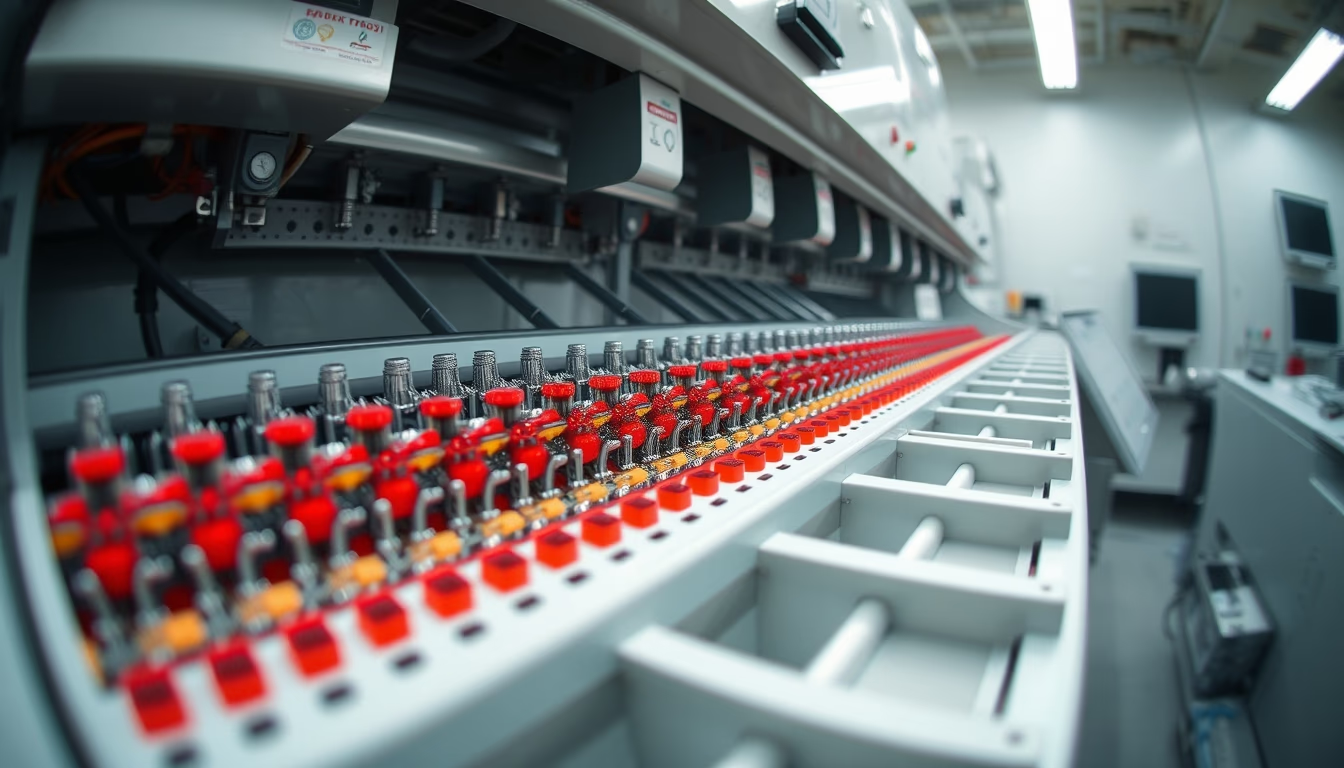
The cell sorting FACS machine is a flow cytometry instrument that isolates individual cells based on optical properties, crucial for biomedical research.
About this subject
Flow cytometry with cell sorting, known as FACS (Fluorescence-Activated Cell Sorting), was developed in the 1960s by Leonard Herzenberg and colleagues at Stanford University. This technology analyzes and separates cells at high speed, using lasers to excite fluorophores conjugated to antibodies or genetic markers. The instrument can process thousands of cells per second, directing each to tubes or culture plates based on parameters like size, granularity, and specific protein expression.
FACS applications are vast in biology and medicine. In immunology, it isolates lymphocyte subtypes such as CD4+ or CD8+ T cells. In oncology, it purifies circulating tumor cells for mutation analysis. In tissue engineering, it selects stem cells for transplants. The equipment is also key in producing genetically modified cell lines, such as in CRISPR gene editing, where successfully edited cells are isolated.
Despite its high precision, FACS requires trained operators and carefully prepared samples. Sterilization is critical to avoid cross-contamination. Recent innovations include mass cytometry (CyTOF), which uses heavy metals instead of fluorophores, increasing detectable parameters. High equipment costs limit access, but research centers and university hospitals typically have these machines as part of shared cytometry core facilities.
Frequently Asked Questions
What is the difference between a flow cytometer and FACS?
A flow cytometer only analyzes cells, while FACS (cell sorter) also physically separates them. FACS includes a droplet deflection mechanism that directs cells into different containers.
How does cell sorting work in FACS?
The sample is nebulized into droplets each containing a single cell. A laser excites fluorophores, and detectors record fluorescence and light scatter. The computer decides whether to electrically charge the droplet and deflect it via electromagnetic fields into the target tube.
What precautions are necessary when using a FACS?
Cells must be in a single-cell suspension without clumps. Flow rate should be adjusted to avoid contamination. Regular filters and cleaning are essential. Operators must use protective equipment and follow biosafety protocols.
Direct URL
https://pub-c7d6a6ea828543ac903a74a341ccb2e1.r2.dev/imagens/cell-sorting-facs-machine-fish-eye-wide-angle-p1.avifHow to credit
Include a visible link back to UtilizAí. Copy one of the snippets below:
<a href="https://xn--utiliza-eza.com/en/midia/imagens/cell-sorting-facs-machine-fish-eye-wide-angle-p1">Cell sorting facs machine</a> by <a href="https://xn--utiliza-eza.com">UtilizAí</a>, licensed under <a href="https://creativecommons.org/licenses/by/4.0/">CC BY 4.0</a>.
[Cell sorting facs machine](https://xn--utiliza-eza.com/en/midia/imagens/cell-sorting-facs-machine-fish-eye-wide-angle-p1) by [UtilizAí](https://xn--utiliza-eza.com), CC BY 4.0
License: CC-BY-4.0