Cell division microscope
1344×768 · AVIF · CC BY 4.0
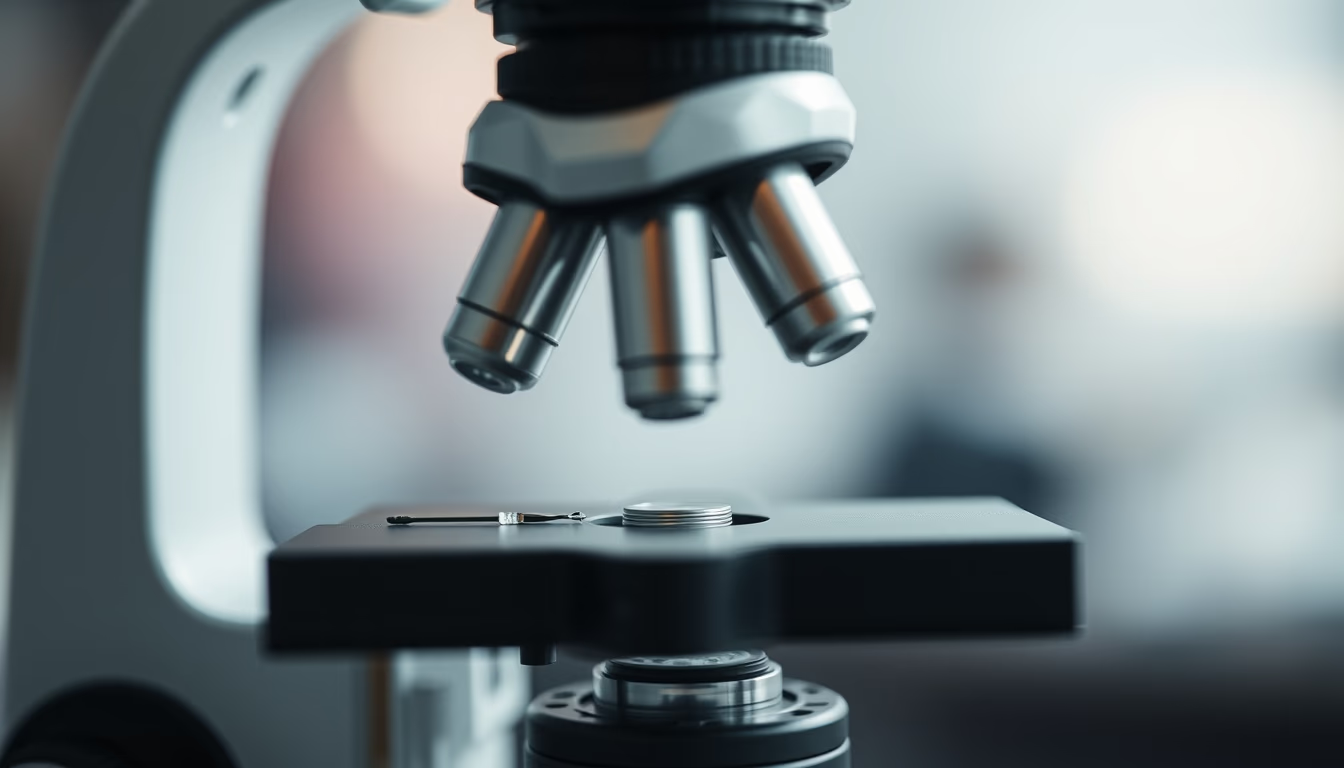
Cell division is the fundamental process by which cells replicate, essential for growth, repair and reproduction of organisms.
About this subject
Cell division is the process by which a parent cell gives rise to two or more daughter cells. In eukaryotes, two main types exist: mitosis and meiosis. Mitosis produces two genetically identical cells, essential for growth and tissue repair. Meiosis occurs in germ cells, generating four cells with half the genetic material, enabling sexual reproduction.
The cell cycle is tightly regulated. Mitosis is divided into phases: prophase (chromosome condensation), metaphase (alignment at the equatorial plane), anaphase (separation of sister chromatids), and telophase (nuclear reformation). Each step is coordinated by proteins such as cyclins and cyclin-dependent kinases, ensuring faithful DNA distribution.
The importance of cell division extends beyond development. In a healthy adult, billions of cells divide daily to replace dead cells. Dysregulation leads to cancer, where cells divide uncontrollably. Microscopic observation allows study of chromosomal abnormalities and effects of anticancer drugs.
Interestingly, division rates vary among tissues. Skin cells renew every 2, 3 weeks, while mature neurons rarely divide. The mitotic spindle, made of microtubules, pulls chromosomes apart. Scientists use fluorescent dyes to visualize specific proteins during division, such as spindle tubulin.
Frequently Asked Questions
What is the difference between mitosis and meiosis?
Mitosis produces two daughter cells identical to the parent (2n), used for growth and repair. Meiosis produces four cells with half the chromosome number (n), essential for gamete formation and genetic diversity.
How long does a cell division take?
It varies by cell type. Embryonic cells can divide in minutes, while adult cells take 12, 24 hours. Mitosis itself lasts about 1, 2 hours.
What happens if cell division fails?
Failures can cause mutations, aneuploidy (abnormal chromosome number), or cell death. If cell cycle checkpoints are bypassed, cancerous cells may arise that divide uncontrollably.
Direct URL
https://pub-c7d6a6ea828543ac903a74a341ccb2e1.r2.dev/imagens/cell-division-microscope-tilt-shift-miniature-p4.avifHow to credit
Include a visible link back to UtilizAí. Copy one of the snippets below:
<a href="https://xn--utiliza-eza.com/en/midia/imagens/cell-division-microscope-tilt-shift-miniature-p4">Cell division microscope</a> by <a href="https://xn--utiliza-eza.com">UtilizAí</a>, licensed under <a href="https://creativecommons.org/licenses/by/4.0/">CC BY 4.0</a>.
[Cell division microscope](https://xn--utiliza-eza.com/en/midia/imagens/cell-division-microscope-tilt-shift-miniature-p4) by [UtilizAí](https://xn--utiliza-eza.com), CC BY 4.0
License: CC-BY-4.0