Cell division microscope
1344×768 · AVIF · CC BY 4.0
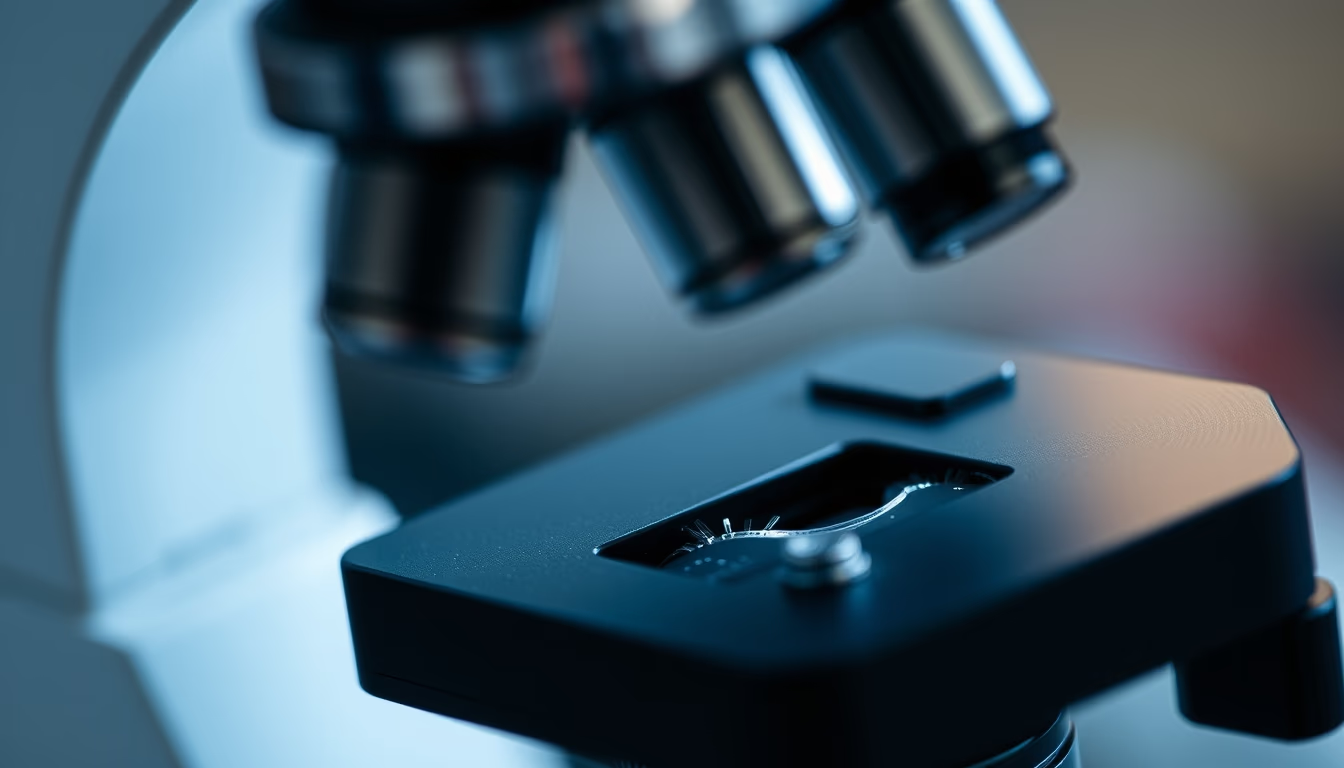
Cell division is the fundamental process by which a cell reproduces, producing two identical or genetically varied daughter cells. Observed under a microscope, it reveals phases such as prophase, metaphase, anaphase, and telophase.
About this subject
Cell division is an essential process for life, responsible for growth, tissue repair, and reproduction in multicellular organisms. In humans, trillions of cells divide daily to maintain body function. There are two main types: mitosis and meiosis. Mitosis produces genetically identical daughter cells and accounts for the increase in cell number, while meiosis halves the chromosome number, creating gametes for sexual reproduction.
The cell cycle is tightly regulated by checkpoints that ensure DNA integrity before division. During interphase, the cell grows and duplicates its genetic material. In mitosis, the classic phases, prophase, metaphase, anaphase, and telophase, can be observed under a light microscope with proper staining, such as Giemsa or fluorescence techniques.
Beyond normal development, uncontrolled cell division is the basis of cancer, where genetic mutations alter regulatory mechanisms. Thus, scientists intensely study the involved proteins, such as cyclins and cyclin-dependent kinases, to develop targeted therapies. Other processes like apoptosis (programmed cell death) also balance cell populations.
Interestingly, some organisms like bacteria divide by binary fission, a simpler process without mitotic spindle formation. In humans, cell division occurs at varying rates: skin cells divide rapidly, while mature neurons rarely divide. Understanding cell division is a cornerstone of modern biology.
Frequently Asked Questions
What are the phases of mitosis?
The phases of mitosis are: prophase (chromosome condensation), metaphase (alignment at the cell center), anaphase (separation of sister chromatids), and telophase (formation of new nuclei).
What is the difference between mitosis and meiosis?
Mitosis produces two identical daughter cells with the same chromosome number. Meiosis produces four cells with half the chromosome number, generating genetic variability.
Why is cell division important?
It allows growth, repair of damaged tissues, and reproduction. In unicellular organisms, it is the mode of reproduction. In multicellular ones, it maintains homeostasis.
Direct URL
https://pub-c7d6a6ea828543ac903a74a341ccb2e1.r2.dev/imagens/cell-division-microscope-macro-closeup-p9.avifHow to credit
Include a visible link back to UtilizAí. Copy one of the snippets below:
<a href="https://xn--utiliza-eza.com/en/midia/imagens/cell-division-microscope-macro-closeup-p9">Cell division microscope</a> by <a href="https://xn--utiliza-eza.com">UtilizAí</a>, licensed under <a href="https://creativecommons.org/licenses/by/4.0/">CC BY 4.0</a>.
[Cell division microscope](https://xn--utiliza-eza.com/en/midia/imagens/cell-division-microscope-macro-closeup-p9) by [UtilizAí](https://xn--utiliza-eza.com), CC BY 4.0
License: CC-BY-4.0