Caribbean turquoise water bird eye
1344×768 · AVIF · CC BY 4.0
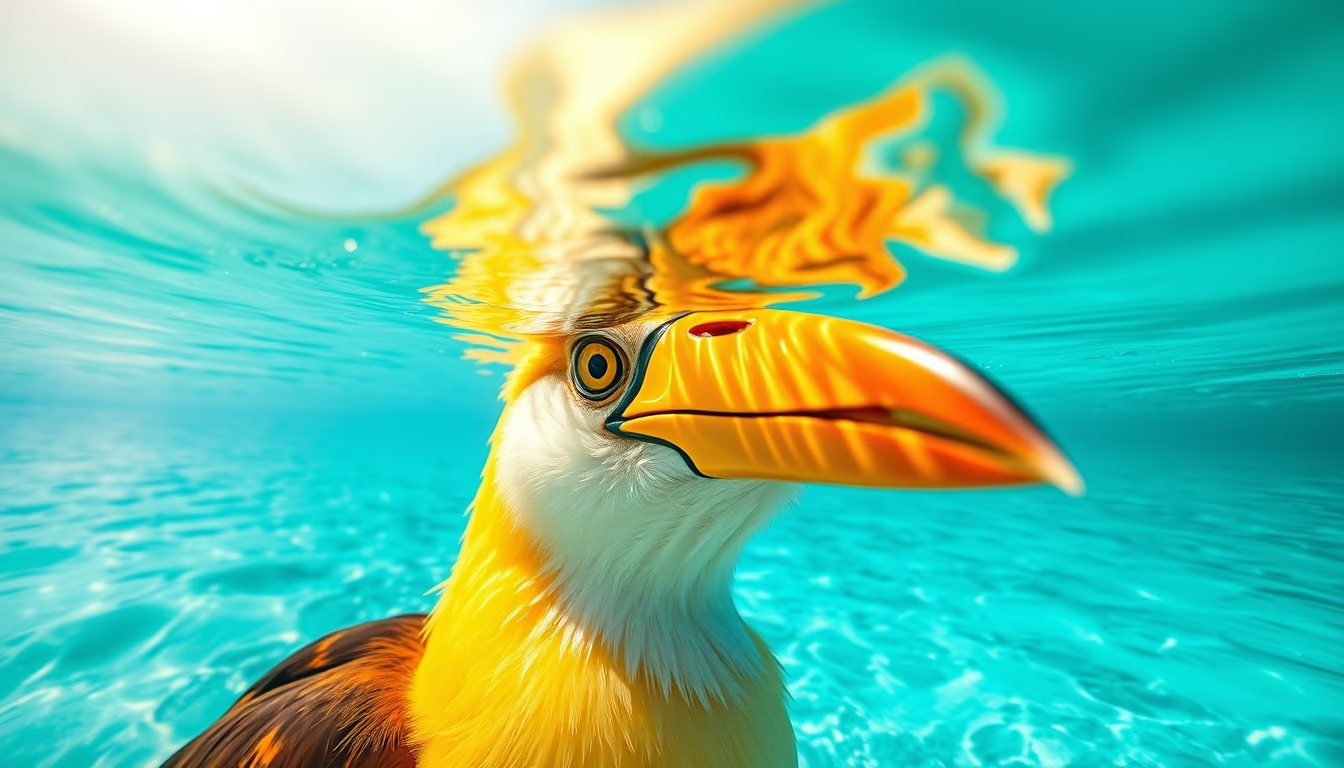
Aerial view of Caribbean turquoise water, with wavy textures and tones ranging from deep blue to light green, forming a natural abstract pattern.
About this subject
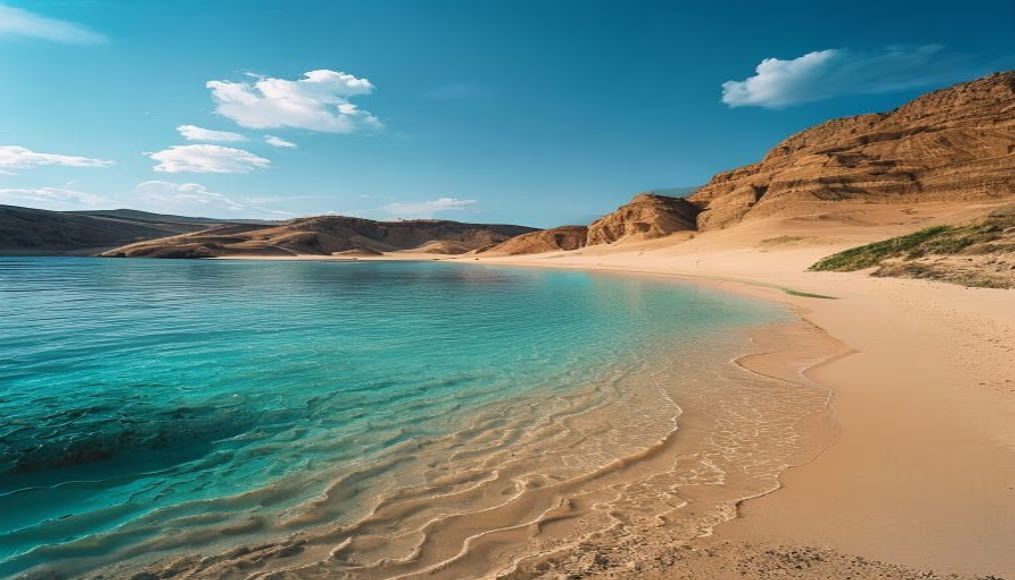
The Caribbean's turquoise waters are world-renowned for their crystalline color, resulting from a combination of white sandy bottoms, shallow depth, and high phytoplankton concentration. This unique hue is most intense in locations such as the Cayman Islands, the Bahamas, and the coast of Cancún, where the continental shelf is extensive and shallow. The optical phenomenon occurs because sunlight penetrates the water and is reflected by the sandy bottom, while pigments from microscopic algae absorb longer wavelengths (red and yellow), leaving blue and green tones predominant.
The Caribbean region comprises about 7,000 islands, islets, and reefs, forming one of the largest archipelagos in the world. Its waters host the second-largest coral barrier on the planet, the Mesoamerican Barrier Reef System, which stretches over 1,000 km from the Yucatán Peninsula to Honduras. The average sea surface temperature ranges from 26°C to 29°C throughout the year, favoring marine biodiversity and making the region a prime destination for diving and snorkeling.
The color variations seen in aerial images are not random: darker areas indicate greater depth or the presence of seagrass meadows, while light patches correspond to sandbanks or coral reefs near the surface. During storms or swells, suspended sediments can temporarily shift the hue to a more opaque green. These dynamic patterns are studied by oceanographers to monitor the health of coastal ecosystems.
Culturally, turquoise sea is an icon of Caribbean tourism, appearing in postcards, films, and advertising campaigns. The expression "Caribbean-colored waters" has become a standard of natural beauty, often used as a reference in interior design and color palettes. However, plastic pollution and coral bleaching threaten this natural heritage, leading to conservation initiatives such as the creation of marine protected areas.
Frequently Asked Questions
Why is Caribbean water so turquoise?
The color results from a combination of white sandy bottoms, shallow depth, and phytoplankton. Sunlight reflects off the bottom, and algal pigments absorb longer wavelengths, leaving blue and green predominant.
What is the average water temperature in the Caribbean?
Surface temperature ranges from 26°C to 29°C throughout the year, being warmer between May and October.
What causes the different shades seen from above?
Darker areas indicate greater depth or seagrass; light patches correspond to sandbanks or shallow reefs. Suspended sediments can temporarily make the water appear greenish.
Direct URL
https://pub-c7d6a6ea828543ac903a74a341ccb2e1.r2.dev/imagens/caribbean-turquoise-water-bird-eye-fine-art-photography.avifHow to credit
Include a visible link back to UtilizAí. Copy one of the snippets below:
<a href="https://xn--utiliza-eza.com/en/midia/imagens/caribbean-turquoise-water-bird-eye-fine-art-photography">Caribbean turquoise water bird eye</a> by <a href="https://xn--utiliza-eza.com">UtilizAí</a>, licensed under <a href="https://creativecommons.org/licenses/by/4.0/">CC BY 4.0</a>.
[Caribbean turquoise water bird eye](https://xn--utiliza-eza.com/en/midia/imagens/caribbean-turquoise-water-bird-eye-fine-art-photography) by [UtilizAí](https://xn--utiliza-eza.com), CC BY 4.0
License: CC-BY-4.0