Cactus greenhouse desert
1344×768 · AVIF · CC BY 4.0
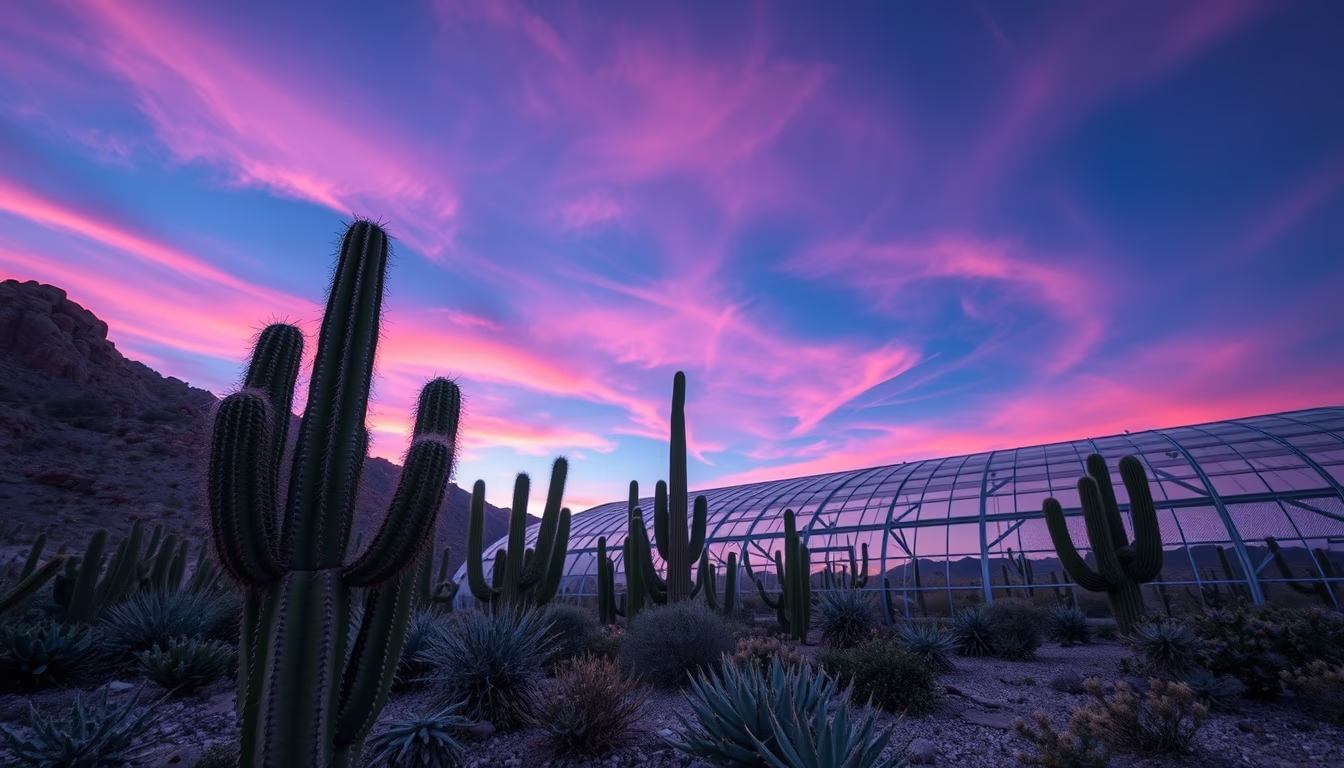
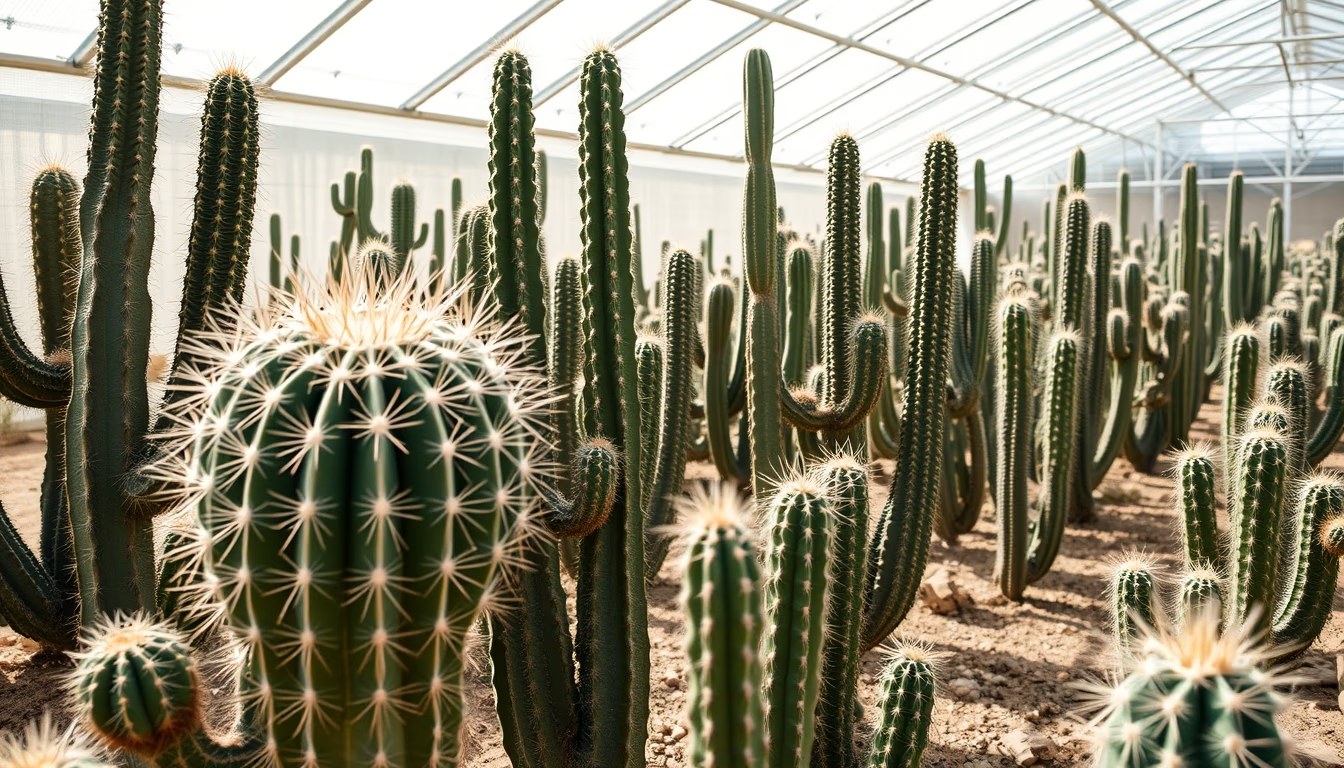
Cactus greenhouses in deserts combine agricultural technology with arid biomes to cultivate species adapted to water scarcity.
About this subject
A cactus greenhouse in a desert region is a structure that recreates controlled conditions of temperature, humidity, and light for cultivating succulent plants. These environments are essential in areas like the Sonoran Desert (USA/Mexico) or the Sahara, where extreme conditions hinder direct soil planting. The greenhouse protects cacti from night frosts and excessive daytime heat, while optimizing water use through drip irrigation systems.
Commonly cultivated species include the saguaro cactus (Carnegiea gigantea), an icon of the American West, and the prickly pear (Opuntia spp.), used for both animal feed and human consumption. Agave (Agave spp.), also typical in desert greenhouses, is the raw material for tequila and fibers. Environmental control accelerates growth and flowering, which in nature would take decades.
Economically, these greenhouses generate income for local communities through the sale of ornamental seedlings, fruits like dragon fruit (Hylocereus undatus), and derived products. Additionally, they act as germplasm banks for conserving species threatened by urban expansion and climate change. The long-exposure photography technique mentioned in the title can be associated with recording the slow growth of cacti over weeks or months, highlighting these plants' adaptability to harsh environments.
Culturally, cacti have a strong presence in popular imagination and art, symbolizing resilience and beauty in the desert. Modern greenhouses use solar panels to power sensors and ventilation systems, serving as examples of sustainable agriculture in arid regions.
Frequently Asked Questions
Which cacti are most commonly grown in desert greenhouses?
Species like the saguaro (Carnegiea gigantea), prickly pear (Opuntia spp.), and agave (Agave spp.) are common, along with ornamental cacti such as dragon fruit (Hylocereus undatus).
How do greenhouses help conserve cacti in deserts?
They act as germplasm banks, protecting species threatened by urbanization and climate change, and allow controlled cultivation without extracting from the wild.
What is the advantage of greenhouse cultivation over direct desert planting?
Greenhouses provide protection against extreme weather (frost, intense heat) and optimize water use, accelerating growth and production of fruits or seedlings.
Direct URL
https://pub-c7d6a6ea828543ac903a74a341ccb2e1.r2.dev/imagens/cactus-greenhouse-desert-long-exposure-fresh8.avifHow to credit
Include a visible link back to UtilizAí. Copy one of the snippets below:
<a href="https://xn--utiliza-eza.com/en/midia/imagens/cactus-greenhouse-desert-long-exposure-fresh8">Cactus greenhouse desert</a> by <a href="https://xn--utiliza-eza.com">UtilizAí</a>, licensed under <a href="https://creativecommons.org/licenses/by/4.0/">CC BY 4.0</a>.
[Cactus greenhouse desert](https://xn--utiliza-eza.com/en/midia/imagens/cactus-greenhouse-desert-long-exposure-fresh8) by [UtilizAí](https://xn--utiliza-eza.com), CC BY 4.0
License: CC-BY-4.0