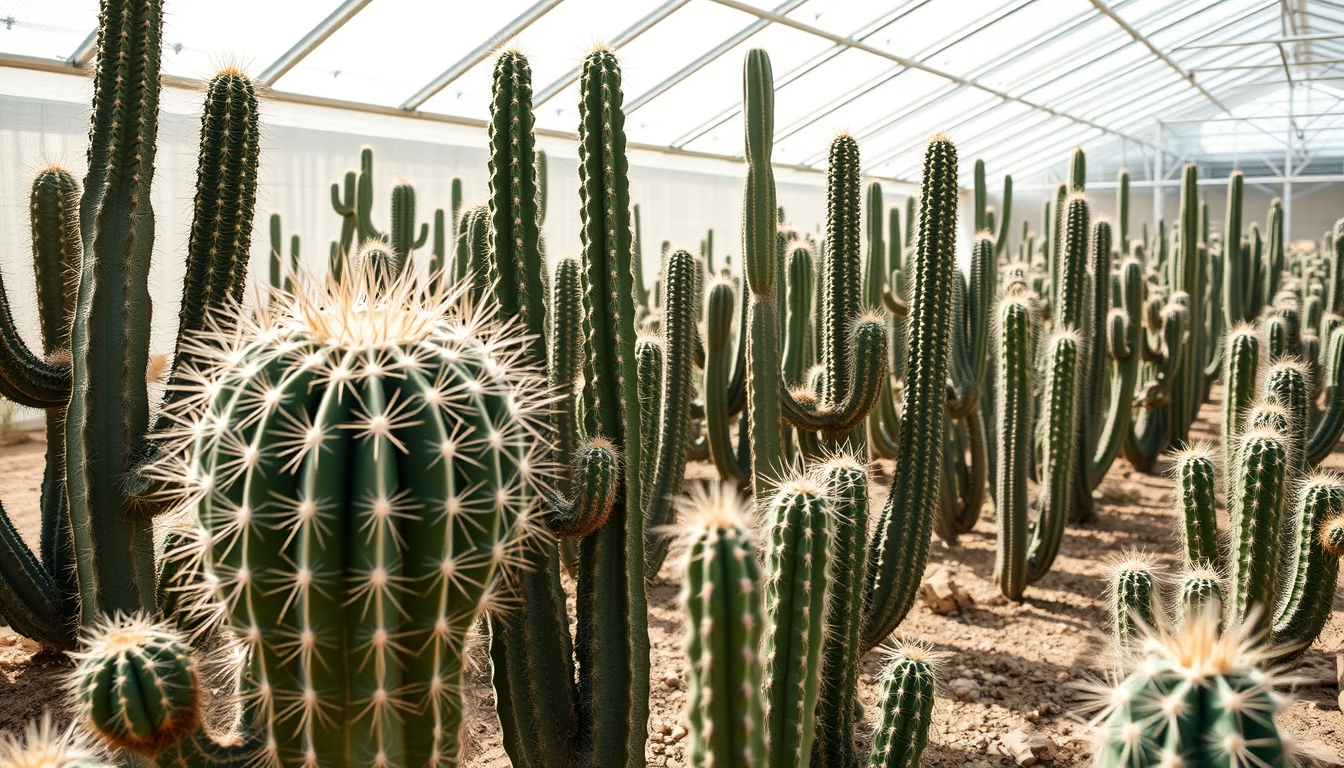
Cactus greenhouse desert
1344×768 · AVIF · CC BY 4.0
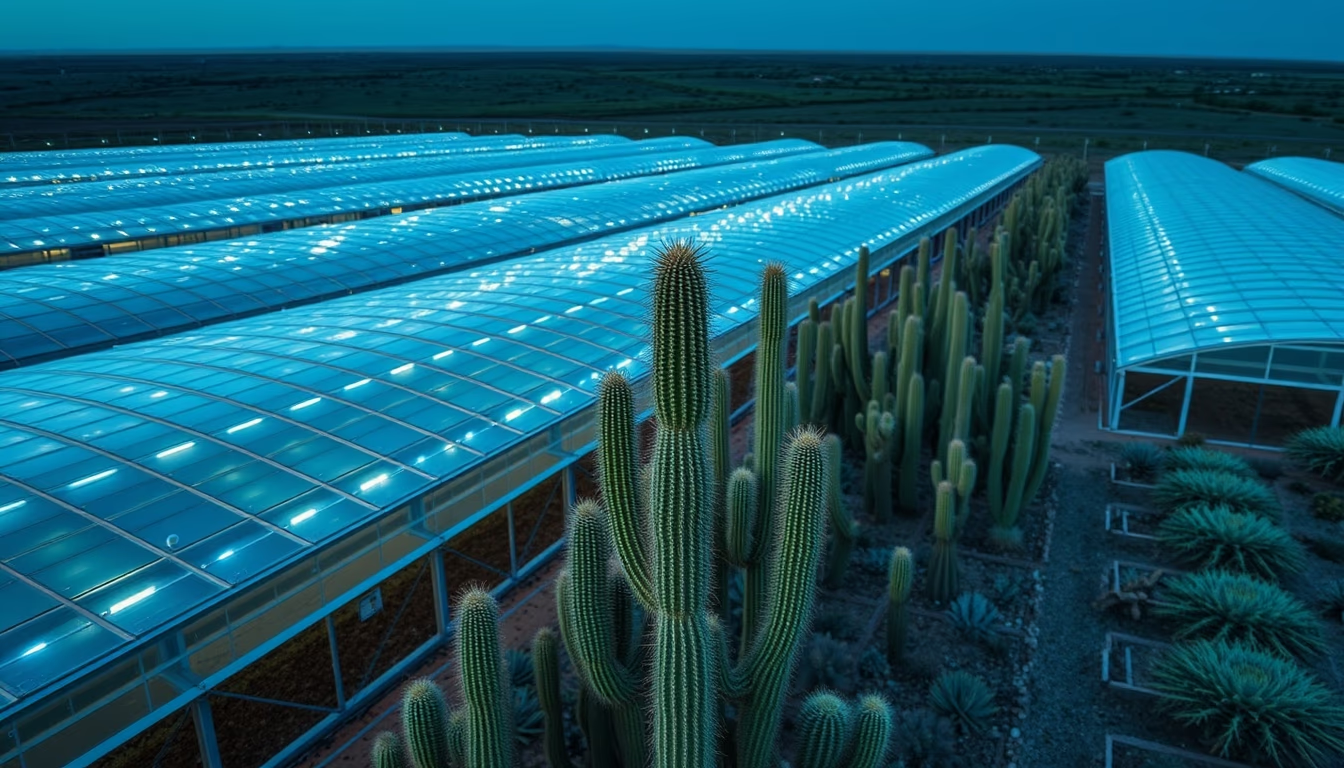
Cactus greenhouses in desert regions combine protected cultivation techniques with the extreme adaptation of succulents, enabling sustainable production in arid environments.
About this subject
Cactus cultivation in desert greenhouses combines the natural hardiness of these plants with structures that control temperature, humidity, and solar radiation. In regions such as the Sonoran Desert (Mexico/USA) or the Atacama (Chile), cactus greenhouses allow production of ornamental and fruit species (like pitaya or prickly pear) outside their natural season, protecting seedlings from strong winds and night frost. The cover often uses light-diffusing plastic or shade nets, reducing direct sunlight by up to 50% without compromising photosynthesis.
Beyond ornamental value, cacti hold cultural and economic significance worldwide. Mexico, for instance, has over 600 endemic species and is the largest producer of nopal (Opuntia ficus-indica), consumed as a vegetable. In desert greenhouses, pest control is more effective against mealybugs and fungi, and drip irrigation reduces water use by up to 70% compared to open field. Some facilities incorporate solar panels to power ventilation and evaporative cooling systems, making the process nearly self-sustaining.
The layout seen in aerial images typically follows a rectangular or modular pattern, with wide aisles for machinery access and harvesting. Greenhouses may host everything from fast-growing mini-cacti to century-old specimens destined for botanical gardens. Interestingly, the high desert light allows some species to bloom year-round under protected cultivation, a rare phenomenon in nature. The use of porous substrates, such as perlite or carbonized rice husk, mimics the drainage of native soil.
Frequently Asked Questions
Which cacti are most commonly grown in desert greenhouses?
The most common are nopal (Opuntia), pitaya (Hylocereus), and ornamental cacti like Echinocactus and Mammillaria. Choice depends on local market and pest resistance.
How do greenhouses reduce water use in the desert?
They use drip irrigation, cover that minimizes evaporation, and systems for rainwater harvesting or condensation, saving up to 70% water compared to open field cultivation.
Is it possible to grow cacti in greenhouses without pesticides?
Yes, with integrated pest management and biological controls, such as ladybugs for mealybugs. The controlled environment drastically reduces the need for chemicals.
Direct URL
https://pub-c7d6a6ea828543ac903a74a341ccb2e1.r2.dev/imagens/cactus-greenhouse-desert-aerial-drone-shot-fresh16.avifHow to credit
Include a visible link back to UtilizAí. Copy one of the snippets below:
<a href="https://xn--utiliza-eza.com/en/midia/imagens/cactus-greenhouse-desert-aerial-drone-shot-fresh16">Cactus greenhouse desert</a> by <a href="https://xn--utiliza-eza.com">UtilizAí</a>, licensed under <a href="https://creativecommons.org/licenses/by/4.0/">CC BY 4.0</a>.
[Cactus greenhouse desert](https://xn--utiliza-eza.com/en/midia/imagens/cactus-greenhouse-desert-aerial-drone-shot-fresh16) by [UtilizAí](https://xn--utiliza-eza.com), CC BY 4.0
License: CC-BY-4.0